In This Article
There’s a particular sound that stops you mid-cup-of-tea: the soft, hesitant grunt of an old dog trying to stand up. If you’ve heard it, you already know why you’re here. An orthopaedic dog bed for arthritis isn’t a luxury purchase — it’s closer to a mobility aid, one that happens to look like a cushion. Arthritis in dogs is a progressive, incurable joint condition, and while no bed can reverse cartilage damage, the right one can genuinely change how comfortably your dog gets through the night and how easily they haul themselves upright come morning.
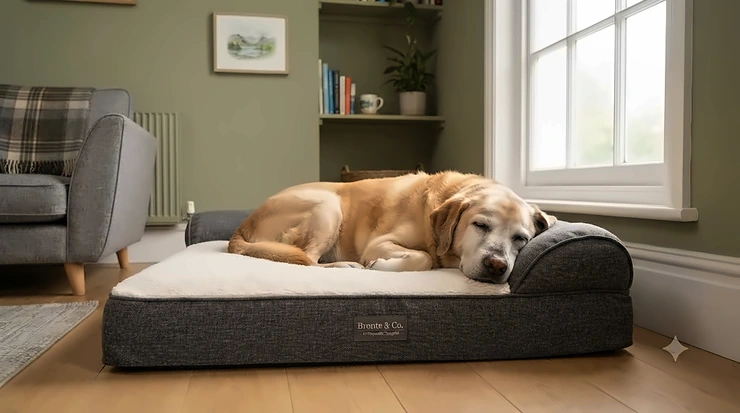
What is an orthopaedic dog bed for arthritis? In short, it’s a supportive bed — usually built around dense memory foam rather than loose stuffing — engineered to hold its shape under weight, distribute pressure evenly across hips, elbows and spine, and stop pointy joints digging into hard floors or thin cushioning during long rests.
This guide skips the marketing fluff and goes straight to the substance: real products sold in the UK, real specs explained in plain English, and honest analysis of who each bed actually suits. We’ll also dig into memory foam density (the single most misunderstood spec on the market), joint pain relief strategies beyond bedding, and what senior dog mobility really demands from a resting surface. According to the Blue Cross, arthritis is one of the most common long-term causes of joint pain in dogs, particularly as they age — and bedding is one of the few daily-life factors owners can control directly, so it’s worth getting right.
Quick Comparison Table
| Product | Foam Type | Best For | Price Range |
|---|---|---|---|
| Scruffs Oxford Orthopaedic Mattress | 70% foam / 30% memory foam crumb | All-rounder comfort seekers | £35-£90 |
| KOPEKS Orthopedic Memory Foam Dog Bed | Solid high-density memory foam, 4-7 inch | Large & giant breeds | £60-£160 |
| PetFusion Ultimate Dog Bed | 4-inch solid memory foam | Balanced mid-range buyers | £50-£130 |
| The Dog’s Bed Orthopaedic Memory Foam Bed | CertiPUR-certified dual-layer foam | Vet-conscious, post-surgery dogs | £45-£140 |
| Bunty Deluxe Dog Bed | Fleece-lined bolster, no memory foam | Tight budgets, mild stiffness | £15-£45 |
| Silentnight Orthopaedic Pet Bed | Contoured pressure-relief foam | Trusted-brand, easy-access seniors | £30-£75 |
| Bedsure Orthopedic Memory Foam Dog Bed | Dual-layer memory foam over support base | Best all-round value | £25-£70 |
Looking at the table, you can already see a pattern worth flagging: the beds that actually use dense, structured memory foam (KOPEKS, The Dog’s Bed, Bedsure, PetFusion) sit closer to the mechanism that genuinely helps arthritic joints, while beds like the Bunty Deluxe rely on fleece and loft rather than foam density, making them a comfort upgrade rather than a therapeutic one. If your dog has a confirmed arthritis diagnosis, this distinction should drive your shortlist more than price alone. Budget doesn’t have to mean giving up support entirely, though — Bedsure proves that dual-layer memory foam construction is achievable well under £70.
💬 Just one click — help others make better buying decisions too!😊
Top 7 Orthopaedic Dog Beds for Arthritis: Expert Analysis
1. Scruffs Oxford Orthopaedic Mattress — plush comfort with genuine foam support
The Scruffs Oxford Orthopaedic Mattress leads with a thick-cut faux fur top that looks more like a boutique dog bed than a medical aid, but don’t let the fluff fool you. Underneath sits a fill made of 70% orthopaedic foam and 30% memory foam crumb, which is a slightly softer construction than solid-slab memory foam beds, but still firm enough to stop a dog’s hip sinking straight through to the floor. It comes in Medium (80x60cm), Large (100x70cm) and X-Large (120x75cm), with a water-resistant inner lining and a fully removable, machine-washable cover.
Based on the spec comparison with solid-foam rivals, the Scruffs Oxford trades a small amount of orthopaedic firmness for noticeably better all-weather practicality — the faux fur top and washable cover matter enormously if your arthritic dog is also incontinent or muddy from short, careful walks. It suits medium-to-large breed owners who want something that looks at home in the living room rather than a clinical foam slab in the utility room. Reviewers consistently note that the cover holds up well through repeated 30-degree washes without the fur matting, though a handful mention the foam crumb fill softening faster under very heavy dogs (35kg+) than a solid-block alternative would.
Pros:
- ✅ Machine-washable cover survives frequent washing
- ✅ Faux fur top adds warmth for stiff senior joints
- ✅ Water-resistant lining copes with accidents
Cons:
- ❌ Foam crumb fill softens faster than solid foam under heavy dogs
- ❌ Raised bolster edges can hinder very stiff dogs climbing in
At around £35-£90 depending on size, the Scruffs Oxford sits in the mid-range bracket, and it earns its keep for dogs under 30kg where the softer fill isn’t stretched to its limits.
2. KOPEKS Orthopedic Memory Foam Dog Bed — thickest slab foam for heavyweight support
The KOPEKS Orthopedic Memory Foam Dog Bed is built around a genuinely substantial slab of memory foam, ranging from 4 inches in smaller sizes up to a full 7 inches in the X-Large, described by the brand as comparable to therapeutic foam used in premium human mattresses. That thickness matters in practice: a large dog’s hip and shoulder can sink 2-3cm into a 7-inch base without ever touching the firmer support layer underneath, which is exactly the kind of even weight distribution vets look for in dogs managing hip or elbow arthritis. It ships with a waterproof inner liner and a soft micro-suede outer cover with an anti-slip zippered base, and several versions include a built-in 3-inch headrest bolster.
What most buyers overlook about this model is that its firmness is genuinely closer to human-grade orthopaedic foam than most “orthopaedic” dog beds that use standard polyurethane foam and just borrow the label. That makes the KOPEKS the pick for large and giant breeds — Labradors, German Shepherds, Mastiffs — where thinner beds compress flat within weeks. Aggregated review sentiment on this bed is strong on comfort and durability, with an average rating hovering around 4.6-4.7 out of 5 on major retailers, though a recurring complaint concerns full expansion: several owners report the compressed, vacuum-packed foam needing a full 24-48 hours (not the advertised few hours) to fully loft after unboxing.
Pros:
- ✅ Up to 7 inches of genuine high-density memory foam
- ✅ Built-in headrest bolster supports neck alignment
- ✅ Waterproof liner protects the foam investment
Cons:
- ❌ Can take a full day or two to fully expand
- ❌ Premium sizes get heavy and awkward to move
Prices range roughly £60-£160 across sizes, and for a dog over 25kg with a confirmed arthritis diagnosis, this is one of the few beds on this list with enough foam depth to genuinely change how they rest.
3. PetFusion Ultimate Dog Bed — the well-rounded mid-range benchmark
The PetFusion Ultimate Dog Bed has quietly become something of an industry reference point, built around a solid 4-inch memory foam base wrapped in a water-resistant liner and a breathable polyester-cotton cover. Here’s what to weigh: 4 inches is a meaningful step up from the 2-3 inch foam found in budget beds, but it’s noticeably less than the KOPEKS’ maximum depth, which places this bed firmly in the “very good for most dogs” category rather than the “built for giant breeds” one.
On paper this means the PetFusion suits small-to-large dogs particularly well, and it’s the bed most frequently recommended by third-party reviewers specifically for older dogs with creakier joints or early-stage arthritis, largely because the firmness holds its shape without the “sinking sofa” effect some cheaper foams develop after a few months. Reviewers consistently report that the zip-off cover machine-washes without shrinking and that the bed stays dry-to-the-touch even with drooly or incontinent dogs, thanks to the water-resistant liner sitting beneath the cover rather than being the cover itself.
Pros:
- ✅ 4-inch solid memory foam resists sagging over time
- ✅ Breathable cotton-blend cover machine washes well
- ✅ Wide size range fits multiple dogs sharing one bed
Cons:
- ❌ Not deep enough for very heavy giant breeds
- ❌ No raised bolster for dogs who like to lean
Expect to pay somewhere in the £50-£130 range depending on size, making the PetFusion Ultimate a sensible default pick when you’re not sure exactly how firm you need to go.
4. The Dog’s Bed Orthopaedic Memory Foam Bed — veterinary-grade support with a headrest
The The Dog’s Bed Orthopaedic Memory Foam Bed leans hard into clinical credibility, and the spec sheet backs it up: CertiPUR-certified foam (meaning it’s tested for harmful chemicals, not just labelled “orthopaedic” for marketing), a dual-layer construction with roughly 5cm of memory foam sitting on top of around 10cm of high-stability support foam, and — on the Headrest models — an anatomically shaped bolster designed to keep the neck in a more natural line while resting. That’s a genuinely useful detail for arthritic dogs, since a dropped or twisted neck position overnight can add strain to an already inflamed spine or shoulders.
Here’s what the spec sheet won’t tell you outright, but the design implies: this bed is explicitly positioned by the brand for dogs recovering from surgery, managing diagnosed hip or elbow dysplasia, and older dogs with reduced mobility — it’s less a general “nice bed” and more a purpose-built recovery and management surface. It comes without raised sides on several models specifically so stiff dogs can step on and off without having to clear a lip, which is a small design choice that matters enormously for a dog who struggles to lift a back leg. UK-based reviewers and several vet-facing blogs cite it as a bed regularly recommended for post-surgical and chronic joint cases.
Pros:
- ✅ CertiPUR-certified foam meets recognised safety testing
- ✅ Low or no-lip design eases entry for stiff dogs
- ✅ Dual-layer foam separates support from cushioning
Cons:
- ❌ Sits at the premium end of the price bracket
- ❌ Replacement covers cost extra if you want a spare
Pricing typically runs £45-£140 depending on size and cover choice, and it’s arguably the most “medically minded” bed on this list — a strong match if your vet has specifically flagged arthritis or dysplasia rather than general stiffness.
5. Bunty Deluxe Dog Bed — the honest budget option
The Bunty Deluxe Dog Bed doesn’t pretend to be a memory foam product, and that honesty is worth respecting. It’s a fleece-lined, poly-canvas-based bed with a rubber-gripped anti-slip base, made in the UK and fully machine washable up to 30 degrees. Sizes run from Small (47x37cm) right up to XXL (105x80cm), with a raised back edge for a sense of security rather than orthopaedic structure.
Reviewers consistently note excellent value and durability for the price, with the bed regularly appearing among the best-selling and most-reviewed dog beds on Amazon UK. Based on the spec comparison with the foam-based beds above, though, the honest analytical take is this: the Bunty Deluxe provides comfort and warmth, not pressure redistribution. For a young dog with very mild, early stiffness, or as a secondary bed for daytime naps downstairs while the “real” orthopaedic bed lives upstairs, it’s a genuinely sensible budget pick. For a dog with a confirmed arthritis diagnosis relying on this as their only bed, it’s unlikely to deliver the joint-pressure relief that foam-based options do, and a vet would likely recommend upgrading.
Pros:
- ✅ Very low price point across all sizes
- ✅ Machine washable at home, no dry cleaning needed
- ✅ Rubber-gripped base stops sliding on hard floors
Cons:
- ❌ No memory foam, so limited pressure redistribution
- ❌ Fleece flattens with heavy or constant use
At roughly £15-£45 across the size range, the Bunty Deluxe earns its place as the honest budget entry — just go in with realistic expectations about what fleece and canvas can and can’t do for a genuinely arthritic joint.
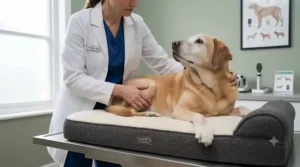
6. Silentnight Orthopaedic Pet Bed — trusted sleep brand, easy-access design
Silentnight built its reputation on seventy-plus years of human mattress technology, and its Orthopaedic Pet Bed range applies a version of that know-how to dogs: a contoured foam layer designed to distribute weight evenly and reduce pressure points, paired with a dropped front edge specifically engineered for easy entry and exit. That dropped-front detail is a small but genuinely thoughtful feature for dogs whose hips or knees make stepping over a raised lip genuinely painful.
What most buyers overlook here is that the brand pedigree isn’t just marketing — Silentnight’s contoured foam technology is adapted rather than reinvented for pet use, so the underlying comfort engineering has decades of consumer testing behind it, even if the dog-specific product line itself is newer. The high sides (minus the dropped front) offer a den-like sense of security that some anxious or arthritic dogs — who may feel vulnerable when lying flat and exposed — genuinely settle into more easily. This suits owners who want a recognisable, trusted UK brand name and a bed that balances joint support with psychological comfort for an ageing dog who’s become more anxious as their mobility has declined.
Pros:
- ✅ Dropped front makes entry and exit easier
- ✅ High sides offer den-like security for anxious seniors
- ✅ Backed by a long-established UK sleep brand
Cons:
- ❌ Foam depth less substantial than dedicated orthopaedic specialists
- ❌ Higher sides less ideal for dogs who like to stretch out flat
Prices generally sit around £30-£75, positioning it as a comfortable middle-ground choice between the budget fleece beds and the deep-foam specialists.
7. Bedsure Orthopedic Memory Foam Dog Bed — best all-round value pick
The Bedsure Orthopedic Memory Foam Dog Bed consistently comes out on top in independent UK buying guides for one simple reason: it delivers genuine dual-layer memory foam construction — a support base topped with a memory foam layer — at a price point that undercuts most of the “premium” names on this list. It includes a waterproof liner, a removable machine-washable cover, and has passed the kind of safety certification checks that separate it from generic own-brand foam beds.
Here’s what to weigh: the Bedsure doesn’t have the show-stopping 7-inch depth of the KOPEKS, nor the CertiPUR paperwork of The Dog’s Bed, but for small-to-medium dogs and budget-conscious owners managing early-to-moderate arthritis, the dual-layer foam still does the fundamental job — supporting weight evenly rather than letting joints bottom out. Reviewers consistently rate it highly for value, and it’s frequently the bed recommended as the “best overall” pick specifically because it balances genuine orthopaedic construction against an accessible price, rather than making buyers choose between the two.
Pros:
- ✅ Genuine dual-layer memory foam, not just foam-branded polyester
- ✅ Strong value relative to premium foam-depth rivals
- ✅ Waterproof liner and washable cover included as standard
Cons:
- ❌ Foam depth modest for giant or very heavy breeds
- ❌ Colour and cover options more limited than pricier rivals
Typically priced £25-£70, the Bedsure is the bed we’d point most first-time orthopaedic bed buyers toward before they commit to a pricier specialist option.
Top 7 Products Comparison
| Product | Foam Depth | Waterproof Liner | Washable Cover | Best For | Price Range |
|---|---|---|---|---|---|
| Scruffs Oxford Orthopaedic Mattress | Moderate (crumb blend) | Yes | Yes | Style-conscious owners | £35-£90 |
| KOPEKS Orthopedic Memory Foam Dog Bed | Deep (up to 7″) | Yes | Yes | Large/giant breeds | £60-£160 |
| PetFusion Ultimate Dog Bed | Solid (4″) | Yes | Yes | Small-large all-rounders | £50-£130 |
| The Dog’s Bed Orthopaedic Bed | Dual-layer (~6″) | Yes | Yes | Post-surgery/diagnosed dogs | £45-£140 |
| Bunty Deluxe Dog Bed | None (fleece) | No | Yes | Mild stiffness, tight budget | £15-£45 |
| Silentnight Orthopaedic Pet Bed | Moderate (contoured) | Partial | Yes | Anxious, easy-access seniors | £30-£75 |
| Bedsure Orthopedic Memory Foam Bed | Dual-layer (moderate) | Yes | Yes | Best overall value | £25-£70 |
The clearest takeaway from this table is that foam depth and price don’t move in lockstep — the Bedsure matches the dual-layer construction of beds costing twice as much, while the Scruffs Oxford justifies its mid-range price through fabric quality rather than foam depth alone. If your dog is under 15kg, almost any bed here except the Bunty will provide meaningful support; above 30kg, the KOPEKS and The Dog’s Bed pull decisively ahead on genuine pressure relief.
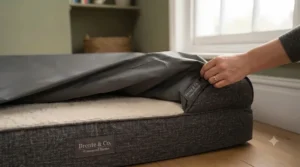
Benefits vs Traditional Dog Beds
| Factor | Orthopaedic Memory Foam Bed | Traditional Cushion/Fleece Bed |
|---|---|---|
| Pressure redistribution | High — foam moulds to joints | Low — weight concentrates on pressure points |
| Shape retention over time | Holds shape for years (quality foam) | Flattens within months |
| Support for senior mobility | Reduces overnight stiffness | Minimal structural support |
| Typical price | Higher upfront cost | Lower upfront cost |
| Lifespan | 3-5+ years with quality foam | 1-2 years before replacement needed |
This is really where the case for orthopaedic beds gets made in cold, practical terms: a £70 memory foam bed that lasts four years works out considerably cheaper per year of use than a £25 fleece bed replaced annually, quite apart from the comfort difference. Traditional beds aren’t “wrong,” exactly — they’re simply built for a different job (softness and warmth) rather than the specific mechanical task of holding a joint in a supported, level position for eight-plus hours a night. For a dog without diagnosed joint issues, that difference may not matter much; for one with arthritis, it’s arguably the single biggest lever an owner controls day-to-day.
✨ Don’t Miss These Exclusive Deals!
🔍 Take your dog’s comfort to the next level with these carefully selected orthopaedic beds. Click on any highlighted product to check current pricing and availability. These beds will help you create the kind of restful, pain-free sleep your ageing companion truly deserves!
Practical Usage Guide: Setting Up an Orthopaedic Bed the Right Way
Getting a good bed is only half the job — how you set it up in the first month makes a real difference to whether your dog actually uses it. Start by placing the bed somewhere your dog already gravitates to naturally; arthritic dogs are creatures of habit, and forcing a location change alongside a bed change often means the expensive new bed sits ignored while your dog sneaks back to the sofa. Let memory foam beds fully expand for the full 24-48 hours some models genuinely need before judging the firmness — a bed assessed on day one, still only half-lofted, will feel disappointingly thin.
In the first 30 days, watch for early warning signs the bed isn’t right: your dog circling excessively before lying down, avoiding the bed altogether, or struggling more than usual to get comfortable. These usually point to either a bed that’s too soft (not enough support) or too firm relative to your dog’s body weight. Rotate the cover through a wash roughly every one to two weeks initially to establish the routine, checking the foam beneath hasn’t developed odd odours from trapped moisture — a sign the waterproof liner isn’t doing its job. Long term, plan to flip or rotate solid foam beds every few months to even out wear, and replace the bed entirely once you notice a permanent body-shaped dent that doesn’t spring back within a few minutes of your dog getting up — that’s the foam telling you its supportive life is over.
Real-World Scenarios: Matching the Bed to Your Dog
Meet three fictional but entirely typical households to see how this plays out in practice. First, picture a 9-year-old Labrador, recently diagnosed with hip arthritis, living in a family home with wooden floors throughout. Here the KOPEKS Orthopedic Memory Foam Dog Bed or The Dog’s Bed Orthopaedic Bed makes the most sense — both offer the foam depth needed for a heavier breed, and the low-lip or no-lip design helps on hard flooring where a stumbling exit could mean a slip.
Next, consider a small, elderly terrier-cross with early, mild stiffness rather than a formal diagnosis, living with an owner on a tighter budget who wants to be proactive without overspending. The Bedsure Orthopedic Memory Foam Bed or PetFusion Ultimate fit well here — genuine memory foam support without the premium price tag, appropriately scaled to a smaller dog’s lower overall pressure load. Finally, imagine a nervous rescue dog with age-related joint pain who startles easily and seeks out enclosed spaces. The Silentnight Orthopaedic Pet Bed, with its high sides and dropped front, addresses both the physical support need and the emotional security this particular dog needs to actually settle and rest properly.
How to Choose an Orthopaedic Dog Bed for Arthritis
- Match foam depth to body weight. Dogs under 15kg generally do well with 3-4 inches of memory foam; dogs over 25kg need 5-7 inches to avoid bottoming out and touching the floor beneath the foam.
- Check the entry design. A dog struggling to lift stiff hind legs benefits enormously from a low or dropped-front edge rather than a bed with raised bolster sides all the way round.
- Prioritise genuine memory foam over “orthopaedic” branding alone. Some budget beds use the word loosely on standard polyurethane foam or fibre fill — look for explicit mentions of memory foam density or CertiPUR-style certification.
- Factor in washability. Senior dogs are more prone to accidents; a fully removable, machine-washable cover isn’t a nice-to-have, it’s close to essential.
- Consider your flooring. Hardwood and tile floors benefit from beds with a genuinely non-slip base, since a sliding bed adds fall risk for a dog already unsteady on their feet.
- Think about total cost of ownership, not just sticker price. A £90 bed that lasts four years is cheaper annually than a £25 bed replaced every twelve months.
- When in doubt, ask your vet. If your dog has a formal arthritis diagnosis, your vet may have specific firmness or design recommendations based on which joints are affected.
Common Mistakes When Buying an Orthopaedic Dog Bed
The most frequent mistake is buying based on the word “orthopaedic” alone without checking what’s actually inside — plenty of beds use the term as a style descriptor rather than a construction fact, and a soft fibre-fill bed marketed as orthopaedic won’t behave like one under a heavy, stiff-jointed dog. A close second is sizing too small: dogs with arthritis often need to stretch out flat to take pressure off curled joints, and a bed that forces them to curl up defeats much of the purpose. Owners also frequently judge a memory foam bed’s firmness on day one, before it’s had the 24-48 hours some models need to fully expand from their shipping compression, and end up returning a perfectly good bed prematurely. Finally, skipping the waterproof liner check is a common oversight — without one, an incontinent senior dog’s accidents soak straight into the foam, shortening its supportive lifespan dramatically and creating odour problems that no amount of cover-washing solves.
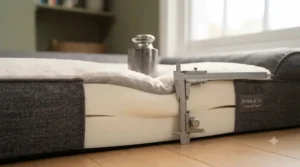
Orthopaedic Beds vs Heated Beds: Which Matters More for Arthritis?
It’s a genuinely common question, and the honest answer is that they solve different problems. Heated beds add gentle warmth that can ease muscle tension and make joints feel looser, particularly in cold UK winters when arthritic stiffness noticeably worsens — but they don’t address the structural pressure-point problem the way memory foam does. An orthopaedic memory foam bed handles the mechanical side: keeping the spine level, redistributing weight, and stopping bony joints pressing straight into a hard surface. For many arthritic dogs, especially in colder months, the ideal solution is actually a genuinely orthopaedic base combined with a warm environment — a memory foam bed placed away from draughts, or with a heated pad used cautiously and only under vet guidance, rather than choosing one feature at the expense of the other.
What to Expect: Real-World Performance
Specs on a page are one thing; a stiff 34kg Rottweiler at 7am is another. In practice, owners moving from a flat or fibre-filled bed to a genuine memory foam orthopaedic bed often report a noticeably calmer, less restless night within the first week — less repositioning, less audible grunting when shifting weight. The morning transition tends to improve too: a dog rising from a level, supportive surface generally needs less of that tentative, joint-by-joint unfolding than one rising from a sagging or too-soft bed where the hips have sunk unevenly overnight. It’s worth being realistic, though — memory foam won’t eliminate morning stiffness caused by osteoarthritis itself; what it changes is how much additional strain the resting surface adds on top of the underlying condition.
Orthopaedic Dog Beds for Senior Dogs: Tailored Advice
Senior dog mobility issues rarely show up as one single symptom — it’s usually a combination of slower rising, reluctance on stairs, and shorter walks, and bedding needs to account for the whole picture, not just where the dog sleeps at night. For seniors, prioritise beds with low or no-lip entry points, since the same stiffness that makes stairs difficult also makes clearing a raised bolster edge harder than it looks. Placement matters more for older dogs too — a bed at the bottom of the stairs or in a well-used ground-floor room reduces the number of painful transitions your dog needs to make in a day. If your senior dog also has reduced bladder control, which becomes more common with age, prioritise beds with a genuinely waterproof (not just water-resistant) inner liner, since foam that absorbs moisture loses supportive structure and can develop odour and hygiene issues far faster than a protected equivalent.
Long-Term Cost & Maintenance
Run the numbers and the value case for a proper orthopaedic bed becomes clearer than the upfront price tag suggests. A quality memory foam bed in the £60-£140 range, properly maintained with regular cover washing and periodic rotation, typically holds useful supportive structure for three to five years. Compare that with a £20-£30 fibre-fill bed that visibly flattens and needs replacing every 12-18 months, and the cost-per-year gap narrows dramatically, sometimes reversing in the foam bed’s favour by year two or three. Maintenance itself is low-effort: machine-wash the cover every one to two weeks (more often for incontinent dogs), air the foam out of direct sunlight occasionally to prevent yellowing, and check zips and seams for wear every few months since these tend to fail before the foam itself does.
Features That Actually Matter (And Those That Don’t)
Genuinely worth paying for: memory foam depth appropriate to your dog’s weight, a proper waterproof inner liner (not just a water-resistant outer fabric), a fully removable and machine-washable cover, and a non-slip base. Largely marketing noise for arthritis purposes specifically: novelty prints and seasonal colourways, “cooling gel” layers (pleasant in summer, but not something that changes joint support), and elaborate multi-bolster shapes that can actually make entry harder for a genuinely stiff dog rather than easier. The spec sheet won’t tell you this directly, but a plain, low-profile, deep-foam rectangle usually outperforms a more elaborately styled bed for a dog whose priority is getting in, lying flat, and getting back out again without pain.
Problem → Solution: Fixing Common Arthritis Bedding Issues
If your dog avoids a new bed entirely, try placing an item with their existing scent on it for the first week and positioning it in their established resting spot rather than somewhere new. If the bed flattens faster than expected, check the weight rating against your dog’s actual weight — many budget beds are rated optimistically, and a genuinely deep-foam option like the KOPEKS or The Dog’s Bed solves this for heavier dogs. If your dog struggles to climb in due to a raised edge, look toward flat, low-profile designs such as the memory foam mattress-style beds rather than bolstered “nest” shapes. If odour develops despite regular washing, the waterproof liner has likely failed or was never present — this is where a certified waterproof design like The Dog’s Bed or Bedsure earns its higher price over uncertified alternatives. And if your dog seems to prefer the cold hard floor to any bed at all, it’s worth booking a vet check, since a sudden preference change like this can sometimes signal worsening pain rather than a simple bed dislike.
Buyer’s Decision Framework
If your dog is over 25kg with a confirmed arthritis or dysplasia diagnosis, choose a deep-foam specialist like the KOPEKS or The Dog’s Bed, because thinner foam won’t support that weight without bottoming out. If your dog is small-to-medium with early or mild stiffness, choose a balanced mid-range option like the PetFusion Ultimate or Bedsure, because you get genuine memory foam support without overpaying for depth you don’t need. If budget is your primary constraint and your dog’s mobility issues are mild, choose the Bunty Deluxe as an interim comfort upgrade, because fleece and structure still beat a hard floor even without true memory foam. If your dog is anxious as well as arthritic, choose the Silentnight Orthopaedic Pet Bed for its combination of support and enclosed security. And if hygiene and accidents are a daily concern, prioritise beds with certified waterproof liners — The Dog’s Bed and Bedsure — over style-led options regardless of your dog’s size.
Safety, Regulations & Compliance Guide
UK pet bedding doesn’t carry the same statutory safety regime as, say, children’s products, but reputable brands increasingly rely on independent chemical safety certifications to signal quality — CertiPUR-style foam testing (screening for harmful flame retardants, heavy metals and formaldehyde) is the most relevant one to look for, and it’s explicitly cited by brands like The Dog’s Bed. OEKO-TEX STANDARD 100 certification appears on several Amazon-listed orthopaedic beds too, and covers similar chemical-safety ground for the fabric components specifically. Beyond certification, general fire-safety labelling on foam-filled products is worth checking, particularly for beds bought secondhand or from less established sellers, since foam composition varies enormously in quality and safety testing outside recognised certification schemes. If your dog is on prescribed arthritis medication or has had recent joint surgery, it’s always worth a quick conversation with your vet about bed firmness and design — some post-operative cases have very specific positioning needs a generic buying guide can’t account for.
Frequently Asked Questions
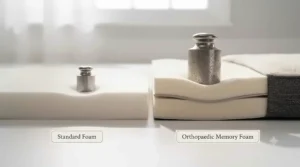
❓ What is the best memory foam density for a dog with arthritis?
❓ How thick should an orthopaedic dog bed be for hip pain?
❓ Can a dog bed actually help with joint pain relief?
❓ Do orthopaedic dog beds help senior dog mobility long-term?
❓ How often should I replace an orthopaedic dog bed?
Conclusion
If there’s one thing worth taking away from all this, it’s that “orthopaedic” is a spectrum, not a guarantee — the word alone tells you far less than the foam depth, density and design underneath it. For most owners of a genuinely arthritic, larger dog, the KOPEKS Orthopedic Memory Foam Dog Bed or The Dog’s Bed Orthopaedic Memory Foam Bed deliver the structural support that actually changes daily comfort. For smaller dogs or earlier-stage stiffness, the Bedsure and PetFusion Ultimate strike a genuinely sensible balance between real memory foam and accessible pricing. And if budget is tight right now, the Bunty Deluxe is an honest stopgap rather than a compromise dressed up as more than it is.
Whichever you choose, remember that bedding is one part of a bigger picture — weight management, appropriate exercise, and regular vet check-ups all matter alongside where your dog actually sleeps. As the PDSAnotes, arthritis is a lifelong condition best managed through a combination of veterinary care and thoughtful daily-life adjustments — and a properly chosen bed is one of the easiest adjustments to get right.
✨ Ready to Give Your Dog the Comfort They Deserve?
🔍 Browse the full range of orthopaedic beds featured above and find the perfect fit for your dog’s size, weight and mobility needs. A better night’s sleep might be just one click away!
Recommended for You
- Reinforced Seam Dog Bed: 7 Genuinely Tough Picks for 2026
- Tough Fabric Dog Bed: 7 Best Chew-Resistant Picks 2026
- Teething Proof Puppy Bed: 7 Tough Picks That Survive 2026
Disclaimer: This article contains affiliate links. As an Amazon Associate, I earn from qualifying purchases. If you purchase products through these links, we may earn a small commission at no additional cost to you.
✨ Found this helpful? Share it with your friends! 💬🤗
