
In This Article
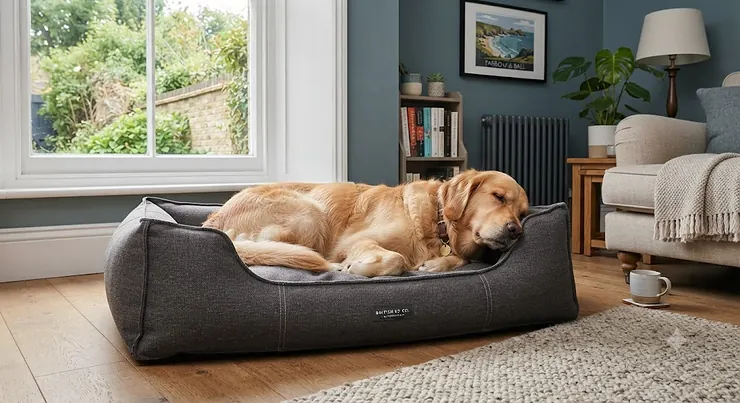
Every dog owner has lived through it: the mysterious sound of stuffing hitting the carpet at 2am, followed by the slow, sinking realisation that your dog’s brand-new bed has split clean along a seam. A reinforced seam dog bed is simply a bed built with extra rows of stitching, often heavy-duty polyester or nylon thread, at the exact points where fabric panels meet and where paws, teeth and body weight put the most strain. It’s the difference between a bed that lasts one boisterous puppy phase and one that survives several.

We’ve spent hours digging through real product specifications, genuine aggregated review sentiment, and UK-specific buying advice to pull together this guide. Rather than rehashing an Amazon listing, we’re going to explain what “reinforced” actually means in practice, which of the seven beds below hold up best for which type of dog, and where owners typically go wrong when shopping for one. Whether you’ve got a Labrador built like a small bear, a whippet who somehow finds the one weak thread in any fabric, or a teething cocker spaniel puppy, there’s a genuinely durable option here.
We’ll also cover puppy bed reinforced stitching specifically, because a growing pup’s chewing habits are a completely different engineering problem to an adult dog’s claws. A dog’s bed often doubles as their safe, settled space within a crate or den, and as PDSA’s guidance on crate training notes, that space needs to feel secure and comfortable, which a bed falling apart underneath a dog clearly undermines. By the end, you should be able to spot a well-made seam from a marketing buzzword, and know exactly which of our seven picks deserves a spot in your home.
Quick Comparison Table
| Product | Best For | Price Range | Standout Feature |
|---|---|---|---|
| Ancol Extreme Dog Bed | Muddy, outdoor-loving dogs | Under £30 | Hi-vis waterproof Oxford weave |
| Bedsure XXL Oxford Fabric Bed | Large breeds on a budget | £30-£45 range | Reinforced Oxford base panel |
| Bunty Deluxe Dog Bed | Anxious pups wanting security | £25-£50 range | UK-crafted tough stitching |
| Bunty Anchor Sofa Dog Bed | Dogs who lean on bolsters | £35-£60 range | Raised sides with reinforced piping |
| Feandrea Orthopaedic Sofa Bed | Joint support with durability | £40-£70 range | Egg-crate foam + raised-edge seams |
| KOPEKS Jumbo Orthopedic Bed | Large and giant breeds | £70-£110 range | 7-inch memory foam, tested seams |
| PetFusion Ultimate Memory Foam Bed | Long-term structural durability | £60-£100 range | Tear-resistant cover, bolster-reinforced |
Looking at the spread above, the cheapest entries earn their keep on straightforward flat mats rather than heavily bolstered designs, where seams under tension are the first thing to fail. Mid-range picks like the Bunty Deluxe Dog Bed and Feandrea Orthopaedic Sofa Bed add raised walls, which means more seam length and, in theory, more potential failure points — so reinforcement matters even more once you go up a tier. At the top, the KOPEKS Jumbo Orthopedic Bed and PetFusion Ultimate Memory Foam Bed justify their price partly through genuinely tougher fabric and zip construction rather than just thicker foam.
💬 Just one click — help others make better buying decisions too!😊
Top 7 Reinforced Seam Dog Beds: Expert Analysis
1. Ancol Extreme Dog Bed — toughest budget option for outdoor use
The Ancol Extreme Dog Bed leans on a durable Oxford weave fabric bonded to an EVA foam base, and that bonded construction is worth pausing on. Because the base doesn’t rely purely on stitched seams to hold its shape, there are fewer stress points for muddy paws and repeated shaking-off to attack. The hi-vis colourway is a genuinely practical touch for anyone walking dogs at dawn or dusk on unlit paths, rather than just a styling choice.
Specced as a flat, low-profile mat rather than a bolstered sofa bed, it’s aimed squarely at kennels, gardens, boots of cars and anywhere a bed needs to survive damp and grit rather than deliver plush comfort. Based on the design brief, this is the pick for owners whose dog spends real time outdoors, on a farm, in a van, or drying off after muddy walks, rather than a house dog who wants to sink into memory foam.
Reviewers consistently report that the waterproof fabric wipes clean easily and resists soaking through, though some owners of persistent chewers note the fabric itself, not just the seams, can be nibbled through with sustained effort — this is a weatherproof mat first and a chew-proof product second. A common theme in feedback is surprise at how sturdy such an affordable bed feels once unpacked.
Pros:
- ✅ Bonded Oxford fabric reduces reliance on stitched seams
- ✅ Hi-vis finish genuinely useful for low-light walks
- ✅ Wipes clean fast after muddy walks
Cons:
- ❌ Flat profile offers little cushioning on hard floors
- ❌ Not marketed as chew-proof for determined chewers
Sitting comfortably under £30 in most sizes, this is a smart value pick for anyone who wants a genuinely weatherproof outdoor bed without paying premium prices, though it won’t replace an indoor sofa-style bed for a dog that likes to burrow.
2. Bedsure XXL Oxford Fabric Bed — best reinforced seam pick for large breeds on a budget
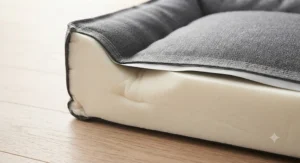
The Bedsure XXL Oxford Fabric Bed pairs a tough Oxford-weave base with a softer top panel, and the seam where those two very different fabric weights meet is exactly the kind of join that tends to fail on cheaper large-dog beds. Bedsure’s construction runs reinforced stitching along that join, which matters more the bigger your dog gets, since a Rottweiler flopping down repeatedly puts real cyclical stress on that exact line.
At 120 x 90cm, this is built with genuinely large breeds in mind rather than being a stretched version of a small-dog design, and the water-resistant base fabric means accidents and drool don’t immediately soak through to flooring underneath. What most buyers overlook about beds at this size is that flat mattress-style designs like this one actually distribute a big dog’s weight more evenly across the seam line than a heavily bolstered design would, reducing the chance of any single stitch bearing too much load.
Aggregated review sentiment consistently praises the size-to-price ratio for large-breed owners, with several reviewers specifically mentioning that the base held up well under a Labrador or German Shepherd’s daily use over several months, though a handful note the cover can pill slightly with heavy machine washing over time.
Pros:
- ✅ Reinforced join between Oxford base and soft top
- ✅ Genuinely large-breed sizing, not just relabelled
- ✅ Water-resistant base fabric protects flooring
Cons:
- ❌ Minimal cushioning compared with foam-filled options
- ❌ Cover can pill after frequent hot washes
Typically found in the £30-£45 range for the largest size, this is the pragmatic choice for anyone whose big dog has already destroyed two or three cheaper beds and needs something built with the actual failure points in mind.
3. Bunty Deluxe Dog Bed — best UK-crafted pick for security-seeking dogs
The Bunty Deluxe Dog Bed is manufactured in the UK with what the brand describes as tough stitching along a poly-canvas shell, and the raised walls give nervous or elderly dogs something to press their back against — a detail that matters because dogs who dig and circle before lying down put repeated lateral stress on wall seams specifically. Reinforcement along those raised edges is doing real structural work here, not just adding bulk.
Based on the spec sheet, the fleece-lined interior and insulating base are aimed at dogs who feel the cold, while the non-slip base keeps the whole bed from sliding across laminate or tile when a dog jumps in enthusiastically. Here’s what to weigh: this isn’t a chew-resistant design in the aggressive-chewer sense, but for dogs who scratch, circle and lean rather than bite, the seam construction has proven noticeably tougher than typical own-brand alternatives in this price bracket.
A common complaint in user reviews, however, is that a minority of buyers report splitting at the wall seams within a couple of weeks of heavy use, which suggests some quality variance between production batches — worth checking recent reviews before buying rather than relying on older ratings alone.
Pros:
- ✅ UK manufacturing with tough poly-canvas shell
- ✅ Raised walls reduce anxiety for nervous dogs
- ✅ Machine washable up to 30°C, tumble-dryer safe
Cons:
- ❌ Some batches report wall-seam splitting early
- ❌ Not suitable for aggressive chewers
Priced in the £25-£50 range depending on size, this suits owners prioritising a homely, secure-feeling bed for a dog who scratches and circles rather than one who actively attacks fabric.
4. Bunty Anchor Sofa Dog Bed — best raised-side design for dogs who lean
The Bunty Anchor Sofa Dog Bed takes the raised-wall concept further with a proper bolstered sofa shape, water-resistant fabric, and plush cushioning designed for dogs that like to rest their head on something. The seams running along each bolster carry more load than a flat bed’s seams do, because dogs frequently lean, push and dig at bolster edges rather than just lying centrally — reinforced stitching along these load-bearing lines is genuinely earning its keep here.
What most buyers overlook about anti-anxiety sofa-style beds is that the “high sides” feature that makes a nervous dog feel secure is precisely the feature most likely to fail first if the seams aren’t reinforced, since it takes the most physical contact. Bunty’s construction appears to have been designed with that specific failure mode in mind, rather than as an afterthought.
Reviewers consistently mention that the bed looks and feels more expensive than its price tag suggests, with several noting it’s held up well through a year or more of daily use with a medium-sized dog. Some feedback highlights that extra-large dogs who fully sprawl rather than curl up may find the bolstered design restrictive rather than protective.
Pros:
- ✅ Reinforced bolster seams handle leaning and pushing
- ✅ Water-resistant fabric guards against accidents
- ✅ Indoor and outdoor suitable construction
Cons:
- ❌ Bolsters restrict dogs who prefer to sprawl flat
- ❌ Premium look comes with premium-adjacent pricing
Typically priced in the £35-£60 range depending on size and colour, this is best suited to small and medium dogs who like to curl up and lean, rather than large dogs who stretch out fully.
5. Feandrea Orthopaedic Dog Sofa Bed — best mid-range pick for joint support and durability
The Feandrea Orthopaedic Dog Sofa Bed combines egg-crate foam with raised bolstered edges and a removable, machine-washable cover, and the seam construction along those raised edges is reinforced to handle the repeated compression of a dog climbing in and out. Egg-crate foam alone doesn’t hold its shape without a well-stitched outer shell keeping it contained, so seam quality directly affects how long the orthopaedic support lasts.
On paper, this means older dogs with joint stiffness get genuine pressure relief, while the waterproof lining underneath protects the foam core from the kind of accidents that would otherwise ruin cushioning permanently. Based on the spec comparison with cheaper foam beds, the raised-edge design also means the seams see constant low-level stress from a dog settling against the bolster, which is exactly where Feandrea has concentrated reinforcement.
Aggregated review sentiment is broadly positive on comfort and joint support, with reviewers specifically noting visible improvement in older dogs’ willingness to get up and down. A recurring theme in feedback, though, is that the non-slip rubber dots on the base can wear smooth faster than the seams themselves do, which is a maintenance point worth knowing about upfront rather than a structural failure.
Pros:
- ✅ Reinforced bolster seams handle repeated compression
- ✅ Egg-crate foam plus waterproof lining protects core
- ✅ Removable, fully machine-washable cover
Cons:
- ❌ Non-slip base dots can wear smooth over time
- ❌ Firmer bolster feel than plush alternatives
Sitting in the £40-£70 range across sizes, this is a strong pick for owners balancing orthopaedic support with genuine seam durability, particularly for senior or larger dogs.
6. KOPEKS Jumbo Orthopedic Dog Bed — best premium memory foam pick for large and giant breeds
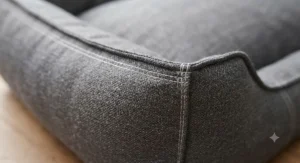
The KOPEKS Jumbo Orthopedic Dog Bed is built around 7 inches of pressure-relieving memory foam, wrapped in a waterproof inner liner and a removable outer cover, with double-zippered access that keeps the whole structure sealed under real weight. What most buyers overlook about very thick memory foam beds is that the outer seam has to contain far more downward and outward pressure than a thinner bed’s seam does — a 45kg dog compresses seven inches of foam quite differently to two inches, and that pressure pushes outward against every stitch line.
Here’s what the spec sheet won’t tell you outright, but the design implies: the brand backs its construction with a warranty specifically covering seam and zipper integrity under normal use, which is a strong signal about where they expect genuine wear to occur, and where they’re confident the reinforcement holds. Based on this, it’s the clear pick for large and giant breed owners whose dogs are hardest on structural seams simply through sheer body weight.
Reviewers consistently report that older, heavier dogs with arthritis or hip dysplasia settle noticeably faster and stay settled longer on this bed compared with thinner alternatives, and several specifically mention the cover surviving daily use with dogs over 45kg without splitting. A common complaint is that the memory foam takes a few days to fully expand after unpacking, and colder rooms slow that process further.
Pros:
- ✅ Warranty explicitly covers seam and zipper integrity
- ✅ 7-inch foam distributes weight, reducing seam stress
- ✅ Waterproof liner plus separate washable outer cover
Cons:
- ❌ Premium price point compared with flat-mattress beds
- ❌ Full foam expansion takes several days after delivery
Typically priced in the £70-£110 range for the largest size, this is a genuine investment piece for heavy or joint-affected dogs where seam failure under sustained weight is the main risk to guard against.
7. PetFusion Ultimate Memory Foam Dog Bed — best premium pick for long-term structural durability
The PetFusion Ultimate Memory Foam Dog Bed uses a water-resistant, tear-resistant outer cover with generously filled bolsters, and YKK-branded zippers rather than generic hardware, which matters more than it might sound. Zippers are effectively long seams with moving parts, and cheap zips are a disproportionately common failure point on bolstered beds — a reinforced fabric seam next to a weak zip is still a weak bed overall.
Based on the spec comparison with the mid-range options in this list, PetFusion’s approach treats the bolster shell almost like a piece of furniture upholstery rather than typical pet-bed fabric, which is reflected in the price but also in how the seams are finished. What the spec sheet won’t tell you, but reviewers note, is that this bed tends to hold its shape and stitching integrity noticeably longer under repeated washing than cheaper polyester-cover alternatives, which matters a great deal if you’re washing weekly for a shedding or muddy dog.
Reviewers consistently highlight the modern, furniture-like look blending into a living room, alongside genuine praise for how the cover has resisted tearing from claws over extended use. Some feedback flags that dogs under about 10kg can find the bolsters oversized relative to the sleeping area, making it better value for medium-to-large dogs.
Pros:
- ✅ YKK-branded zippers reduce a common failure point
- ✅ Tear-resistant cover holds up to repeated washing
- ✅ Furniture-grade construction and finish
Cons:
- ❌ Bolster proportions can swamp very small dogs
- ❌ Among the pricier options in this line-up
Generally priced in the £60-£100 range depending on size, this is the pick for owners who want a bed to look good in the living room and still be standing structurally in two years’ time.
Practical Usage Guide: Setting Up and Getting the Most from a Reinforced Seam Dog Bed
Getting a new bed home is only half the job. In the first 30 days, the most common mistake is skipping the wash-before-use step — most covers arrive compressed and slightly stiff from packaging, and a first wash on a cool, gentle cycle helps fabric relax into shape and reveals any factory stitching issues while you’re still within an easy returns window.
Positioning matters more than owners expect. A bed placed directly against a radiator or in constant direct sunlight will see its fabric and thread degrade faster through repeated heat cycling, which weakens seams well before visible wear appears elsewhere. Equally, placing a bed where a dog has to repeatedly squeeze past furniture to get in encourages exactly the kind of side-on scraping that stresses seam lines unnecessarily. The Kennel Club’s crate training advice recommends placing a dog’s resting space in a calm, quiet area away from direct heat or draughts, and that same positioning logic protects your bed’s seams as much as it protects your dog’s comfort.
For ongoing maintenance, rotate which side of a reversible or symmetrical bed faces the main entry point every few weeks; this spreads wear evenly rather than concentrating stress on one seam. Trim your dog’s nails regularly — even a moderately durable seam can be worn through faster by consistently long, sharp nails catching fabric during the getting-in-and-out motion. Vacuum beds weekly to remove grit that works its way into weave gaps and slowly abrades thread from the inside, a failure mode that’s easy to miss because it happens beneath the visible surface.
A quick monthly check of stitch lines, particularly along raised bolsters, catches loose threads before they unravel into full seam splits — a five-minute inspection is far cheaper than a full bed replacement.
Real-World Scenarios: Matching the Bed to Your Dog
If you’ve got an 8-week-old Labrador puppy who’s teething and testing everything with her mouth, a heavily bolstered premium bed is arguably wasted money at this stage — a hardier, lower-cost option like the Bedsure XXL Oxford Fabric Bed or the Ancol Extreme Dog Bed makes more sense until the teething phase passes around six to seven months old, at which point upgrading to something like the Feandrea Orthopaedic Dog Sofa Bed becomes worthwhile.
If you’re managing a senior 38kg Golden Retriever with confirmed hip dysplasia who mostly rests indoors, the priority shifts entirely to pressure relief and seam durability under sustained weight rather than chew resistance — the KOPEKS Jumbo Orthopedic Dog Bed is built precisely for this profile, with its thick foam core and seam-specific warranty coverage.
If you’re a renter with a medium-sized rescue dog who’s anxious around new environments and likes to burrow into corners, a raised-wall design that offers security without excessive bulk, such as the Bunty Anchor Sofa Dog Bed, tends to suit both the dog’s emotional needs and a smaller living space, while remaining light enough to move between rooms as your dog settles in.

Common Bed Failure Points and How to Solve Them
Problem: Seam splitting along bolster edges. This usually happens where fabric is under constant tension from a dog leaning or pressing against raised walls. Solution: choose beds with reinforced double-stitching specifically along bolster seams, such as the Bunty Anchor Sofa Dog Bed or Feandrea Orthopaedic Dog Sofa Bed, and avoid positioning the bed where a dog has to squeeze past furniture into it.
Problem: Zipper failure on removable covers. Cheap zips jam, split, or lose teeth well before the surrounding fabric fails. Solution: prioritise branded zippers like YKK, found on the PetFusion Ultimate Memory Foam Dog Bed, and avoid forcing a zip closed over unevenly distributed foam.
Problem: Base fabric wearing through from claws. Constant scratching before lying down abrades base fabric faster than side seams typically fail. Solution: a bonded, non-woven base like the Ancol Extreme Dog Bed‘s EVA layer resists this better than a purely stitched-fabric base.
Problem: Thread degradation from repeated hot washing. High heat weakens polyester thread tensile strength over dozens of wash cycles. Solution: wash on cooler cycles where the care label allows, and air-dry covers rather than tumble-drying on high heat whenever possible.
Problem: Puppy teething damage disguised as seam failure. Sometimes what looks like a manufacturing fault is actually a puppy actively chewing an accessible seam edge. Solution: supervise a teething puppy’s bed use closely and provide appropriate chew toys as a genuine outlet, as recommended by the RSPCA’s guidance on puppy biting and mouthing, which notes that chewing during teething can continue until around seven months of age.
How to Choose a Reinforced Seam Dog Bed
- Match reinforcement type to your dog’s actual behaviour. A digger and circler needs base reinforcement; a leaner and burrower needs bolster-seam reinforcement — they’re not the same engineering problem.
- Check thread material, not just stitch count. Polyester and nylon thread resist rot and UV degradation far better than cotton thread, which matters even for indoor beds near windows.
- Look for double or box stitching at stress points. A single row of stitching along a heavily loaded seam is a false economy; box or double stitching distributes load across more thread.
- Consider fabric weight alongside seam quality. The strongest seam in the world will still fail if it’s holding together fabric too thin for your dog’s size and behaviour.
- Factor in your washing routine. If you’ll be washing weekly, prioritise beds whose manufacturers explicitly state machine-wash durability, since seams under repeated mechanical agitation need proven resilience.
- Read recent reviews for seam-specific complaints. Aggregated sentiment can shift between production batches, so recent feedback is more reliable than a bed’s overall historic rating.
- Size up rather than down for growing or joint-affected dogs. A too-small bed forces awkward positioning that concentrates stress unevenly across seams rather than spreading it.
Double-Stitched Seams vs Standard Seams: What the Difference Actually Means
A standard single-stitched seam runs one row of thread through two layers of fabric, which is perfectly adequate for a lightly used cushion but under-engineered for a surface a dog jumps onto repeatedly, scratches at, and leans against. Double-stitched seams add a second, usually parallel, row of stitching, which does two things: it distributes load across two thread lines instead of one, and it creates redundancy, so that if one row of stitching is compromised by a snagged claw or worn thread, the second row still holds the fabric together.
The practical difference shows up over months, not days. A single-stitched seam on a budget bed might hold perfectly well for the first few weeks, then begin to fail once thread fatigue sets in from repeated flexing — this is why some reviews of budget beds are glowing in week one and frustrated by month three. Double-stitched construction, seen across most of the mid-range and premium picks in this guide, tends to show a much flatter failure curve, with the second stitch line buying meaningful extra lifespan even after the first line shows wear.
It’s worth noting double stitching isn’t automatically superior if the thread itself is low quality, or if the stitching is placed decoratively rather than at genuine stress points — some cheaper beds add a second row purely for appearance along non-load-bearing seams while leaving the actual high-stress bolster joints single-stitched. When comparing beds, it pays to check exactly where the reinforcement sits, not just whether the word “reinforced” appears in the listing.
Puppy Bed Reinforced Stitching: A Guide for Teething Pups
Puppies present a genuinely different durability challenge to adult dogs. According to the RSPCA, puppies typically begin a more intense teething phase from around 12 weeks of age, during which chewing becomes a form of pain relief as adult teeth push through, and this phase can continue for several months. A puppy bed with reinforced stitching needs to withstand not just body weight and claws, but direct, sustained chewing pressure applied precisely at accessible seam edges — exactly where a curious puppy’s mouth naturally lands first.
Durable seam puppy bed construction typically favours simpler, flatter designs over heavily bolstered ones during this phase, because bolster seams present more exposed edge for a puppy to grip and pull at. This is part of why budget-friendly, lower-bolster options like the Bedsure XXL Oxford Fabric Bed often outperform premium plush beds for very young puppies — not because they’re objectively tougher overall, but because their design offers fewer accessible attack points for a teething mouth.
Heavy-duty thread genuinely matters more for puppy beds than adult beds, because puppy teeth apply concentrated, repetitive pressure rather than the broader, more diffuse stress an adult dog’s body weight creates. Nylon or heavy polyester thread resists a puppy’s bite far better than standard-weight cotton or thin polyester thread, which can fray within days of consistent chewing.
Realistically, no bed marketed for general use is fully puppy-proof against a determined teether, and the RSPCA’s advice on redirecting chewing toward appropriate toys remains the most effective strategy alongside choosing a genuinely reinforced bed. Supervision during the teething months, combined with a modestly priced, sturdily stitched bed you won’t be devastated to replace, is generally more practical than investing in a premium bed before the teething phase has passed.
Heavy-Duty Thread and Fabric: Features That Actually Matter (And Those That Don’t)
Marketing copy throws around “heavy-duty” and “reinforced” fairly liberally, so it’s worth separating what genuinely extends a bed’s lifespan from what’s mostly cosmetic language.
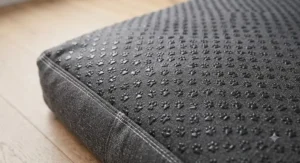
What actually matters: thread denier and material. Nylon and bonded polyester thread resist abrasion and UV breakdown significantly better than standard cotton-poly blends, and this shows up directly in how long stitching holds under repeated flexing. Fabric weight, typically measured in denier for technical fabrics like Oxford weave, correlates strongly with tear resistance — higher denier numbers generally mean a tougher weave, though comfort trades off against this at the very high end. Box-stitched corners, where stitching runs in a reinforcing box or X-pattern at high-stress corner points, genuinely distribute load better than a simple straight seam.
What matters less than the marketing suggests: an extra decorative topstitch line that doesn’t run along an actual structural seam adds negligible durability. Branded fabric names without disclosed technical specifications, like denier count or thread material, tell you little on their own — a “heavy-duty” label with no supporting detail is a claim, not a specification. Waterproofing alone doesn’t indicate seam strength; a bed can be entirely waterproof and still have weak stitching, since these address different failure modes entirely.
The most reliable signal, based on the spec comparison across this list, is a manufacturer being specific about where reinforcement sits and what it’s made from, rather than using “reinforced” as a blanket descriptor applied to the whole product.
Common Mistakes When Buying a Reinforced Seam Dog Bed
Buying purely on price is the most frequent misstep, since the cheapest bed in a size range often cuts corners specifically at stitching quality, which isn’t visible in product photos. A closely related mistake is ignoring your dog’s actual behaviour profile — buying a heavily bolstered premium bed for a puppy who’s still teething front-loads cost onto the exact product type most likely to be damaged during this phase.
Another common error is assuming “orthopaedic” and “durable” are the same claim; a bed can offer excellent joint support through quality memory foam while still having relatively ordinary seam construction, and vice versa. Skipping the first wash before use is a smaller but real mistake, since it delays discovering any factory stitching flaw until you’re outside an easy returns window.
Finally, many owners overlook washing instructions entirely, running beds through high-heat cycles that degrade thread tensile strength faster than the manufacturer intended, then blaming the bed’s construction rather than the washing routine when seams eventually give way.
Long-Term Cost & Maintenance: The Real ROI
A genuinely useful way to compare these beds isn’t sticker price alone, but cost-per-year based on realistic lifespan. A £25 budget bed that needs replacing every four to six months due to seam failure works out considerably more expensive over two years than a £70 bed that reliably lasts that entire period, even before accounting for the hassle of repeat purchases and disposal.
| Tier | Typical Price Range | Realistic Lifespan | Approx. Cost Per Year |
|---|---|---|---|
| Budget flat mats (e.g. Ancol Extreme Dog Bed) | Under £30 | 6-12 months | Roughly £30-£50 |
| Mid-range bolstered (e.g. Bunty Deluxe Dog Bed, Feandrea Orthopaedic Sofa Bed) | £30-£70 range | 12-24 months | Roughly £25-£45 |
| Premium reinforced (e.g. KOPEKS Jumbo Orthopedic Bed, PetFusion Ultimate Memory Foam Bed) | £60-£110 range | 24-48 months | Roughly £20-£35 |
Interpreting the table above, the premium tier generally wins on pure cost-per-year for owners with large, heavy, or destructive dogs, since the higher upfront price is offset by a meaningfully longer working life. Budget beds remain sensible specifically for short-term use cases, like a puppy’s teething phase or a dog recovering from surgery on vet-recommended bedding you don’t mind replacing. Mid-range beds occupy a genuine sweet spot for calmer adult dogs without extreme size or destructive tendencies.
Maintenance costs are worth factoring in too: replacement covers, where available, are typically far cheaper than a whole new bed and extend the usable life of a structurally sound foam core considerably, which is one reason the KOPEKS Jumbo Orthopedic Dog Bed‘s separately washable cover system adds long-term value beyond its headline price.
Safety, Regulations & Your Consumer Rights
UK dog bed fabrics sold on Amazon are generally subject to general product safety requirements, and many listings carry OEKO-TEX Standard 100 certification, which independently tests thread, buttons and trims against a list of over 1,000 regulated chemicals for human and, by extension, pet safety. It’s worth checking for this certification specifically if your dog is a known fabric-chewer, since it offers some reassurance about what they’re being exposed to if a seam does eventually give way.
On the consumer protection side, it’s genuinely useful to know your rights if a reinforced seam dog bed fails prematurely. Under the Consumer Rights Act 2015, goods sold in the UK must be of satisfactory quality, fit for purpose, and durable enough for normal use — and as Which?’s guide to the Consumer Rights Act explains, durability is explicitly considered part of that satisfactory-quality standard, taking into account the product’s price point and how it was advertised. If a mid-range or premium bed splits at the seams within weeks of light, normal use, that’s grounds for a repair, replacement or refund claim against the retailer, separate from any manufacturer warranty.
Keep your order confirmation and photograph any seam failure promptly, since claims within the first 30 days carry the strongest automatic right to reject goods for a full refund, with tiered remedies applying after that window.
Buyer’s Decision Framework
If your dog is under seven months old and still teething, choose a lower-cost, simply constructed bed because premium features will likely be damaged before they’re appreciated. If your dog is a heavy or giant breed over 30kg, choose a bed with a specific seam or zipper warranty because sustained weight is the primary stress your bed will face. If your dog is anxious or likes to burrow, choose a raised-wall or bolstered design with seam reinforcement concentrated at the bolster edges specifically. If you wash bedding weekly due to shedding or muddy walks, choose a bed with branded zippers and thread rated for repeated machine washing. If budget is the primary constraint and your dog is calm and indoors most of the time, a well-reviewed mid-range flat or lightly bolstered bed will likely outlast its price tag’s expectations.
✨ Don’t Miss These Exclusive Deals!
🔍 Take your search for the right reinforced seam dog bed to the next level with these carefully compared picks. Click on any highlighted product above to check current pricing and availability. A properly reinforced bed means fewer 2am stuffing surprises and more genuinely restful sleep for your dog!
Frequently Asked Questions
❓ What is a reinforced seam dog bed?
❓ Do reinforced seams stop puppies chewing through beds?
❓ How long should a good dog bed seam actually last?
❓ Are double-stitched dog beds worth the extra cost?
❓ Can I claim a refund if my dog bed seams split quickly?
Conclusion
A genuinely reinforced seam dog bed isn’t about chasing a buzzword on a product listing — it’s about matching stitch quality, thread material, and seam placement to what your specific dog actually does to a bed day after day. A muddy outdoor dog, a teething puppy, and a heavy senior with joint pain each stress a bed differently, and the seven picks in this guide cover that full range with genuine spec differences rather than interchangeable marketing.
If you take one thing away, let it be this: check where the reinforcement actually sits, not just whether the word appears in the title. A bed with double stitching in the wrong place is barely better than one with none at all, while a well-placed reinforced seam on even a budget bed can outlast a poorly constructed premium one. Match the bed to your dog’s size, behaviour and life stage, follow the maintenance habits above, and know your consumer rights if something does go wrong early.
✨ Ready to Upgrade Your Dog’s Bed?
🐾 Whichever of these seven beds fits your dog best, a properly reinforced seam means fewer replacements, less mess, and a far more settled night’s sleep for everyone in the house.
Recommended for You
- Teething Proof Puppy Bed: 7 Tough Picks That Survive 2026
- Soft Crate Bed for Puppy: 7 Cosy UK Picks for 2026
- Puppy Crate Mattress UK: 7 Best Picks Compared 2026
Disclaimer: This article contains affiliate links. As an Amazon Associate, I earn from qualifying purchases. If you purchase products through these links, we may earn a small commission at no additional cost to you.
✨ Found this helpful? Share it with your friends! 💬🤗
