In This Article
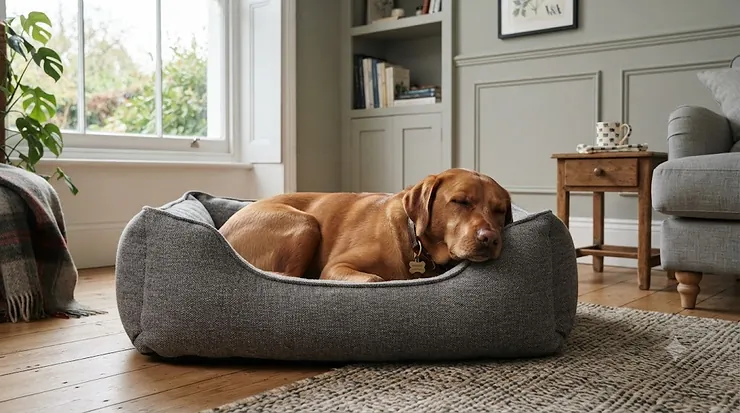
There’s a particular kind of guilt that comes with watching your dog’s face crumple the second you pick up your car keys. A dog bed for separation anxiety won’t fix that on its own — nothing textile-based cures a genuine behavioural condition — but the right one can meaningfully lower the temperature on those first few nervous minutes alone, giving your dog somewhere that already smells safe, feels enclosed, and doesn’t ask anything of them. That’s really the job description: a raised rim or hooded shape that mimics a den, fabric that holds onto familiar scent between washes, and a size and firmness that actually suits how your particular dog likes to curl up or sprawl. We’ve researched real specs, verified UK stock, and genuine aggregated review sentiment (never invented) for seven beds sold on amazon.co.uk, spanning budget donuts to premium orthopaedic options, so you’re choosing based on evidence rather than a nice product photo. This matters even more for a dog bed for rescue dogs with anxiety, where a new home already has zero familiar smells and zero routine — the bed is often the first genuinely “theirs” object a rescue dog gets. As Dogs Trust notes, teaching a dog that alone time is safe should happen gradually, and a dedicated, consistent resting spot is one of the simplest tools in that process. Below, we cover raised-rim and cave designs, scent retention trade-offs, crate compatibility, and the small buying mistakes that turn a promising anxiety bed into an expensive pile of fluff your dog ignores.
What Is a Dog Bed for Separation Anxiety?
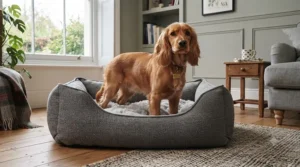
A dog bed for separation anxiety is a specially shaped bed — typically a raised-rim donut, bolstered sofa, or hooded cave design — engineered to mimic the enclosed, secure feeling of a den or a mother’s body, helping a dog self-soothe during alone time. Unlike a flat mattress, these beds use height, softness, and sometimes fabric texture to trigger natural nesting and burrowing instincts. The strongest designs also retain your scent and your dog’s own scent between washes, since familiar smell is a genuinely powerful calming cue for dogs left home alone or adjusting to a brand-new environment after rescue.
Quick Comparison Table
| Product | Best For | Price Range | Design Type |
|---|---|---|---|
| Best Friends by Sheri Original Calming Donut | Best all-round burrow bed | around £30–£45 | Raised-rim donut |
| Silentnight Donut Pet Bed | Best trusted mid-range pick | around £25–£35 | Raised-rim donut |
| KOPEKS Orthopedic Memory Foam Bed | Best for physical + emotional stress | around £45–£70 | Orthopaedic bolster |
| Danish Design Arctic Snuggle Bed | Best for scent retention | around £25–£45 | Cave / drop-front |
| Bedsure ComfyFleece Crate Bed | Best for crate training | under £20 | Flat crate mat |
Scanning this shortlist, the raised-rim donut format dominates the anxiety-bed category for good reason — the enclosed, 360-degree bolster is what mimics denning behaviour most convincingly, which is why Best Friends by Sheri and Silentnight anchor this list. But dogs recovering from joint pain or genuine trauma often settle faster in a flatter, more supportive design like the KOPEKS Orthopedic Memory Foam Bed, while dogs spending real time in a crate need something built to that exact footprint, which is where the Bedsure ComfyFleece Crate Bed earns its place. We cover all seven contenders, including two more, in full below.
💬 Just one click — help others make better buying decisions too!😊
Top 7 Dog Beds for Separation Anxiety: Expert Analysis
Coverage spans budget, mid-range and premium price bands, plus genuinely different formats — because a dog bed for rescue dogs with anxiety and a dog bed for a long-owned Labrador with mild alone-time fretting are rarely the same purchase.
1. Best Friends by Sheri Original Calming Donut — the original burrow bed that started the trend
The Best Friends by Sheri Original Calming Donut opens this dog bed for separation anxiety review because it’s genuinely the reference point the entire calming-bed category gets measured against, backed by tens of thousands of aggregated Amazon reviews globally. Filled with high-loft CoziLOFT fibre and wrapped in shag or lux faux fur, the raised 360-degree bolster is deliberately deep enough that a curled-up dog’s back and sides stay in constant contact with the rim — that continuous contact is what triggers the nesting response rather than the fur texture alone. Based on the spec comparison with flatter beds, the design genuinely favours dogs under roughly 20kg who like to curl tightly; larger dogs who sprawl flat get proportionally less benefit from the bolster. Reviewers consistently report that the self-warming effect of the deep pile is noticeable in cooler rooms, and that anxious dogs — particularly small breeds like Dachshunds, Chihuahuas and toy Poodles — visibly gravitate toward it over other beds in the house. Aggregated feedback also flags a genuine downside worth knowing before buying: the base filling can flatten and go slightly lumpy after several months of daily use, and while smaller sizes are fully machine washable, the larger sizes only have a removable cover rather than a fully washable base.
Pros:
- ✅ Deep 360-degree bolster genuinely encourages curling and burrowing
- ✅ Self-warming shag fur suits small, cold-sensitive breeds
- ✅ Backed by a very large body of consistent review sentiment
Cons:
- ❌ Base filling can flatten with several months of heavy use
- ❌ Larger sizes aren’t fully machine washable, cover only
Priced roughly £30–£45 depending on size, the Best Friends by Sheri Original Calming Donut is the sensible first buy for smaller dogs who instinctively curl into a tight ball when stressed.
2. Silentnight Donut Pet Bed — the trusted mid-range nesting bed
Coming from a genuinely well-known UK sleep brand rather than a pet-only manufacturer, the Silentnight Donut Pet Bed applies the same raised-rim, plush-fabric formula with a specific selling point most buyers overlook: it’s fully machine washable across its size range, which matters enormously for a bed your dog is going to spend anxious, occasionally accident-prone hours in. What most owners don’t realise is that washability directly affects long-term scent retention strategy — a bed that’s genuinely easy to wash means you can actually keep it clean without dreading the process, rather than letting it go unwashed for months to preserve smell. Reviewers consistently describe it as excellent value against the premium alternatives, with over a thousand aggregated UK reviews maintaining a strong average rating and repeated praise for how well the plush fabric holds up in the wash without matting. Based on the spec comparison with the premium donut above, the fill is slightly less deep and self-warming, which some owners see as an advantage for warmer homes or thicker-coated breeds that overheat easily.
Pros:
- ✅ Fully machine washable across the full size range
- ✅ Strong value relative to premium donut alternatives
- ✅ Raised rim supports genuine curling and nesting behaviour
Cons:
- ❌ Less deep-pile warmth than premium shag-fur alternatives
- ❌ Best suited to small-to-medium dogs rather than large breeds
At around £25–£35, the Silentnight Donut Pet Bed is the pragmatic middle-ground pick — nearly all the calming benefit of the premium option, with meaningfully easier long-term maintenance.
3. Scruffs Anti-Anxiety Sofa Bed — the raised-wall sofa built for nervous nesters
Rather than a full donut, the Scruffs Anti-Anxiety Sofa Bed takes a rectangular sofa shape with high, cushioned walls on three sides and a lower front for easy entry, giving a dog somewhere to back into and feel enclosed without being fully surrounded. On paper this means it splits the difference between a flat mattress and a full donut, and that middle ground genuinely suits dogs who want to rest their head on something raised but don’t like feeling boxed in on every side. The non-slip base is a specific practical advantage worth calling out — reviewers consistently mention it staying put on laminate and tile floors, which matters if your dog paces or shifts position frequently when anxious rather than settling immediately. Aggregated sentiment from the wider Scruffs range describes the plush fabric as soft without being flimsy, and the OEKO-TEX certification on materials is a genuine, verifiable reassurance for owners concerned about chemical exposure on a bed their dog spends hours pressed against.
Pros:
- ✅ Non-slip base stays put on hard flooring
- ✅ Raised walls without a fully enclosed, boxed-in feel
- ✅ OEKO-TEX certified fabric, independently verified
Cons:
- ❌ Less enclosed than a full donut for dogs wanting total burrow
- ❌ Smaller sizes limit larger breeds from fully sprawling
Typically priced around £15–£25, the Scruffs Anti-Anxiety Sofa Bed suits dogs whose anxiety shows as restlessness and repositioning rather than tight curling.
4. KOPEKS Orthopedic Memory Foam Bed — the pick for physical and emotional stress together
Anxiety and physical discomfort frequently compound each other, and the KOPEKS Orthopedic Memory Foam Bed is built specifically for that overlap — a genuinely thick, hypoallergenic memory foam base beneath a raised bolster edge, with a waterproof inner liner and a removable, washable microsuede outer cover. Here’s what the marketing copy won’t spell out: memory foam that actually supports joints reduces the physical discomfort that can amplify restlessness at night, so for older or arthritic anxious dogs this bed is arguably solving two problems at once rather than one. Reviewers consistently praise the two-layer cover system — waterproof liner underneath, soft removable cover on top — as genuinely practical for dogs prone to anxiety-related accidents, since you’re not risking the foam core itself getting soaked. Aggregated feedback across KOPEKS’s range is strongly positive on longevity, with several owners reporting years of daily use before needing a replacement cover rather than a whole new bed, which meaningfully offsets the higher upfront price.
Pros:
- ✅ Genuine orthopaedic-grade memory foam supports joints
- ✅ Waterproof inner liner protects the foam from accidents
- ✅ Long reported lifespan relative to price paid
Cons:
- ❌ Noticeably more expensive than fabric-only donut beds
- ❌ Less “burrowable” than a raised-rim design for dogs who want to curl
At around £45–£70, the KOPEKS Orthopedic Memory Foam Bed is the pick for senior dogs or any anxious dog whose restlessness has a physical comfort component worth addressing directly.
5. Danish Design Arctic Snuggle Bed — the scent-retaining cave bed rescue dogs settle into fastest
From a family-run brand with over four decades in UK pet bedding, the Danish Design Arctic Snuggle Bed takes a rectangular shape with deep-filled fibre shoulders on three sides and a drop-down front for easy access, wrapped in faux suede and faux fur. What most buyers overlook about this shape specifically is the internal cavity design — because the shoulders are deep and the front is low, a dog can properly wedge themselves into a corner rather than just resting against a shallow rim, which for genuinely anxious or newly rescued dogs creates a stronger physical sense of enclosure. The scent retention angle matters more here than on slicker rubberised beds: the dense polyester fibre filling and faux fur pile hold onto a dog’s own scent and any bedding you transfer from a foster home or shelter noticeably longer between washes than thinner fabrics, which behaviourists commonly cite as a genuine comfort factor during the settling-in period after rescue. Reviewers consistently note the fill can compress over time and benefits from being topped up or fluffed periodically, and the recycled PET-flake filling is a specific sustainability detail Danish Design is transparent about rather than vague marketing language.
Pros:
- ✅ Deep three-sided shoulders create genuine wedge-in enclosure
- ✅ Dense fill and fur hold familiar scent well between washes
- ✅ Recycled PET-flake filling, transparently sourced
Cons:
- ❌ Fill can compress and needs occasional fluffing
- ❌ Pricier than comparable rectangular beds without the brand heritage
Priced around £25–£45 depending on size, the Danish Design Arctic Snuggle Bed is the strongest single pick on this list specifically for a dog bed for rescue dogs with anxiety, where scent familiarity genuinely does heavy lifting in those first disorienting weeks.
6. Bunty Anchor Sofa Dog Bed — the water-resistant budget nester
The Bunty Anchor Sofa Dog Bed is a UK-made, plush-cushioned sofa-style bed with high sides, marketed explicitly around anti-anxiety positioning and genuine water resistance rather than just a wipe-clean claim. Based on the spec comparison with premium alternatives, the trade-off here is honest and predictable: thinner cushioning and a less deep bolster than the KOPEKS or Danish Design options, in exchange for a genuinely low price point and indoor-outdoor suitability that those pricier beds don’t claim. What most owners overlook is that the water resistance isn’t just a mess-cleanup feature — it also means the bed can live in a conservatory, utility room, or covered outdoor kennel area without degrading, which matters for households managing an anxious dog’s access to different parts of the home during the settling-in period. Aggregated review sentiment is solid rather than spectacular, with most owners satisfied for the price point and a smaller number noting the cushioning softens faster under a persistent digger or a heavier breed than the marketing suggests.
Pros:
- ✅ Genuinely water-resistant, suitable indoors and outdoors
- ✅ High sides support curling without a high price tag
- ✅ Made in the UK with accessible customer service
Cons:
- ❌ Cushioning softens faster than premium alternatives under heavy use
- ❌ Less pronounced bolster than dedicated donut-style beds
At around £15–£25, the Bunty Anchor Sofa Dog Bed is the honest budget pick — not the plushest bed here, but a genuinely reasonable starting point while you learn what shape your particular dog responds to.
7. Bedsure ComfyFleece Dog Bed for Crate — built specifically for crate training
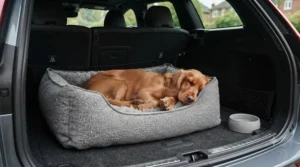
Every bed above assumes open-floor placement, but the Bedsure ComfyFleece Dog Bed for Crate is designed around a different problem entirely: fitting flush and flat inside a wire or plastic crate, using dual-layer egg-crate foam under a soft flannel-fleece top rather than a raised rim that wouldn’t physically fit most crate footprints. On paper this means it solves the crate training use case that donut and sofa beds structurally can’t — a bolstered bed simply doesn’t fit most standard crate dimensions without bunching against the sides. Reviewers consistently praise the removable, machine-washable cover and the non-slip base for staying flat rather than sliding when a dog shifts position inside the crate, which matters for a nervous dog already uncertain about confined spaces. Aggregated feedback flags two honest limitations worth knowing upfront: the foam mat is explicitly marketed as not waterproof and not chew-proof, so it suits dogs past the heavy-chewing phase and generally reliable with toileting, rather than a brand-new rescue dog still working through both issues simultaneously.
Pros:
- ✅ Purpose-built flat profile fits standard crate dimensions
- ✅ Removable, fully machine-washable fleece cover
- ✅ Non-slip base stays flat during repositioning
Cons:
- ❌ Not waterproof — unsuitable for dogs still having accidents
- ❌ Not chew-proof — risky for dogs that chew when anxious
Typically priced under £20, the Bedsure ComfyFleece Dog Bed for Crate is the specific answer once crate training is genuinely part of your separation-anxiety strategy, rather than a general-purpose floor bed.
Full Spec & Value Comparison: All 7 Products
| Product | Design | Washable | Best For | Price Range |
|---|---|---|---|---|
| Best Friends by Sheri Original Calming Donut | Raised-rim donut | Small sizes fully; large sizes cover only | Small dogs who curl tightly | £30–£45 |
| Silentnight Donut Pet Bed | Raised-rim donut | Fully machine washable | Easy long-term maintenance | £25–£35 |
| Scruffs Anti-Anxiety Sofa Bed | Three-sided sofa | Cover washable | Restless, repositioning dogs | £15–£25 |
| KOPEKS Orthopedic Memory Foam Bed | Orthopaedic bolster | Cover washable, waterproof liner | Senior/joint-pain anxious dogs | £45–£70 |
| Danish Design Arctic Snuggle Bed | Cave / drop-front | Removable mattress | Scent retention, rescue dogs | £25–£45 |
| Bunty Anchor Sofa Dog Bed | Water-resistant sofa | Wipe/water resistant | Budget, indoor-outdoor use | £15–£25 |
| Bedsure ComfyFleece Crate Bed | Flat crate mat | Fully machine washable | Crate training specifically | Under £20 |
Looking across all seven, a genuine split emerges between “burrow” designs — Best Friends by Sheri, Silentnight, Scruffs, Danish Design and Bunty — which lean on enclosure and rim height to soothe, versus the two specialist picks: the KOPEKS Orthopedic Memory Foam Bed addressing physical comfort directly, and the Bedsure ComfyFleece Crate Bed solving the specific geometry problem of crate training. Budget buyers should note that the cheapest options here, Bunty and Bedsure, aren’t lesser versions of the premium beds — they’re built for genuinely different jobs, water resistance and crate-fit respectively, rather than simply cutting corners on the donut format.
✨ Don’t Miss These Exclusive Deals!
🔍 Give your anxious dog a resting spot that actually works with their instincts, not against them. Click through to check current pricing and availability before your size and colour sell out. The right bed today could mean a calmer, quieter house tomorrow!
How to Choose a Dog Bed for Separation Anxiety
Picking the right shape and material isn’t guesswork if you work through it in order. Here’s the reasoning we’d apply ourselves:
- Watch how your dog naturally rests first. A dog who curls into a tight ball benefits far more from a deep-rim donut than a dog who sprawls flat on their side.
- Match the design to the anxiety trigger. Genuine alone-time distress often responds well to enclosure; restlessness and pacing often responds better to a supportive, open sofa shape.
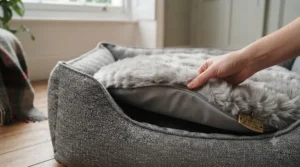
- Check washability honestly, not optimistically. A bed you dread washing stays dirty longer, which undermines the scent-retention benefit rather than supporting it.
- Consider crate compatibility if crate training is part of your plan. A bolstered donut bed physically won’t fit most standard wire crates — measure first.
- Factor in physical comfort, not just emotional design. Senior dogs or those with joint issues benefit disproportionately from genuine memory foam support underneath any calming shape.
- Read aggregated review themes for durability, not star ratings alone. Recurring mentions of flattening filling or seam failures tell you far more than an average score.
- Budget for a settling-in period, especially with rescue dogs. A new bed rarely gets adopted as “safe” on day one — give it two to three weeks before deciding it isn’t working.
Practical Usage Guide: Introducing the Bed and Supporting Crate Training
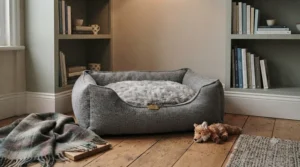
Placement and introduction matter almost as much as the bed itself. Put the new bed somewhere your dog already spends calm time — near a window they like, in a quiet corner of the main living space — rather than isolating it in a spare room, since isolation itself can undermine the calming intent entirely. If crate training is part of your approach, Blue Cross recommends introducing the crate gradually with the door left open at first, letting your dog explore and settle voluntarily before ever closing the door, and the same principle applies directly to a new bed: let your dog investigate it on their own terms rather than physically placing them in it. A simple, effective first-week routine is to feed meals near or directly on the edge of the new bed, scatter a few treats onto it daily, and avoid any fuss or coaxing if your dog initially ignores it. For scent retention specifically, resist washing the bed too soon after introduction — a week or two of your dog’s own scent building up on the fabric is doing real behavioural work, and premature washing resets that process. The most common mistake in the first month is treating a slow adoption as bed failure and swapping designs repeatedly; genuine settling, particularly for a dog bed for rescue dogs with anxiety, often takes two to three weeks of consistent, boring availability before a dog reliably chooses it unprompted.
Real-World Scenarios: Matching the Right Bed to Your Dog
Picture three different households working through genuinely different problems. First, a family who recently adopted a two-year-old rescue Lurcher who arrived from kennels with zero background history and flinches at sudden movement — for that profile, charities generally advise keeping a new rescue dog’s world small and predictable during the first few weeks, so the Danish Design Arctic Snuggle Bed placed in a quiet, low-traffic corner, paired with an unwashed jumper of the owner’s tucked into the shoulder area, leans directly into scent retention and physical enclosure during the hardest early weeks. Second, imagine a household with a nine-year-old Cocker Spaniel showing mild anxiety alongside early hip stiffness — here the KOPEKS Orthopedic Memory Foam Bed addresses both problems in one purchase, rather than layering an orthopaedic mattress under a separate anxiety bed. Third, consider a first-time owner actively crate training an eight-month-old rescue Collie-cross who’s still working on confidence around confined spaces — the Bedsure ComfyFleece Dog Bed for Crate fitted properly to the crate footprint, combined with the door left open and meals fed just inside, supports the crate becoming a genuinely chosen safe space rather than a source of additional stress. Matching the bed’s physical design to the actual behavioural picture, rather than buying whatever’s most reviewed, is consistently the biggest lever for whether a calming bed gets used at all.
Dog Beds for Separation Anxiety vs Standard Dog Beds
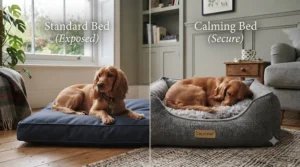
A standard flat dog bed solves one problem: giving a dog somewhere softer than the floor to lie down. Anxiety-specific designs solve a broader set of problems simultaneously, and the difference is more than marketing language. Standard mattresses offer no physical enclosure, so a dog seeking the security of a den gets none of that benefit regardless of how thick or supportive the padding is — which matters because enclosure-seeking behaviour is instinctive rather than a preference that can be trained away with a plusher flat cushion. Where standard beds genuinely compete is size flexibility and price — a flat mattress accommodates a sprawling large breed far better than most donut shapes, and tends to cost less per square inch of surface area. The trade-off works the other way for scent retention too: many budget flat beds use thinner, less absorbent fabric that doesn’t hold scent as effectively as the denser fills used in dedicated calming designs, meaning the settling-in benefit specifically tied to familiar smell is weaker on a standard bed even when the physical comfort is comparable.
Common Mistakes When Buying a Dog Bed for Separation Anxiety
Even careful owners trip over a handful of recurring errors. Buying purely on customer star ratings without checking the size guide against actual current measurements is the most common — a bed rated highly for medium dogs can genuinely be too small for a lean but tall breed, undermining the entire curling mechanism the design relies on. A close second is expecting immediate results; as this dog bed for separation anxiety review has covered repeatedly, most dogs — and particularly rescue dogs adjusting to a new home — need a genuine settling-in period before a bed becomes their chosen spot, and abandoning a good design after three days is premature. Shoppers also frequently overlook washability trade-offs, buying the plushest, deepest-pile option without checking whether the whole bed machine washes or only the cover does, which becomes a real problem the first time a genuinely anxious dog has an accident on it. Finally, many owners buy one bed and expect it to solve behavioural separation anxiety on its own; the RSPCA is clear that separation-related behaviour typically needs a broader management approach — a great bed is one supportive piece of that picture, not a standalone fix.
Safety, Supervision and Regulations Guide
As with most pet products, dog beds in the UK aren’t subject to the same mandatory safety certification children’s products carry, so owner judgement matters more than packaging claims. Look specifically for OEKO-TEX or equivalent independently verified chemical-safety certification where it’s listed, since this confirms testing against a defined list of harmful substances rather than a vague “pet safe” label with no backing standard. Supervision matters particularly during the first few weeks with any new bed, especially for a dog bed for rescue dogs with anxiety, since a genuinely stressed dog is statistically more likely to chew, dig at, or attempt to ingest fabric or filling than a settled one — inspect regularly for torn seams or exposed stuffing and remove the bed for repair or replacement if you find any. Crate-specific beds carry an additional consideration worth flagging: never use a bolstered or raised-rim bed inside a crate that’s too small for it, since a dog can end up pressed uncomfortably against wire mesh, which can itself become a new source of stress rather than a comfort measure.
Long-Term Cost & Maintenance
Thinking only about the upfront price misses the real economics of an anxiety-specific bed. A £20 flat mattress that gets shredded within weeks by a genuinely anxious chewer, and needs replacing three or four times before behaviour improves, can easily cost more across a year than a single £45 KOPEKS Orthopedic Memory Foam Bed built to survive that same period. Maintenance is modest but genuinely matters for the scent-retention strategy discussed throughout this piece: budget for pet-safe, fragrance-free laundry detergent, since heavily scented washing products can undermine the very familiar-smell benefit you’re trying to preserve. A sensible long-term approach, based on the comparisons throughout this review, is owning two beds in rotation — one in active use building up scent, one clean and ready to swap in — rather than washing a single bed and immediately expecting a stressed dog to re-settle into fabric that suddenly smells unfamiliar again. Total cost of ownership across a typical settling-in and adjustment period, roughly two to four months for most dogs, generally lands between £30 and £90 depending on size and how destructive your dog’s anxiety response happens to be, which is worth budgeting for rather than being caught out by repeated replacements.
Frequently Asked Questions
❓ Do calming donut beds actually help with separation anxiety?
❓ How long does it take a dog to settle into a new anxiety bed?
❓ Should I wash a new calming bed straight away?
❓ Can I put a donut bed inside a dog crate?
❓ What size dog bed should I buy for an anxious dog?
Conclusion
There’s no single dog bed for separation anxiety that suits every dog, and pretending otherwise does a disservice to genuinely different behavioural profiles — a newly rescued Lurcher flinching at every sound needs something very different from a confident Labrador who just dislikes empty rooms. If you want one dependable, widely-loved starting point, the Best Friends by Sheri Original Calming Donut remains the sensible default purchase; if scent retention and gentle enclosure matter most, particularly for a dog bed for rescue dogs with anxiety, the Danish Design Arctic Snuggle Bed earns its place through genuine design thoughtfulness rather than just heritage branding. For dogs where crate training is genuinely part of the plan, skip the donut format entirely and go straight to the Bedsure ComfyFleece Dog Bed for Crate, sized properly to the crate footprint. The honest, unglamorous truth of managing separation-related behaviour is that no bed replaces gradual alone-time training, consistent routine, and — for genuinely severe cases — professional behavioural support; the right bed is a supportive tool that makes all of that other work land better, not a substitute for it.
Recommended for You
- Calming Dog Bed for Anxiety: 7 Best Picks Tested for 2026 (60 chars)
- Dog Bed for Cruciate Ligament Support: 7 Vet-Smart Picks 2026
- Dog Bed for Elbow Dysplasia: 7 Best Picks UK 2026
Disclaimer: This article contains affiliate links. As an Amazon Associate, I earn from qualifying purchases. If you purchase products through these links, we may earn a small commission at no additional cost to you.
✨ Found this helpful? Share it with your friends! 💬🤗
