In This Article
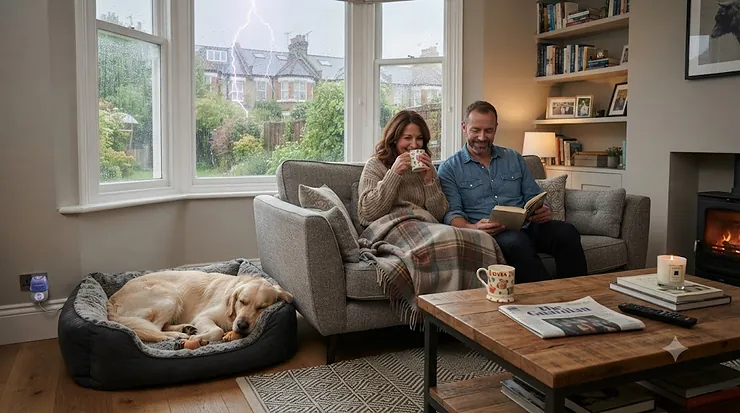
There’s a specific kind of helplessness that comes with watching your dog fold in on themselves the second the sky rumbles. The panting starts, then the pacing, then they’re wedged behind the toilet at 2am shaking like a leaf, and no amount of “it’s okay, it’s okay” seems to reach them. If you’ve landed here searching for a dog bed for thunderstorm anxiety, you already know this scene far too well — and you’re not being dramatic. Noise-related fear in dogs is astonishingly common, with UK welfare charities reporting that the majority of dog owners notice some form of distress during storms or fireworks.
A good calming bed isn’t a miracle cure — nothing sold on a website is — but the right design can genuinely help. Raised rims, deep hoods, and pressure-mimicking walls tap into a dog’s instinct to den, and a den is exactly what a frightened animal is looking for. This guide breaks down seven real, currently available beds across every price point, explains what actually matters in the specs, and shows you how to build a proper safe space around whichever bed you choose. We’ve also woven in advice from the RSPCA and veterinary behaviourists so you’re not just buying a product — you’re building a genuine coping strategy for firework season, storms, and every loud, unpredictable noise in between.
Quick Comparison Table
Before we go deep on all seven, here’s the shape of the market at a glance.
| Product | Style | Best For | Price Range |
|---|---|---|---|
| Bedsure Calming Donut Dog Bed | Open donut | Tightest budget, small-medium dogs | Under £30 |
| Silentnight Donut Pet Bed | Raised-rim donut | Reliable mid-range all-rounder | Low-to-mid £30s |
| YAGE Calming Dog Bed | Enclosed foam-top cave | Dogs who want total darkness | Mid £30s-£40s |
| FurHaven Snuggery Burrow | Adjustable hooded cave | Burrowers who also nap in the open | £30s-£60 |
| PawHut Hooded Cave Bed | Budget cave | Small dogs, tight spaces | £20s-£30s |
| JOYELF Orthopaedic Memory Foam Bed | Bolstered mattress | Senior or large anxious dogs | £45-£75 |
| PetFusion Ultimate Dog Bed | Solid memory foam bolster | Long-term durability, bigger breeds | £50-£90 |
Notice the spread: three donut/open styles, two proper caves, and two orthopaedic bolster beds for dogs whose anxiety is tangled up with joint pain or age. Budget doesn’t map neatly onto quality here — the Bedsure Calming Donut Dog Bed punches well above its price tag, while the pricier orthopaedic options earn their keep through material quality rather than gimmicks. If your dog is young, mobile, and simply noise-sensitive, a donut or cave bed will likely do the job; if they’re older or arthritic, the extra spend on memory foam usually pays for itself in fewer bad nights.
💬 Just one click — help others make better buying decisions too!😊
Top 7 Dog Beds for Thunderstorm Anxiety: Expert Analysis
Every dog panics differently — some want to burrow, some want to feel hugged, some just want somewhere soft and low to the ground. These seven cover all three instincts, from £20-something starter beds to proper orthopaedic investments.
1. Bedsure Calming Donut Dog Bed — best entry point under £30
The raised rim on this one is the whole story: it gives a dog something to press their back against, which mimics the feeling of curling up against a den wall. That’s a small design detail with an outsized psychological payoff for a nervous sleeper. Available in a 50cm size with a removable, zip-off cover, the faux fur surface and OEKO-TEX-certified fabric mean it’s genuinely machine washable rather than “spot clean only” in fine print — a real point of difference at this price. Based on the spec comparison with pricier competitors, the fill here is thinner and will flatten faster under a heavier dog, so this is best suited to small and medium breeds rather than a 30kg Labrador. Reviewers consistently note that it’s an easy first calming bed to trial before committing to something pricier, and that the zip cover survives repeated washes better than expected for the price. What most buyers overlook is that the “50cm” measurement is outer diameter, not usable sleeping space, so measure your dog curled up before ordering.
Pros:
- ✅ Genuinely machine washable zip cover
- ✅ Raised rim gives real chin and back support
- ✅ Low price makes it a low-risk first try
Cons:
- ❌ Fill flattens faster under bigger dogs
- ❌ Usable space smaller than the outer measurement suggests
Priced under £30 in most sizes, this is the bed to buy if you want to test whether a calming design actually helps your dog before spending more.
2. Silentnight Donut Pet Bed — best trusted-brand all-rounder
Coming from the UK’s most recognised sleep brand carries real weight here, and the trust shows up in the reviews rather than just the branding. Aggregated Amazon UK feedback for this bed shows well over a thousand ratings sitting around 4.4 stars, which is an unusually consistent result for a category full of hit-and-miss donut beds. The plush faux-fur top and firm, raised rim combine to give 360-degree nesting support, and the whole thing — cover and base — goes through the washing machine, which matters enormously if your anxious dog also happens to have accidents during storms. Based on the spec comparison with the budget Bedsure option above, the fill density here holds its shape noticeably longer, justifying the modest price jump. What the spec sheet won’t tell you, but reviewers note repeatedly, is that the sizing runs slightly generous, so many owners size down from what they’d normally buy. For a medium dog who wants a supportive, huggable rim rather than full enclosure, this is the safest mid-range bet on the list.
Pros:
- ✅ Strong, consistent review history at scale
- ✅ Fully machine washable, cover and base
- ✅ Raised rim holds shape well over time
Cons:
- ❌ Sizing runs generous — check the chart carefully
- ❌ No hood, so light-sensitive dogs may still want a blanket over the top
Sitting in the low-to-mid £30s, it’s the bed we’d point a first-time anxious-dog owner toward if they want a name they recognise.
3. YAGE Calming Dog Bed — best for total darkness seekers
Some dogs don’t just want support, they want to disappear, and that’s exactly what this design is built for. The dome-shaped top is filled with foam for structural support, so it stands up on its own rather than collapsing the moment your dog climbs in, creating a genuinely enclosed, cave-like pocket of darkness. The padded sides double as a headrest, which matters more than it sounds — a dog resting their chin on a firm, elevated edge settles faster than one with nothing to lean into. Honestly, this is one for patient owners: it ships vacuum-packed and can take a couple of days to fully fluff up to its intended shape, so don’t judge it on day one. Aggregated customer feedback highlights the softness and warmth retention as standout points, particularly for short-haired or thin-coated breeds that get cold as well as scared during storms. What most buyers overlook is that the fully-enclosed top, while great for noise-and-light blocking, means less airflow, so it’s not the ideal pick for a dog who runs hot or lives somewhere without reliable heating control.
Pros:
- ✅ Fully enclosed top blocks light almost completely
- ✅ Firm padded sides double as a headrest
- ✅ Excellent warmth retention for cold sleepers
Cons:
- ❌ Needs a few days to decompress and fluff up
- ❌ Less airflow than open designs — can run warm
Expect to pay somewhere in the mid-£30s to £40s range, positioning it firmly as a mid-tier upgrade over a basic donut.
4. FurHaven Snuggery Burrow Bed — best two-in-one flexibility
What makes this one clever is that it isn’t locked into one shape. A removable support tube inside the hood lets you choose: keep it propped up for a proper cave effect, or pull it out and let the top fold down into a soft blanket layer instead. That flexibility means the same bed can work for a dog going through a rough firework week and then flatten back out for normal summer napping. It’s available across four sizes from 45cm right up to 111cm, so it genuinely scales from a Chihuahua to a Labrador, which is rarer than you’d think in the cave-bed category. The orthopaedic foam base is a meaningful upgrade over the thin filling in most cave beds, giving older joints some real cushioning underneath the anxiety-focused design. Based on the spec comparison with the fixed-hood YAGE above, this is the more versatile option if you’re not sure your dog will take to full enclosure — you can always let the hood down and try again later. Reviewers with multiple dogs frequently mention their pets actually competing for space in it, which is about as strong an endorsement as a cave bed can get.
Pros:
- ✅ Convertible hood suits dogs who are unsure about caves
- ✅ Scales from toy breeds to large dogs
- ✅ Orthopaedic foam base adds genuine joint support
Cons:
- ❌ Larger sizes are a genuine investment, not a budget buy
- ❌ Support tube can work loose and need repositioning
Prices climb from the £30s for the smallest size up toward £60 for the largest, so match the size carefully to your dog rather than rounding up “just in case.”
5. PawHut Hooded Cave Bed — best budget cave-style option
If the fully-foam-domed YAGE bed feels like overkill, this is the softer, cheaper alternative that still delivers the core den effect. The hood is fabric rather than structural foam, so it drapes more loosely, but for small dogs that just want somewhere dim and quiet to hide, that’s often plenty. Aggregated UK marketplace listings put it consistently at 4 stars and above, which is respectable for a budget cave bed where corners are usually cut somewhere. Here’s what to weigh: the trade-off for the lower price is a hood that can sag over time and needs the odd reshape or plump-up, rather than holding a rigid dome shape indefinitely. It suits toy and small breeds — chihuahuas, dachshunds, small terriers — far better than anything mid-sized or larger, since the enclosed pocket simply isn’t built to scale. For owners who want to test whether their dog responds to a cave-style bed at all before spending £40-plus on the FurHaven, this is a sensible, low-commitment way in.
Pros:
- ✅ Genuine enclosed-cave feel at a budget price
- ✅ Lightweight and easy to move between rooms
- ✅ Good fit for toy and small breeds specifically
Cons:
- ❌ Fabric hood sags with heavy use
- ❌ Not sized for medium or large dogs
Typically priced in the £20s to low £30s, it’s one of the more affordable ways to trial the cave-bed format.
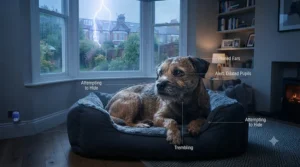
6. JOYELF Orthopaedic Memory Foam Dog Bed — best for senior or large anxious dogs
Anxiety and joint pain feed off each other more than owners realise — a stiff, aching dog startles more easily and settles less quickly after a fright, which is exactly what this bed is built to address. The egg-crate memory foam base is designed to relieve pressure on sore hips and shoulders, while raised bolster sides give a dog something firm to rest their chin against, borrowing the same psychological trick as a donut bed’s rim but on a mattress built for durability. A waterproof inner liner sits beneath the corduroy cover, which is close to essential for senior dogs who may have the odd accident during a bad storm. Based on the spec comparison with the donut-style beds earlier on this list, the difference here is longevity: memory foam holds its supportive shape for years rather than months, which matters if you’re buying for an older dog who needs consistency, not novelty. Aggregated reviews for this style of orthopaedic sofa bed report strong satisfaction — commonly cited around 4.7 stars across roughly a thousand-plus ratings — with particular praise for how it holds up under bigger, heavier dogs without collapsing flat.
Pros:
- ✅ Genuine pressure-relieving memory foam, not cheap fill
- ✅ Waterproof liner protects against accidents
- ✅ Holds supportive shape far longer than standard foam
Cons:
- ❌ Heavier and bulkier — not easy to move between rooms
- ❌ Premium price compared with basic donut or cave beds
Sitting in the £45-£75 bracket depending on size, this is the pick for dogs whose anxiety and physical comfort needs overlap, particularly seniors.
7. PetFusion Ultimate Dog Bed — best long-term investment for bigger breeds
This one earns its premium price through raw material quality rather than novelty features, which is exactly what you want in a bed that’s going to see daily use for years. The base is solid, high-density memory foam rather than the shredded or loose fill used in cheaper beds, so it won’t clump, shift, or develop a permanent dog-shaped dent within a few months. Bolstered sides give the same chin-rest, den-adjacent security as the JOYELF above, and the removable cover is water-resistant on top of being washable, a small but genuinely useful detail for anxious dogs prone to drooling or pacing-induced accidents during storms. What most buyers overlook is that solid memory foam, while more expensive upfront, is also considerably more resistant to the kind of destructive digging and nesting behaviour some anxious dogs display — cheaper shredded-fill beds tend to get torn open far more easily. Reviewers consistently flag the non-slip base as a standout for hardwood or tiled floors, where lighter beds tend to skid when a panicked dog jumps in fast.
Pros:
- ✅ Solid high-density memory foam resists clumping
- ✅ Water-resistant, washable cover
- ✅ Non-slip base stays put on hard flooring
Cons:
- ❌ Among the pricier options on this list
- ❌ Solid foam construction makes it heavier to lift and wash
Expect to pay somewhere between £50 and £90 depending on size — a genuine investment, but one built to outlast several cheaper beds bought in succession.
Practical Usage Guide: Setting Up Your Dog’s Safe Space
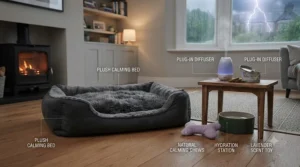
Buying the right bed is only half the job — where and how you introduce it matters just as much. Start by placing the bed somewhere with minimal exterior wall exposure; an interior room, or at least a spot away from windows, does more to dampen sound and flashing light than most owners expect. During the first 30 days, resist the urge to force your dog into the bed — instead, scatter treats around and inside it, and let curiosity do the work. A common mistake is introducing the bed for the first time during an actual storm, when your dog is already too stressed to explore anything new calmly; instead, build the association on a completely ordinary, quiet day. Layer in a worn item of your clothing or a blanket that already smells familiar, since scent does a lot of the calming heavy lifting that the bed’s shape alone can’t manage. For cave-style beds specifically, check the hood’s support structure every few weeks — foam domes and support tubes shift with regular use, and a sagging hood loses much of its den-like effect. Finally, pair the bed with background noise, such as a radio or white noise, particularly in the weeks leading into firework season, so the bed becomes one part of a wider calming routine rather than a stand-alone fix.
Real-World Scenarios: Matching the Bed to Your Dog
The city flat dweller with a noise-sensitive rescue. If you’re renting a flat near a main road, with fireworks and sirens a near-weekly occurrence, an enclosed option like the FurHaven Snuggery Burrow or YAGE Calming Dog Bed makes the most sense — the hood blocks both light and a meaningful amount of ambient sound, and a rescue dog with an unknown history often responds strongly to a fully enclosed, den-like space they can control access to.
The senior dog with arthritis who’s grown more storm-anxious with age. As dogs get older, noise sensitivity frequently worsens alongside declining mobility and joint pain, and the two compound each other. Here, the JOYELF Orthopaedic Memory Foam Bed is the obvious fit — the pressure relief helps the physical side while the bolstered edges provide the same chin-rest comfort a younger dog might get from a donut bed’s rim.
The budget-conscious first-time owner testing the waters. If you’re not yet sure whether a calming bed will actually help your particular dog, there’s no shame in starting cheap. The Bedsure Calming Donut Dog Bed or PawHut Hooded Cave Bed both sit under £30 and let you gauge your dog’s response — do they gravitate toward it during a storm, or ignore it entirely — before committing to a £50-plus orthopaedic upgrade.
Top Anti-Anxiety Dog Beds Under £35
If budget is the deciding factor, three beds on this list clear the bar comfortably. The Bedsure Calming Donut Dog Bed usually lands under £30 and remains the strongest all-round pick for small-to-medium dogs who just need a supportive rim to nest against. The PawHut Hooded Cave Bed sits in a similar bracket and is the better choice specifically for toy breeds that want full enclosure rather than an open donut shape. The Silentnight Donut Pet Bed occasionally dips into this range depending on size and current stock, and given its unusually strong review history, it’s worth checking before assuming it’s out of budget. What all three share is genuine machine washability — a non-negotiable at this price point, since a calming bed that can’t be cleaned quickly becomes a bed nobody wants to use. The trade-off across all three is durability under heavier or more destructive dogs; if your dog weighs over 20kg or tends to dig and scratch at bedding when anxious, budget beds will need replacing sooner than a mid-range or premium pick.
How to Choose a Calming Dog Bed for Noise Phobia
- Start with your dog’s instinct, not your own preference. Some dogs want to burrow and hide (cave beds); others want to feel supported without full enclosure (donut beds). Watch how your dog naturally seeks comfort during a mild fright — under furniture suggests a cave, pressed against a wall or sofa suggests a donut with a firm rim.
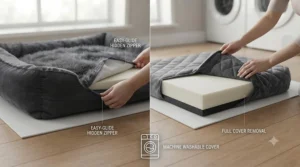
- Prioritise washability over looks. A frightened dog may pant, drool, or have accidents. Anything that isn’t fully machine washable will become unusable fast.
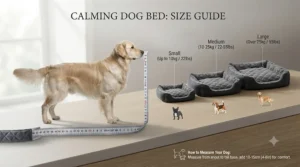
- Match size to genuine curled-up dimensions, not breed averages. Measure your dog nose-to-tail while curled, then check the bed’s usable inner space, not just its outer footprint.
- Consider joint health alongside anxiety. Older or larger dogs benefit disproportionately from memory foam over standard polyester fill, since physical discomfort amplifies noise-related stress.
- Think about placement before you buy shape. A bulky cave bed is wasted in a small hallway; measure the intended spot first.
- Don’t expect the bed alone to solve severe cases. For dogs showing extreme distress — self-injury, destructive escape attempts, prolonged panic — a bed is one tool among several, and a vet consultation should come first.
- Buy once, buy well, where the budget allows. A £60 bed that lasts three years works out cheaper than three £20 beds that get destroyed or worn out within a season.
Enclosed Cave Beds vs Open Donut Beds
| Factor | Cave Beds (FurHaven, YAGE, PawHut) | Donut Beds (Bedsure, Silentnight) |
|---|---|---|
| Best For | Dogs who hide or burrow when scared | Dogs who press against something for support |
| Light Blocking | Strong — hood fully covers | Minimal — fully open top |
| Airflow | Reduced, can run warm | Better ventilation |
| Typical Size Range | Toy to large (varies by model) | Small to extra-large |
| Ease of Cleaning | Slightly more fiddly hood shape | Straightforward, flat cover |
The honest answer to “which is better” is that it depends entirely on what your dog does when frightened, not on which style photographs better. A dog that already dives under the bed or behind furniture during storms is telling you they want a cave; a dog that presses into a corner of the sofa or against your legs is telling you they want a supportive rim, not a roof. Owners sometimes buy a cave bed assuming it must be the “more effective” calming option because it looks more secure, only to find their dog won’t set a paw inside it — the enclosed feeling that comforts one dog can feel trapping to another, particularly older dogs or those with any history of being confined unpleasantly.
Understanding Noise Phobia: What’s Actually Happening
Noise phobia isn’t your dog being dramatic — it’s a genuine, physiologically driven fear response. Dogs hear frequencies and volumes far beyond human range, meaning a thunderclap or firework bang that startles you is often significantly more intense from their perspective. According to the RSPCA, fireworks can produce sound between 120 and 175 decibels, a level capable of causing real physical discomfort in an animal’s more sensitive ears, on top of the psychological fear response. That combination — physical discomfort plus unpredictability — is why noise phobia so often escalates rather than fading on its own; a dog that isn’t supported through it tends to become more reactive with each fresh trigger, not less. A calming bed interrupts one part of that cycle by giving a consistent, reliable retreat, but it works best alongside the wider management RSPCA guidance recommends: closing curtains, muffling sound with music or television, and never punishing or forcing a dog out of hiding when they’re frightened.
Preparing for Firework Season: A Problem → Solution Guide
Problem: Your dog starts pacing and panting the moment fireworks begin, well before you’re ready. Solution: introduce the calming bed weeks before firework season starts, not on the night itself, so it’s already a familiar, positive space rather than a brand-new object appearing during a crisis.
Problem: The bed is ignored entirely once fireworks actually start. Solution: pair it with something that smells familiar — an unwashed jumper, an existing blanket — and place it away from windows; a bed alone in an exposed, bright, loud spot won’t feel safe regardless of design.
Problem: Your dog tries to escape the garden or bolt out the front door mid-panic. This is a safety issue beyond what any bed can solve alone — the BSAVA recommends environmental modifications such as securing exits and providing an enclosed hiding place as part of a broader management plan, alongside veterinary-guided behavioural support for severe cases.
Problem: Your dog seems worse this year than last. Noise phobias typically worsen with repeated unmanaged exposure rather than improving naturally with age. If distress is escalating year on year, a bed and a quiet room are good management tools, but they’re not a substitute for speaking to your vet about desensitisation or, in severe cases, short-term medication.
Problem: Multiple pets, one safe space, and competition for the “good” spot. Solution: rather than buying one large bed and hoping they share, consider two smaller budget beds (the Bedsure or PawHut options work well here) so neither animal has to negotiate for comfort during an already stressful event.
Common Mistakes When Buying an Anti-Anxiety Dog Bed
The single most common mistake is buying based on how a bed looks in product photography rather than how your specific dog seeks comfort — a beautifully photographed cave bed is wasted money if your dog has never once tried to hide under furniture. A close second is ignoring washability; anxious dogs pant, drool, and occasionally have accidents, and a bed that can’t go straight into the washing machine will end up smelling and unused within weeks. Buyers also frequently oversize “just to be safe,” not realising that an oversized bed, particularly a cave style, loses the snug, pressure-mimicking effect that makes these designs work in the first place — too much empty space around a dog can feel exposed rather than secure. Another frequent error is expecting results on the very first stormy night; most dogs need repeated positive exposure to a new bed before it becomes their automatic retreat, and abandoning a decent bed after one unsuccessful storm is premature. Finally, some owners treat the bed as a complete solution and skip the wider environmental changes — closed curtains, background noise, a calm owner — that research consistently shows matter just as much as the bed itself.
Long-Term Cost & Maintenance
A £25 donut bed replaced every six months across three years works out at roughly £150, while a well-built £70 orthopaedic bed that lasts the full three years is, on paper, the cheaper option — and that’s before accounting for the fact that cheaper fills also tend to flatten and lose their supportive shape faster, quietly reducing the calming benefit long before the fabric actually wears out. Maintenance-wise, budget donut and cave beds typically need a wash every one to two weeks with regular use, more often during a bad patch of storms, while denser memory foam bases can usually stretch to monthly washes of the cover alone, since moisture and odour don’t penetrate the foam as readily. Watch for flattening as the real end-of-life signal rather than visible wear — a bed that’s lost its rim height or hood structure has also lost most of its psychological calming effect, even if the fabric still looks presentable. For households with multiple anxious pets, buying two mid-range beds tends to outlast one oversized bed that gets fought over and consequently wears twice as fast.
Safety, Standards & When to See a Vet
Look for OEKO-TEX certification or equivalent chemical-safety labelling on any bed your dog will spend hours pressed against, particularly cheaper imported options — this confirms the fabric and fill have been tested against a substantial list of regulated and unregulated substances that could otherwise cause skin irritation. Beyond the bed itself, it’s worth understanding where “management” ends and “medical” begins. According to guidance from Cornell University’s College of Veterinary Medicine, signs of fear can range from mild trembling and panting through to genuine escape attempts, and dogs showing the more severe end of that range typically need more than a calming bed alone. If your dog shows self-injury, destructive escape attempts, prolonged distress lasting hours after the noise stops, or has never once responded to a safe space no matter how well set up, that’s a signal to speak to your vet about desensitisation training or short-term medication rather than trying yet another bed. A calming bed is genuinely useful first-line management for mild-to-moderate cases; it isn’t a substitute for veterinary input in severe ones.
FAQ
❓ Do calming dog beds actually work for thunderstorm anxiety?
❓ What is the best dog bed for noise phobia specifically?
❓ How much should I spend on an anti-anxiety dog bed?
❓ Are enclosed cave beds better than open beds for anxious dogs?
❓ How do I prepare my dog's bed for firework season?
Conclusion
There’s no single “best” dog bed for thunderstorm anxiety, because there’s no single way a frightened dog behaves — some burrow, some lean, some just want somewhere soft and low to the ground away from the window. What the seven beds in this guide share is a genuine design intention behind the calming claim, whether that’s a raised rim, a structural hood, or pressure-relieving memory foam, rather than just a “calming” label slapped on a standard cushion. Start by watching how your dog already seeks comfort during a mild scare, match that instinct to a bed style rather than a price tag, and build the wider routine — quiet room, familiar scent, closed curtains — around it. Done properly, and given a little patience through those first few nights, a well-chosen bed becomes one of the most reliable, low-effort tools you have for getting your dog through storm and firework season with a little more peace, and a little less shaking behind the toilet.
✨ Don’t Miss These Exclusive Deals!
🔍 Take your dog’s comfort to the next level with these carefully selected calming beds. Click on any highlighted product to check current pricing and availability, and give your anxious pup a genuine safe space to retreat to this storm and firework season!
Recommended for You
- Dog Bed for Separation Anxiety 2026: 7 Picks That Actually Help
- Calming Dog Bed for Anxiety: 7 Best Picks Tested for 2026 (60 chars)
- Dog Bed for Cruciate Ligament Support: 7 Vet-Smart Picks 2026
Disclaimer: This article contains affiliate links. As an Amazon Associate, I earn from qualifying purchases. If you purchase products through these links, we may earn a small commission at no additional cost to you.
✨ Found this helpful? Share it with your friends! 💬🤗
