In This Article
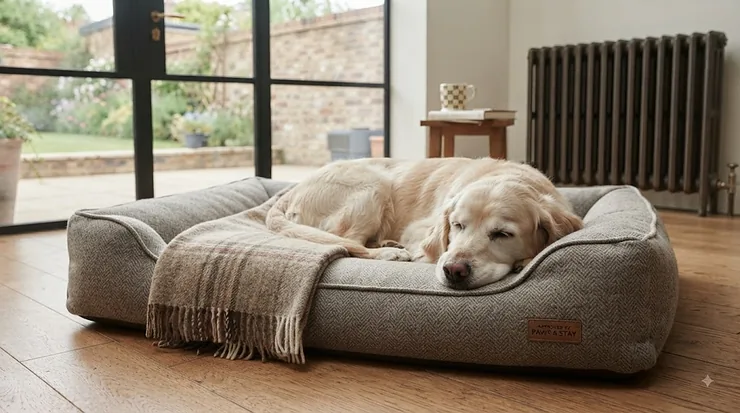
Watch a dog with a dodgy elbow try to get comfortable on a thin, flat cushion and you’ll see the problem in about four seconds flat: circle, circle, flump, wince, shuffle, sigh. That restless routine is usually the first sign that a dog bed for elbow dysplasia isn’t just a nice-to-have — it’s doing actual medical work. Elbow dysplasia is one of the most common causes of front-leg lameness in large and giant breeds, and it rarely announces itself with a single dramatic limp. More often it’s a slow accumulation of stiffness, reluctance to jump into the car, and a dog who used to flop down anywhere now hunting for the one spot that doesn’t hurt.

This guide exists because “orthopaedic” has become one of the most abused words in pet retail. Slap it on a £20 cushion with an inch of standard foam and, technically, nobody’s stopped you. We’ve dug into real specifications, aggregated genuine review sentiment, and current veterinary guidance to work out which beds genuinely take pressure off an aching elbow joint — and which are just wearing the label. You’ll get seven real products spanning budget to premium, a breakdown of exactly how much cushioning depth actually matters, and practical advice for large breed puppies who are still developing the joints in question.
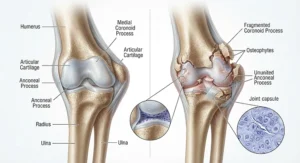
Before we get into product picks, it’s worth understanding what we’re actually managing. Elbow dysplasia causes pain, swelling and progressive arthritis, and it typically shows up in dogs between five and eighteen months old, most often in medium and large breeds such as Labradors, German Shepherds and Rottweilers, according to PDSA’s clinical guidance on elbow dysplasia. A supportive bed won’t reverse joint damage — nothing short of veterinary treatment does that — but it removes one entirely controllable source of daily discomfort, and that matters more than most owners realise.
Quick Comparison Table
Before the deep dive, here’s the shape of the market at a glance. Prices below are indicative ranges only — always check the current price on the product page, since Amazon pricing shifts constantly.
| Bed | Foam Type | Thickness | Price Range | Best For |
|---|---|---|---|---|
| Big Barker | Solid orthopaedic base foam | 7″ | around £180-£300 | Heavy large-breed elbow support |
| KOPEKS Jumbo Orthopedic | Solid memory foam | 7″ | around £70-£110 | Mid-budget deep cushioning |
| PetFusion Ultimate Memory Foam Lounge | Solid memory foam | 4″ | around £55-£140 | No-shred, consistent support |
| The Dog’s Bed Orthopedic | High-stability memory foam | 4″-7″ (size dependent) | around £100-£180 | Multi-joint condition management |
| Bedsure SupportMax Oval Bolster | Supportive foam base | 3″-4″ | around £35-£70 | Budget bolster with neck support |
| Brindle Waterproof Memory Foam Bed | Layered memory + support foam | 4″ | under £40 | Crate-size budget pick |
| Amazon Basics U-Shape Bolster | Orthopaedic foam | 3″ | around £25-£45 | Cheapest genuine joint-support option |
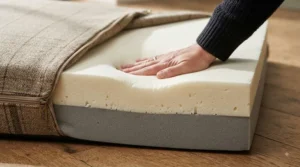
Looking at this spread, the pattern is fairly clear: thickness and price move together almost in lockstep, which makes sense given that memory foam is the single most expensive input in any bed. The Big Barker and The Dog’s Bed Orthopedic sit at the top because they use solid (not shredded) foam blocks deep enough to stop a 35kg dog from “bottoming out” and feeling the floor underneath. Budget picks like the Amazon Basics U-Shape Bolster and Brindle Waterproof Memory Foam Bed trade depth for price, which is fine for smaller or lighter dogs but worth watching closely if you own a heavyweight breed.
💬 Just one click — help others make better buying decisions too!😊
Top 7 Dog Beds for Elbow Dysplasia: Expert Analysis
We’ve picked seven real, currently available beds spanning budget, mid-range and premium price points, plus a mix of construction styles — solid foam blocks, shredded foam, and bolster designs — so there’s a genuine option whatever your dog’s size, weight and your own budget looks like.
1. Big Barker — vet-referenced support for heavy large breeds
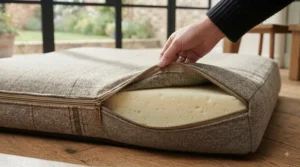
The standout feature here is the 7-inch solid foam base, which is unusually deep for a mass-market bed and specifically engineered to stop heavy dogs sinking through to the floor beneath. The brand states that independent university research found its foam structure reduces pressure on hips and elbows compared with standard bedding — a claim worth noting rather than treating as gospel, but it lines up with what orthopaedic vets generally say about deep, high-density foam versus shallow padding. The foam is CertiPUR-US certified, which at minimum confirms it’s been tested for harmful chemicals, and the cover is machine washable with a separate waterproof liner sold to protect the core.
Based on the spec comparison with everything else on this list, this is squarely aimed at dogs over 25kg — Labradors, German Shepherds, Bernese Mountain Dogs — where thinner foam genuinely can’t cope with sustained body weight on one joint. Reviewers consistently report that dogs who previously struggled to settle noticeably calm down within the first week or two, and a recurring theme in aggregated feedback is that the foam holds its shape for years rather than flattening the way cheaper polyfoam does. The most common complaint concerns the roll-packed shipping, with some buyers noting the foam takes several days to fully expand after unboxing.
Pros:
- ✅ Genuinely deep, solid foam rather than shredded fill
- ✅ CertiPUR-US certified foam for chemical safety
- ✅ Cover holds up well to repeated machine washing
Cons:
- ❌ Sits at the premium end of this list on price
- ❌ Foam needs several days to fully expand after delivery
Price-wise, expect to be in the £180-£300 range depending on size, which is a genuine investment — but for a dog over 30kg with confirmed elbow dysplasia, the value case is straightforward: a bed that lasts five years without flattening works out cheaper per year than replacing a £40 cushion every six months.
2. KOPEKS Jumbo Orthopedic — thick memory foam with pillow headrest
What jumps out first is the 7-inch memory foam base topped with an additional 2.5-inch pillow section, giving dogs a genuine headrest rather than forcing them to prop their chin on the mattress edge. In practice, that headrest matters more than it sounds — dogs with elbow dysplasia often shift weight awkwardly to avoid loading a sore joint, and a raised pillow section gives the neck and shoulders somewhere supportive to rest without twisting the front legs underneath them. The bed ships with both a waterproof inner liner and a removable micro-suede outer cover, so accidents don’t reach the actual foam.
This one suits owners who want near-premium depth without the Big Barker price tag, and it’s a sensible pick for dogs in the 20-40kg range rather than genuine giants. Reviewers frequently mention the foam holding its shape well after the first few months — a common failure point for cheaper “memory foam” beds that use a thin topper over standard polyfoam. On the flip side, a recurring theme in review sentiment is that the largest size runs heavy and awkward to move once a dog is lying on it, which is worth factoring in if you rearrange furniture often.
Pros:
- ✅ 7-inch solid foam plus separate pillow headrest section
- ✅ Waterproof liner included as standard, not an add-on
- ✅ Foam retains shape well over extended use
Cons:
- ❌ Heavy and awkward to reposition once assembled
- ❌ Micro-suede cover shows wear faster than heavier fabrics
Priced around £70-£110 depending on size and colour, this sits comfortably in the mid-range bracket — a sensible middle ground for owners who want real orthopaedic depth without committing to premium pricing straight away.
3. PetFusion Ultimate Memory Foam Lounge — solid 4-inch foam, no shredded filling
The defining feature is right there in the name: this is a genuinely solid 4-inch memory foam block, not the shredded foam fill that many “orthopaedic” beds substitute to cut costs. That distinction matters more than marketing copy usually admits — shredded foam clumps and shifts over months of use, gradually losing its ability to distribute weight evenly, whereas a solid block keeps its supportive shape until it eventually degrades as a whole unit. The bolster sides use recycled fill rather than more memory foam, which keeps the price sensible while still giving dogs something to rest their head against.
Based on the spec sheet, this suits medium to large dogs who need genuine pressure relief but don’t need giant-breed depth — think Golden Retrievers, Border Collies or Springer Spaniels managing early-stage elbow dysplasia rather than dogs over 40kg. Aggregated review sentiment is strongly positive on comfort and support, with owners of arthritic dogs frequently describing the difference as noticeable within days; one recurring theme in customer feedback is that dogs actively seek this bed out over other resting spots in the house, which is about as strong a behavioural signal as you’ll get. The main criticism relates to the cover’s zip placement, which some owners find fiddly during washing.
Pros:
- ✅ Solid memory foam block, not shredded or clumping fill
- ✅ Water-resistant, tear-resistant outer cover
- ✅ Strong aggregated review sentiment on comfort for arthritic dogs
Cons:
- ❌ Zip placement on the cover is awkward during washing
- ❌ Bolster sides use recycled fill rather than memory foam
Expect a price range of roughly £55-£140 depending on size, with the smaller sizes edging toward genuinely affordable and the X-Large climbing toward premium territory — solid mid-range value either way.
4. The Dog’s Bed Orthopedic — built specifically for hip and elbow dysplasia
The standout claim here is specificity: this bed is explicitly designed and marketed for dogs managing hip and elbow dysplasia, arthritis and osteochondritis, rather than being a general-purpose bed with “orthopaedic” bolted on as an afterthought. It uses high-stability memory foam inside a waterproof protective inner, with a durable, machine-washable outer cover and a separate waterproof mattress protector to catch accidents before they reach the foam core. It’s also positioned as a sensible preventative measure for younger dogs of breeds known to be predisposed to joint conditions — a reasonable framing given how early elbow dysplasia symptoms typically begin.
What most buyers overlook about this model is the sheer size range: available from small through to XXL, it genuinely scales with a dog rather than forcing large-breed owners into a single oversized option. That flexibility, paired with fourteen colour choices, has made it a popular pick among owners managing multiple joint conditions at once rather than elbow dysplasia in isolation. The trade-off is price — this sits at the higher end of the mid-range bracket even at smaller sizes, which is worth weighing if budget is a primary concern.
Pros:
- ✅ Purpose-built for hip and elbow dysplasia specifically
- ✅ Machine-washable cover plus separate waterproof protector
- ✅ Full size range from small through to XXL
Cons:
- ❌ Pricier than most competitors even at smaller sizes
- ❌ Limited independent long-term durability data available
Prices typically start from around £100 and climb toward £180 for larger sizes, positioning this as a premium-adjacent pick that leans on its condition-specific design rather than raw thickness alone.
5. Bedsure SupportMax Oval Bolster — budget-friendly 360° neck support
The headline feature is the full 360-degree bolster ring, which supports a dog’s neck and shoulders from every angle rather than just one side — useful for dogs who curl differently depending on which elbow is bothering them that day. The base uses a supportive foam layer rather than premium memory foam, which keeps the price down considerably while still lifting a dog off a hard floor. The cover is water-resistant and removable, with a non-slip base that stops the bed sliding on laminate or tile.
Here’s what the spec sheet won’t tell you outright: this is a genuinely sensible entry point for owners managing a mild or early-stage joint issue, or for smaller large-breed dogs like Springer Spaniels and Border Collies, rather than a long-term solution for a 40kg Rottweiler with advanced arthritis. Reviewers consistently praise the value for money and the 360° support shape, describing dogs settling into it more readily than flat cushions. A recurring complaint in aggregated feedback concerns the foam flattening somewhat faster than premium memory foam beds — an expected trade-off given the price point.
Pros:
- ✅ Full 360° bolster supports the neck from any angle
- ✅ Non-slip base works well on hard flooring
- ✅ Strong value at a genuinely accessible price point
Cons:
- ❌ Foam flattens faster than premium memory foam options
- ❌ Less suitable for dogs over roughly 35kg long-term
At around £35-£70 depending on size, this is a strong budget-to-mid pick — genuinely useful joint support without the premium price tag, provided expectations match the price.
6. Brindle Waterproof Memory Foam Bed — best crate-size pick under £50
The standout here is genuine layered construction in a compact, crate-friendly footprint: two inches of orthopaedic memory foam sits on top of two inches of high-density support foam, giving four total inches of cushioning despite the bed’s smaller dimensions. A waterproof polyurethane layer beneath the fabric protects against accidents, and the zippered velour cover is fully machine washable. It’s specifically designed to fit inside standard dog crates, which matters for owners whose dog spends part of the day crated for safety during recovery or exercise restriction.
What most buyers overlook about compact beds like this is that a smaller footprint doesn’t automatically mean worse joint support — the layering here punches above its price point precisely because it uses genuine memory foam rather than cheap polyfoam padding. Reviewers consistently note the fit inside standard crates as a major selling point, and aggregated sentiment around durability is solid for a bed at this price. The main limitation, unsurprisingly, is size — this isn’t built for giant breeds, and larger dogs will need to size up considerably or look elsewhere on this list.
Pros:
- ✅ Genuine two-layer memory foam construction, not a thin topper
- ✅ Fits standard dog crates precisely
- ✅ Machine washable, non-skid zippered cover
Cons:
- ❌ Not suitable for genuinely large or giant breeds
- ❌ Interior foam pad itself isn’t washable, only the cover
Priced under £40 for most crate sizes, this is one of the clearest examples on this list of real orthopaedic value at a genuinely budget price — ideal for smaller dogs or as a crate-specific second bed alongside a larger lounge bed elsewhere in the house.
7. Amazon Basics U-Shape Bolster — cheapest genuine memory-foam option
The defining feature is straightforward: a U-shaped bolster design with an orthopaedic foam base, sold at one of the lowest price points on this entire list while still using genuine supportive foam rather than loose stuffing. The three-sided bolster gives dogs a head-rest option on either side plus the back, and the cover is removable and washable, with a non-skid bottom that keeps it in place on hard floors.
Based on the spec comparison against everything above, this is the sensible starting point for owners who suspect a joint issue but haven’t yet had it confirmed by a vet, or for lighter dogs — Cocker Spaniels, younger Collies — where a full 7-inch premium bed would be overkill. Aggregated review sentiment is generally positive relative to the price, with the main praise centring on genuine comfort improvement compared to older, flatter beds being replaced. The honest caveat, and it’s a significant one, is that at this price the foam is noticeably thinner than the premium options on this list, so it won’t provide the same long-term pressure relief for a heavy or severely affected dog.
Pros:
- ✅ Genuinely low price while still using real orthopaedic foam
- ✅ Three-sided bolster gives flexible resting positions
- ✅ Removable, washable cover with a non-slip base
Cons:
- ❌ Foam depth is noticeably thinner than premium picks here
- ❌ Less suitable as a sole bed for advanced joint disease
At roughly £25-£45 depending on size, this is the most accessible entry point on the list — a sound choice for early management or as a second bed, rather than the primary bed for a dog with confirmed, advanced elbow dysplasia.
Practical Usage Guide: Setting Up Your Dog’s Joint Support Bed
Buying the right bed is only half the job — where and how you set it up genuinely affects how much good it does. Start with placement: put the bed away from direct radiators and cold external walls, since dogs with joint pain benefit from consistent warmth, and a bed positioned in a draughty hallway undoes a chunk of the foam’s benefit before your dog even lies down. Hard flooring underneath matters too — a non-slip base only helps if the floor itself isn’t slick, so consider a thin rubber-backed mat under the bed on laminate or tile.
In the first thirty days, watch for two common mistakes. The first is leaving a brand-new memory foam bed in its packaging too long before use — most beds need 24-72 hours to fully expand, and dogs placed on a not-yet-expanded bed sometimes reject it outright, wrongly labelled “doesn’t like it” when really it just hasn’t finished inflating. The second is over-washing the cover in the early weeks; while covers are machine washable, washing weekly rather than as-needed accelerates fabric wear and fading well before the foam core shows any age at all.
For maintenance, rotate and fluff shredded-foam beds every couple of weeks to stop clumping, and for solid-foam beds, flip the mattress (where the design allows) every month or two to even out compression from a dog’s preferred sleeping position. Vacuum the surface weekly to control hair and dander, and check waterproof liners every few months for small tears — a compromised liner lets moisture reach the foam core, which is where mould and odour problems genuinely start.
Real-World Scenarios: Which Bed Fits Your Dog?
The senior Labrador with confirmed arthritis. A 32kg, nine-year-old Labrador with X-ray-confirmed elbow arthritis needs maximum pressure relief and doesn’t need to be lifted especially high off the floor. The Big Barker or The Dog’s Bed Orthopedic make the most sense here — both offer genuine depth and are specifically positioned around managing existing joint disease rather than general comfort.
The budget-conscious owner with a young Springer Spaniel. A 20kg Springer showing early stiffness after exercise, with no confirmed diagnosis yet, doesn’t need a £250 bed. The Bedsure SupportMax Oval Bolster or Amazon Basics U-Shape Bolster offer sensible, genuinely supportive entry points while you monitor symptoms and book a vet check.
The flat-dweller with a crated Border Collie recovering from surgery. Post-surgical recovery often means crate rest, and floor space is at a premium. The Brindle Waterproof Memory Foam Bed fits standard crates precisely while still delivering genuine layered foam support during the critical early recovery weeks.
Problem → Solution: Common Elbow Dysplasia Bedding Mistakes
Problem: the bed is too thin and the dog still feels the floor. Solution — check the actual foam thickness in the listing, not just the word “orthopaedic.” Anything under 3 inches of genuine foam is unlikely to help a dog over 25kg; step up to a 4-7 inch solid foam bed like the KOPEKS Jumbo Orthopedic or PetFusion Ultimate Memory Foam Lounge.
Problem: the dog avoids the new bed entirely. Solution — give memory foam 24-72 hours to expand fully before introducing your dog, and place familiar bedding or a worn item of clothing on top for the first few days to encourage use.
Problem: the foam flattens within a few months. Solution — this usually signals cheap polyfoam sold under an “orthopaedic” label rather than genuine memory foam. Look for CertiPUR-US certification or explicit memory foam density claims, as seen on the Big Barker and KOPEKS Jumbo Orthopedic.
Problem: accidents or drooling are damaging the foam core. Solution — add a separate waterproof liner if the bed doesn’t already include one; several beds on this list, including the KOPEKS Jumbo Orthopedic and The Dog’s Bed Orthopedic, ship with one as standard.
Problem: the bed slides around on hard flooring. Solution — check for a genuine non-slip rubberised base rather than a printed “grip” pattern on fabric, and consider a thin anti-slip mat underneath as extra insurance.
✨ Ready to Give Your Dog’s Elbows a Break?
🔍 Take the guesswork out of joint support — click through to any highlighted bed above to check current pricing, sizing and availability. A properly supportive bed is one of the simplest, most immediate changes you can make to your dog’s daily comfort.
What Is a Dog Bed for Elbow Dysplasia?
A dog bed for elbow dysplasia is a supportive orthopaedic bed built with deep, high-density or memory foam that distributes a dog’s weight evenly across bony pressure points — particularly the elbows, shoulders and hips — rather than concentrating pressure on the joint itself the way thin, flat cushions do. It won’t cure the underlying condition, but it removes a major, entirely fixable source of daily discomfort.
How to Choose a Dog Bed for Elbow Dysplasia
- Confirm your dog’s weight and size first. Foam that comfortably supports a 15kg Cocker Spaniel will compress flat under a 40kg Rottweiler within weeks — always size up rather than down if you’re between measurements.
- Check actual foam thickness, not marketing language. Look for a specific measurement (4-7 inches for medium-large dogs) rather than trusting the word “orthopaedic” alone.
- Prioritise solid foam over shredded fill for heavier dogs. Solid blocks distribute weight more evenly and resist clumping better over time than shredded foam, which matters most for dogs over 25kg.
- Look for a genuine waterproof liner, not just a water-resistant cover. A liner protects the foam core itself, which is the expensive, hard-to-replace part of any orthopaedic bed.
- Consider your flooring. Non-slip rubberised bases matter far more on laminate, tile or wood than on carpet, where slipping is rarely an issue.
- Factor in washing practicality. A removable, machine-washable cover isn’t optional for a dog managing a chronic condition — accidents and shedding are part of the picture.
- Match your budget to the severity of the diagnosis. Mild, early-stage stiffness rarely justifies a £250 bed; confirmed, advanced arthritis usually does.
Dog Bed for Elbow Dysplasia in Large Breeds: What Changes?
Large breeds change the maths considerably. A dog bed for elbow dysplasia in large breeds needs to handle sustained weight of 25-45kg without the foam compressing down to nothing within the first year, which is precisely where budget beds tend to fail fastest — thin polyfoam simply can’t recover its shape under that kind of sustained load night after night. It’s also worth noting that elbow dysplasia disproportionately affects large and giant breeds in the first place; Labrador Retrievers, Golden Retrievers, German Shepherds, Bernese Mountain Dogs and Rottweilers are consistently over-represented in veterinary caseloads, a pattern confirmed by large-scale UK veterinary data collected through the Royal Veterinary College’s VetCompass elbow disease study.
For genuinely large dogs, the Big Barker and KOPEKS Jumbo Orthopedic are the strongest picks on this list — both use solid 7-inch foam bases specifically engineered around sustained heavy-breed weight rather than general comfort. Sizing matters just as much as foam depth here: a large dog curled awkwardly to fit a too-small bed puts uneven strain right back onto the affected elbow, undoing much of the bed’s benefit. As a rule of thumb, measure your dog fully stretched out, nose to tail, and add 15-20cm in every direction before choosing a size.

Cushioning Depth: How Thick Does the Foam Need to Be?
Cushioning depth is the single most misunderstood spec in this entire category, and it’s worth being specific rather than vague about it. For small dogs under 10kg, 2-3 inches of genuine foam is generally adequate. Medium dogs in the 10-25kg range need 3-4 inches to avoid bottoming out. Large breeds from 25-40kg genuinely need 4-7 inches of solid foam — anything less and a dog’s elbow will still make contact with the firm base layer or the floor beneath during normal sleeping positions. Giant breeds over 40kg benefit most from the deepest options on this list, such as the 7-inch base used in the Big Barker.
Here’s what the spec sheet won’t tell you, but veterinary physiotherapists frequently note in practice: cushioning depth interacts with a dog’s sleeping position. Dogs who sleep curled tend to concentrate weight over a smaller surface area than dogs who sprawl flat, meaning a curled sleeper with a joint condition often needs proportionally more depth than the weight chart alone would suggest, since all that pressure is loading through a much smaller contact point.
Top Joint Support Dog Beds Under £50
Budget shouldn’t mean abandoning genuine joint support altogether — it just means being more selective about construction. Of the seven beds reviewed above, the Brindle Waterproof Memory Foam Bed and Amazon Basics U-Shape Bolster both deliver real memory or orthopaedic foam under the £50 mark, while the smaller sizes of the Bedsure SupportMax Oval Bolster frequently land in the same bracket depending on current pricing.
| Bed | Foam Depth | Typical Price | Best For |
|---|---|---|---|
| Amazon Basics U-Shape Bolster | 3″ orthopaedic foam | around £25-£45 | Small-medium dogs, early-stage stiffness |
| Brindle Waterproof Memory Foam Bed | 4″ layered memory foam | under £40 | Crate use, smaller breeds |
| Bedsure SupportMax Oval Bolster | 3″-4″ supportive foam | around £35-£70 | Budget bolster support, 360° neck relief |
Looking at this table, the pattern holds: none of these three match the raw depth of the premium picks, but all three use genuine supportive or memory foam rather than the loose polyester stuffing found in truly bottom-tier beds. For a dog under 25kg managing mild to moderate symptoms, any of these three represents legitimate value rather than a compromise purely driven by price.
Elbow Joint Pressure: Why Standard Beds Make It Worse
Elbow joint pressure is the mechanical crux of this entire topic. When a dog with elbow dysplasia lies on a thin, flat cushion, their body weight concentrates almost entirely through the bony point of the elbow — there’s no give, no distribution, just direct load straight onto already-inflamed cartilage and bone. Over time, that repeated pressure doesn’t just cause discomfort in the moment; it can contribute to callusing, skin irritation, and a dog subconsciously avoiding rest altogether because lying down has become genuinely unpleasant.
Memory foam and high-density orthopaedic foam work by spreading that same body weight across a much wider surface area, meaning the elbow itself bears a fraction of the direct load it would on a hard or thin surface. This is precisely the mechanism referenced across veterinary literature on osteoarthritis management, including detailed clinical descriptions of elbow joint pathology in the Merck Veterinary Manual’s coverage of elbow dysplasia, which notes that affected dogs commonly show stiffness after rest and pain on joint manipulation — both of which supportive bedding can meaningfully ease, even though it can’t address the underlying joint pathology itself.
Large Breed Puppies and Joint Support Bedding
Large breed puppies occupy an unusual middle ground in this whole discussion, because elbow dysplasia often begins developing during the rapid growth phase, well before a dog reaches adult size. Symptoms frequently start between five and eighteen months old, meaning a puppy showing intermittent front-leg stiffness isn’t “just clumsy” — it’s genuinely worth a veterinary check rather than assuming they’ll grow out of it.
For large breed puppies, orthopaedic bedding serves a slightly different purpose than it does for a diagnosed adult dog: it’s as much preventative comfort as active management. A growing puppy’s joints are under considerable mechanical stress simply from rapid weight gain, and a supportive surface for rest genuinely helps, even absent a confirmed diagnosis. That said, avoid buying the largest possible size purely to “size up” for adult growth — a bed too large for a puppy’s current frame doesn’t provide the contained, supportive feel that encourages proper resting posture, and most brands on this list offer a size range specifically to avoid that mismatch, including the The Dog’s Bed Orthopedic, which scales from small through to XXL.
Orthopaedic Beds vs Standard Cushion Beds
The difference between a genuine orthopaedic bed and a standard cushion bed comes down to foam density and recovery, not appearance — the two can look almost identical in a product photo. Standard cushion beds typically use low-density polyester fibre fill or basic foam that compresses under weight and springs back only partially, gradually forming a permanent dip exactly where the dog’s heaviest pressure points land. Over months, that dip becomes a groove that actively concentrates pressure rather than distributing it, which is the opposite of what a dog with elbow dysplasia needs.
Orthopaedic beds, by contrast, use high-density or memory foam engineered specifically to resist that permanent compression. Memory foam responds to body heat and weight by conforming closely around a joint rather than simply flattening beneath it, then recovers its shape once the dog moves. In practice, this means an orthopaedic bed continues doing its job for years, whereas a standard cushion bed’s usefulness for a joint condition often degrades within months. The cost difference reflects that gap directly — you’re paying for foam that keeps working, not just foam that feels soft on day one.
Common Mistakes When Buying a Dog Bed for Elbow Dysplasia
The most frequent mistake is buying on the word “orthopaedic” alone without checking actual foam thickness or type — as covered above, this label carries no regulatory meaning and is applied inconsistently across the market. A close second is under-sizing, often driven by trying to save space or money, which forces a dog into an awkward curled position that can load the affected elbow unevenly rather than relieving pressure from it.
A third common error is assuming a higher price automatically means better joint support; while there’s a general correlation, some mid-range beds like the PetFusion Ultimate Memory Foam Lounge deliver genuinely solid foam construction at a lower price point than premium alternatives with similar specifications. Finally, many owners skip checking for a washable cover and waterproof liner, only to discover months later that the bed can’t be properly cleaned without damaging the foam core — a problem that’s entirely avoidable by checking the listing carefully before buying.
Long-Term Cost & Maintenance
Thinking in cost-per-year rather than upfront price changes the value picture considerably. A £40 standard cushion bed that flattens and needs replacing every four to six months works out to roughly £80-£120 per year, and that’s before factoring in the reduced joint support during the months it’s already sagging. A £200 solid-foam orthopaedic bed that genuinely lasts three to five years works out closer to £40-£65 per year — cheaper in the long run, and delivering consistent support the entire time rather than degrading support in the final months before replacement.
Maintenance costs are modest across the board: replacement covers for most beds on this list run £15-£35, considerably cheaper than replacing the whole bed once a cover wears out first. Waterproof liners, where sold separately, typically cost £10-£20 and are worth buying proactively for any dog prone to accidents or drooling, since they protect the expensive foam core that represents the bulk of the bed’s total cost.
Safety, Regulations & Compliance Guide
There’s no specific UK regulation governing pet bed foam density or the use of the word “orthopaedic,” which is precisely why the label gets applied so loosely across the market — it functions as marketing language rather than a certified standard. What you can check for is general product safety certification, such as CertiPUR-US foam testing (used by beds including the Big Barker), which confirms the foam has been independently tested for harmful chemicals and emissions rather than simply trusting a brand’s own claims.
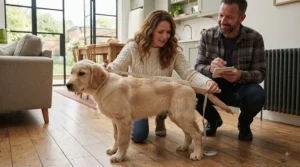
On the veterinary side, if you suspect elbow dysplasia rather than having a confirmed diagnosis, a bed change should complement — never replace — a proper veterinary assessment. Breed-specific screening exists precisely because this condition is significantly hereditary; the Kennel Club’s elbow dysplasia scoring scheme, run jointly with the British Veterinary Association, exists to help breeders and owners understand and manage the condition’s genetic risk factors across predisposed breeds. If your dog shows persistent lameness, reluctance to exercise, or stiffness that doesn’t ease with rest, book a vet appointment rather than relying on bedding changes alone.
FAQ
❓ Can a dog bed help with elbow dysplasia?
❓ What is the best dog bed for a dog with elbow dysplasia?
❓ How thick should a memory foam dog bed be for joint problems?
❓ Is memory foam better than standard foam for joint pain?
❓ Do large breed puppies need an orthopaedic bed?
Conclusion
Choosing a dog bed for elbow dysplasia isn’t really about chasing the fanciest label on the packaging — it’s about matching genuine foam depth and construction to your dog’s actual size, weight and stage of joint disease. The seven beds covered here span a real budget range, from the Amazon Basics U-Shape Bolster at under £45 through to the Big Barker at the premium end, and every single one uses genuine supportive or memory foam rather than the loose fibre padding that dominates the bottom tier of this market.
If your dog is a heavier large breed with confirmed elbow dysplasia, lean toward the deepest solid-foam options — the Big Barker, KOPEKS Jumbo Orthopedic, or The Dog’s Bed Orthopedic. If you’re managing early symptoms on a tighter budget, the Bedsure SupportMax Oval Bolster, Brindle Waterproof Memory Foam Bed and Amazon Basics U-Shape Bolster all offer genuine, honest value. Whatever you choose, remember that bedding is one part of a wider management plan — weight control, appropriate exercise and veterinary guidance all matter just as much as what your dog sleeps on.
✨ Give Your Dog’s Joints the Support They Deserve
🔍 Browse the full lineup above and pick the bed that matches your dog’s size, weight and budget. A properly supportive bed is one of the easiest changes you can make today.
Recommended for You
- Dog Bed for Hip Dysplasia: 7 Best Orthopaedic Picks
- Dog Bed for Cruciate Surgery Recovery: 7 Best Picks for 2026
- Medical Grade Dog Bed Reviews 2026: 7 Vet-Informed Picks Ranked
Disclaimer: This article contains affiliate links. As an Amazon Associate, I earn from qualifying purchases. If you purchase products through these links, we may earn a small commission at no additional cost to you.
✨ Found this helpful? Share it with your friends! 💬🤗
