
In This Article
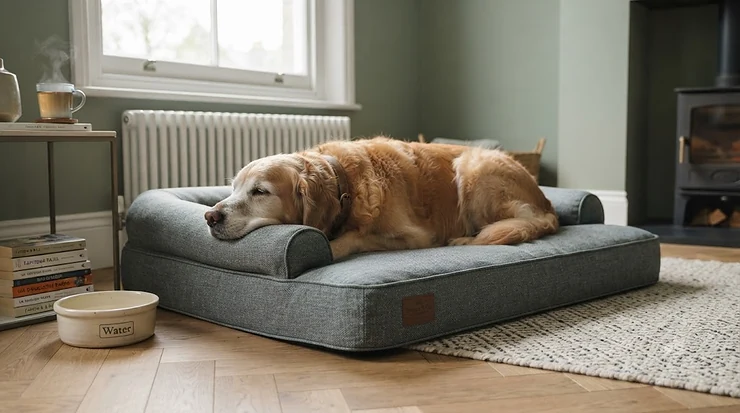
If you’ve ever watched an older dog wince their way up off a threadbare cushion, you already understand why medical grade dog bed reviews are suddenly everywhere. A medical grade dog bed is a supportive sleeping surface — usually built from high-density foam or veterinary-grade fleece — designed to cushion pressure points, ease joint strain, and aid recovery after surgery or injury, rather than simply offering somewhere soft to flop. It’s the difference between a bed that looks cosy in a product photo and one that’s actually doing something useful while your dog sleeps.

Here’s the thing nobody tells you at the pet shop counter: not every bed labelled “orthopaedic” earns that label. Some are little more than a fancy cushion with a firmer sounding name and a higher price tag. Others genuinely change how a dog moves the next morning. Sorting the two apart matters enormously if you’re caring for a senior dog with arthritis, a working breed prone to hip dysplasia, or a patient recovering from cruciate ligament surgery.
We’ve spent time digging through real specifications, aggregated customer feedback, and UK veterinary guidance to put together this comparison — because, as the RSPCA notes in its guidance on choosing dog beds, dogs need somewhere they can stretch out, curl up, and rest without disturbance, and getting that surface wrong has real welfare consequences. Below you’ll find seven genuinely available beds from budget to premium, a breakdown of what “medical grade support bed for dogs” actually means in practice, and a proper look at how a recovery dog bed differs from a standard orthopaedic one. Let’s get into it.
Quick Comparison Table
Before the deep dive, here’s a scannable snapshot of all seven beds side by side. Each one earns its spot for a different reason — some for budget-friendliness, others for pure clinical-grade support.
| Bed | Foam/Fill Type | Price Range | Best For |
|---|---|---|---|
| Petlife Vetbed Original | Veterinary-grade fleece pile | under £35 | Whelping, post-op recovery, crate use |
| Bedsure Orthopedic Dog Bed | Egg-crate CertiPUR-US foam | £35-£55 | Budget joint support |
| Amazon Basics U-Shape Bolster Dog Bed | Polyester-fill bolster | under £35 | First-time buyers, mobility-limited dogs |
| JOYELF Memory Foam Dog Bed | Solid memory foam base + PP cotton bolsters | £45-£65 range | Anxious or den-loving dogs |
| The Dog’s Bed Orthopaedic | Dual-layer high-density memory foam | £65-£130 range | Arthritis, hip/elbow dysplasia |
| KOPEKS Jumbo Orthopedic Dog Bed | 7-inch memory foam with headrest | £75-£115 range | Large and giant breeds |
| PetFusion Ultimate Memory Foam Lounge | Solid (non-shredded) memory foam | £60-£95 range | Owners wanting a no-flatten guarantee |
Looking at the spread, there’s a clear pattern: the beds under £55 rely on egg-crate or shredded foam and polyester bolsters, which cushion but don’t fully support a heavy or arthritic frame long-term. The £65-plus tier switches to solid, high-density memory foam layered over a firmer base — the construction genuinely associated with better weight distribution. If your dog is young, healthy, and just wants somewhere soft, the budget tier is fine; if they’re managing a diagnosed joint condition, the mid-to-premium tier is where the real support lives.
💬 Just one click — help others make better buying decisions too!😊
Top 7 Medical Grade Dog Beds: Expert Analysis
Right, let’s get into the specifics. Each of these products is genuinely available to UK buyers, and we’ve paired every feature with what it actually means for a dog lying on it for twelve-plus hours a day.
1. Petlife Vetbed Original — the fleece vets actually use
Before you dismiss fleece as “not proper orthopaedic,” hear this out. Petlife Vetbed has been fitted into UK veterinary practices for over two decades, and it’s not there for looks. The deep, heat-retaining pile sits on a rubberised, non-slip backing that drains liquid straight through rather than absorbing it — a genuinely clever bit of engineering for anyone dealing with incontinence or a dog fresh out of theatre. Available in pre-cut sizes or as a roll you trim yourself, it slots into crates, car boots, and post-op recovery pens without fuss.
Here’s the honest trade-off: Vetbed isn’t cushioning in the memory-foam sense — there’s no thick supportive core underneath, just fleece over a thin rubber base — so on a hard floor it won’t relieve pressure the way a foam mattress will. What it does brilliantly is hygiene and warmth, which matters enormously in the first days after surgery when a dog can’t move much and accidents happen. Reviewers consistently describe it as remarkably durable through repeated washing, with the pile holding its loft rather than matting flat, and vet nurses often recommend it specifically for whelping boxes and recovery crates.
Pros:
- ✅ Genuinely used in UK veterinary practices, not just marketed as such
- ✅ Drains liquid through to a washable backing — ideal post-surgery
- ✅ Machine washable and remarkably slow to wear out
Cons:
- ❌ No thick supportive core for arthritic joints on hard floors
- ❌ Needs pairing with a firmer base bed for full orthopaedic benefit
Prices sit comfortably under £35 for most crate sizes, making the Petlife Vetbed Original one of the cheapest genuinely clinical products on this list — excellent value if you’re using it as recovery bedding rather than a everyday joint-support mattress.
2. Bedsure Orthopedic Dog Bed — best budget entry point
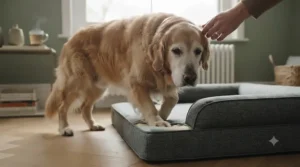
The Bedsure Orthopedic Dog Bed built its reputation on being the bed people buy when they want “something better than a cushion” without committing to premium pricing. Inside is CertiPUR-US certified egg-crate foam — the ridged, contoured type you’ll recognise from human mattress toppers — wrapped in a four-sided bolster that gives dogs several head-resting options depending on how they curl up.
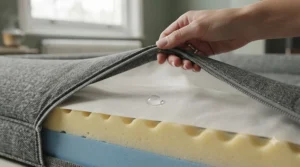
The egg-crate structure is the key thing to understand here: those ridges create air pockets that reduce heat build-up and offer a gentler, more forgiving surface than flat foam, but they compress more easily under sustained weight than the solid blocks used in premium beds. In practice that means it’s a genuinely comfortable everyday bed for a healthy dog, or a reasonable stopgap for mild stiffness, but it’s not the bed we’d reach for post-surgery or for a dog with diagnosed hip dysplasia. The waterproof liner underneath the foam is a smart inclusion at this price point, protecting against the kind of accidents that ruin cheaper beds within weeks.
Pros:
- ✅ CertiPUR-US certified foam at a genuinely low price
- ✅ Waterproof inner liner protects against spills and accidents
- ✅ Four-sided bolster suits multiple sleeping positions
Cons:
- ❌ Egg-crate foam compresses faster than solid memory foam
- ❌ Less suited to dogs with diagnosed joint conditions
Sitting in the £35-£55 range, the Bedsure Orthopedic Dog Bed delivers strong value for money for a healthy, active dog, though owners managing a joint condition should budget for something firmer.
3. Amazon Basics U-Shape Bolster Dog Bed — simplest option for mobility-limited dogs
There’s a particular kind of usefulness in a bed that just gets out of the way, and that’s exactly what the Amazon Basics U-Shape Bolster Dog Bed offers. The three-sided design leaves the front completely open, which sounds like a minor detail until you’ve watched a stiff-hipped senior dog struggle to step over a high bolster edge. For dogs with reduced mobility, that open front genuinely removes a daily obstacle.
The foam itself is described as orthopaedic rather than memory foam — worth flagging, because it won’t contour to the body the same way. What it does provide is firmer, more consistent support than a standard stuffed cushion, preventing the “bottoming out” sensation where a dog’s hips sink through to the floor. It’s a sensible first step up from a basic bed rather than a clinical-grade product, and the neutral grey colourway is a small but appreciated detail for anyone tired of garish pet accessories dominating the living room.
Pros:
- ✅ Open-front design suits dogs with limited mobility
- ✅ Firmer base than standard polyester-filled beds
- ✅ Backed by Amazon’s straightforward returns policy
Cons:
- ❌ Not true memory foam, so less body-contouring support
- ❌ Bolster padding compresses over time with heavy dogs
At under £35, this is one of the most accessible entry points into orthopaedic-style support, and a sound choice for first-time buyers testing whether their dog even prefers a firmer surface before spending more.
4. JOYELF Memory Foam Dog Bed — best for anxious, den-loving dogs
The JOYELF Memory Foam Dog Bed consistently earns an Amazon’s Choice badge, and the reasoning becomes obvious once you understand canine denning instinct. Many dogs feel more secure with something to rest their head or back against — it’s a hardwired preference, not just a comfort quirk — and JOYELF’s generously padded PP-cotton bolsters lean directly into that, creating a nest-like enclosure around a solid memory foam base.
What makes this one worth a dedicated mention is the combination: solid memory foam underneath for genuine joint support, paired with the psychological reassurance of raised sides. Reviewers consistently report that older dogs with diagnosed arthritis settle more readily on this bed than on flatter alternatives, and several UK buyers specifically mention the robust zipper on the removable cover surviving repeated washing without the seams giving way — a common failure point on cheaper bolster beds. The waterproof internal liner adds a second layer of protection that’s genuinely useful for senior dogs prone to occasional accidents.
Pros:
- ✅ Solid memory foam base rather than shredded fill
- ✅ Bolster design suits anxious or security-seeking dogs
- ✅ Durable zippers hold up through repeated washing
Cons:
- ❌ Raised bolsters can be awkward for very stiff-jointed dogs to enter
- ❌ Runs smaller than some competitors at the same price point
Priced in the £45-£65 range, the JOYELF Memory Foam Dog Bed strikes a genuinely useful balance between orthopaedic support and behavioural comfort — worth the premium over pure budget options if your dog is both achy and anxious.
5. The Dog’s Bed Orthopaedic — the veterinary-approved gold standard
If there’s a bed on this list that most closely resembles what you’d find recommended in a UK veterinary practice, it’s The Dog’s Bed Orthopaedic. This UK-designed product uses a dual-layer construction — roughly 5cm of premium-grade orthopaedic memory foam sitting on a firmer support base — specifically engineered for dogs managing hip dysplasia, elbow dysplasia, arthritis, or post-surgical recovery.
What separates this from the mid-tier bolster beds is the foam’s response to body heat: it’s genuinely heat-sensitive, moulding to your dog’s shape rather than simply compressing under weight and springing back once they move. That distinction matters clinically, because pressure that’s evenly redistributed rather than just cushioned is what actually protects vulnerable joints and reduces the risk of pressure sores in dogs who spend long periods lying down. Replacement covers are sold separately, which extends the bed’s usable life well beyond beds where a worn cover means buying the whole thing again. Pet owners frequently credit this bed with visibly improved mobility in aging dogs, and it’s explicitly marketed as suitable both for prevention in joint-prone breeds and for active recovery support.
Pros:
- ✅ Dual-layer construction specifically engineered for joint conditions
- ✅ Heat-responsive foam moulds precisely to body shape
- ✅ Replacement covers sold separately extend usable lifespan
Cons:
- ❌ Sits at a noticeably higher price point than mid-tier options
- ❌ Larger sizes are bulky and less practical for small living spaces
Spanning roughly £65 to £130 depending on size, The Dog’s Bed Orthopaedic is priced like a genuine medical investment rather than a home accessory — and for a dog with a confirmed joint diagnosis, the spec sheet backs that price up.
6. KOPEKS Jumbo Orthopedic Dog Bed — best for large and giant breeds
Large-breed owners know the specific frustration of beds that simply aren’t built to hold real weight without flattening within months. The KOPEKS Jumbo Orthopedic Dog Bed addresses that head-on with seven inches of pressure-relieving memory foam — noticeably thicker than most competitors — built with a headrest that particularly benefits older large dogs who find it harder to lift themselves off a flat surface.
The thickness isn’t just marketing padding. A heavier dog needs more foam depth before their weight compresses through to the firm base underneath; thinner beds that work fine for a 10kg terrier will bottom out under a 40kg Labrador within weeks. KOPEKS’ two water-resistant zippered covers — one on the foam itself, one on the outer fabric — are a genuinely practical detail for larger dogs who are statistically more likely to have joint-related incontinence as they age. The anti-slip rubber base is a small but appreciated addition for anyone whose dog has ever gone skidding across hard flooring trying to settle.
Pros:
- ✅ Seven-inch foam depth suited to genuinely large body weights
- ✅ Double waterproof liner system protects the foam core
- ✅ Anti-slip base prevents sliding on hard flooring
Cons:
- ❌ Considerable bulk makes it impractical for smaller homes
- ❌ Premium thickness pushes it toward the higher end of the price range
At around £75-£115, the KOPEKS Jumbo Orthopedic Dog Bed earns its price through sheer material volume — this is a bed built around the physics of supporting genuine bodyweight, not just marketed as if it were.
7. PetFusion Ultimate Memory Foam Lounge — best solid-foam guarantee against flattening
The PetFusion Ultimate Memory Foam Lounge takes a slightly different construction approach worth calling out specifically: solid, single-piece memory foam rather than the shredded or layered foam used in most competitors. That’s a meaningful distinction. Shredded foam beds redistribute filling over time, creating thin patches exactly where a dog’s hips or shoulders press hardest — precisely where support matters most.
A solid ten-centimetre block doesn’t have anywhere for the material to migrate to, so the support stays consistent across the bed’s lifespan rather than degrading unevenly. The integrated waterproof liner sits directly against the foam rather than as a separate insert, which is a tidier engineering solution, though it does mean the liner isn’t user-removable if it’s ever damaged. American-designed but genuinely stocked and shipped for UK buyers, this bed tends to draw praise specifically from owners who’ve previously been burned by beds that looked plump in the box and went flat within a season.
Pros:
- ✅ Solid single-piece foam resists uneven flattening over time
- ✅ Integrated waterproof liner is seamlessly built in
- ✅ Consistent support across the bed’s full lifespan
Cons:
- ❌ Non-removable liner can’t be swapped if damaged
- ❌ Firmer feel initially than shredded-foam alternatives
Positioned around £60-£95, the PetFusion Ultimate Memory Foam Lounge is the pick for owners who’ve specifically been frustrated by flattening in the past — the solid-foam construction is a direct answer to that exact complaint.
Practical Usage Guide: Setting Up and Maintaining Your Dog’s New Bed
Buying the right bed is half the job — how you introduce and maintain it determines whether your dog actually uses it. Start by placing the bed in a location your dog already gravitates toward, rather than somewhere you’d like them to sleep; dogs are creatures of habit, and a brand-new orthopaedic bed shoved into an unfamiliar corner often gets ignored for weeks in favour of the old, familiar spot on the floor. Leaving an item with your dog’s scent on it — an old blanket, a worn jumper — on the new bed for the first few nights speeds up acceptance considerably.
For the first thirty days, watch for the mistakes that shorten a bed’s life fastest. Skipping the waterproof liner’s zip closure during washing lets water seep into the foam core, which then takes days to dry fully and can develop odour or mould in the meantime — always wash the cover separately from the liner, and hand wash or use a gentle cycle where the manufacturer specifies it. Placing a memory foam bed directly against a cold, damp exterior wall accelerates compression breakdown on one side; a few centimetres of clearance extends foam life noticeably. Rotate the bed 180 degrees every few weeks if your dog reliably favours one end, since uneven wear is what eventually creates those telltale sunken patches that undo the orthopaedic benefit entirely. Vacuum the surface weekly between full washes to prevent dust and dander building up in the foam’s structure, particularly important for dogs prone to skin sensitivities.
Real-World Scenarios: Matching the Right Bed to Your Dog
Specs only tell you so much — here’s how three genuinely common situations map onto the options above. If you’re a first-time owner with a healthy young Labrador who simply chews through everything, the Amazon Basics U-Shape Bolster Dog Bed or Bedsure Orthopedic Dog Bed make sense: durable enough for daily wear, affordable enough that a destroyed bed isn’t a financial disaster, and firm enough to build good sleeping habits before joint issues ever become a concern.
If you’re caring for a senior Staffordshire Bull Terrier newly diagnosed with hip dysplasia, budget stretches further toward The Dog’s Bed Orthopaedic or the PetFusion Ultimate Memory Foam Lounge — both offer the dual-layer or solid-foam construction that genuinely redistributes weight away from compromised joints, and the investment tends to pay off in visibly easier mornings within a few weeks. And if you’re bringing a dog home from cruciate ligament surgery with strict crate-rest instructions from your vet, the Petlife Vetbed Original inside the crate, potentially layered over a thin firm mat for additional cushioning, mirrors exactly what most UK veterinary recovery wards actually use — hygienic, washable, and built for a dog who genuinely cannot move much for several weeks.
Recovery Dog Bed vs Orthopaedic Dog Bed: What’s Actually Different
These two terms get used almost interchangeably in product listings, which causes genuine confusion at the point of purchase. An orthopaedic dog bed is built primarily around long-term joint support — thick, high-density foam engineered to prevent pressure building up in hips, elbows, and spine over months or years of daily use. It’s a preventative and management tool, aimed at dogs with chronic conditions like arthritis or predisposed breeds getting ahead of future problems.
A recovery dog bed, by contrast, is built around the specific demands of the days and weeks immediately following surgery or acute injury. Hygiene and drainage typically outrank plushness — think the Petlife Vetbed’s ability to wick liquid away from a dog who can’t yet get up to relieve themselves comfortably, or a firm, low-entry surface that doesn’t require a jump or stretch a healing incision might not tolerate. Recovery beds are also frequently paired with waterproof, easy-strip covers because they’re expected to need washing far more often during an intensive recovery period than an everyday orthopaedic bed would.
| Feature | Orthopaedic Bed | Recovery Bed |
|---|---|---|
| Primary goal | Long-term joint support | Short-term post-surgical hygiene and comfort |
| Typical materials | High-density memory foam | Veterinary fleece, washable/drainable layers |
| Best example here | The Dog’s Bed Orthopaedic | Petlife Vetbed Original |
| Entry/exit height | Can include bolsters | Usually low or flat for easy access |
| Washing frequency needed | Moderate | High |
The practical takeaway is that the two aren’t mutually exclusive — many owners use a recovery-style fleece bed for the acute post-surgical phase, then transition to a firmer orthopaedic mattress once their vet gives the all-clear for normal activity. Buying the wrong one for the wrong stage is a common and avoidable mistake.
✨ Don’t Miss These Exclusive Deals!
🔍 Take your dog’s sleep setup to the next level with these carefully selected products. Click on any highlighted item to check current pricing and availability. The right bed helps your dog wake up ready to run, not stiff and reluctant to move!
High-Density Foam Explained: Features That Actually Matter
Marketing copy loves the phrase “high-density foam,” but density is only meaningful in context, and it’s worth understanding what actually separates a genuinely supportive bed from one that just sounds impressive on the listing page.
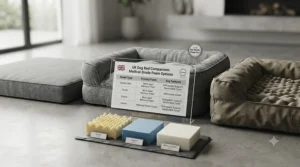
Foam density, measured in kilograms per cubic metre, determines how well a bed resists compression under sustained weight rather than how soft it initially feels. Memory foam itself is a viscoelastic polyurethane material, originally developed for aerospace seating before crossing over into mattresses and, eventually, pet bedding, and it’s this slow-recovery, heat-responsive property that lets it contour to a body rather than simply compressing and springing straight back. A dog lying still for eight hours needs foam dense enough that their hips don’t press through to a hard floor by hour three — thin, low-density foam might feel plush in a showroom but collapses under real, sustained load. Thickness matters alongside density: a seven-inch bed like the KOPEKS Jumbo Orthopedic Dog Bed has room to compress gradually and still leave supportive material beneath a heavy dog’s pressure points, whereas a two-inch pad bottoms out almost immediately regardless of how dense the foam is.
What genuinely doesn’t matter nearly as much as marketing suggests: colour-matched stitching, decorative tufting, and vague claims like “luxury comfort” with no measurable backing. Features that do matter and are worth actively checking before buying include CertiPUR-US or OEKO-TEX certification (confirming the foam is tested against harmful chemicals), a removable and separately washable cover, and a non-slip base — small details that make the difference between a bed that lasts years and one that needs replacing within months.
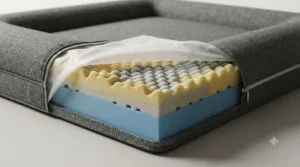
Clinical Recovery: Solving Post-Surgery and Injury Bedding Problems
Post-surgical and injury recovery throws up specific, recurring problems that a standard bed simply doesn’t solve — here’s how to address the five most common ones.
Problem: Your dog can’t easily climb into a raised or bolstered bed while healing. Solution — switch temporarily to a flat, low-profile surface like the Petlife Vetbed Original, which removes any need to step up or over an edge during the weeks when mobility is most restricted.
Problem: Incontinence or wound drainage is soaking through the bedding. Solution — a bed with a genuine waterproof liner separate from the outer cover, such as the Bedsure Orthopedic Dog Bed or KOPEKS Jumbo Orthopedic Dog Bed, lets you strip and wash the soiled layer without disturbing the foam core underneath.
Problem: Your dog keeps chewing at stitches or an e-collar catches on bolster fabric. Solution — a flat surface without raised edges or loose seams reduces snagging risk considerably during the critical early healing window.
Problem: The bed retains too much heat during a fever or post-anaesthesia recovery period. Solution — breathable, lower-pile materials rather than deep memory foam allow better air circulation; this is a case where the humble Vetbed genuinely outperforms thick foam short-term.
Problem: Cost of replacing bedding repeatedly during a messy recovery period adds up fast. Solution — buy a genuinely washable, durable option upfront rather than cheap disposable pads; the Petlife Vetbed Original‘s reputation for surviving hundreds of wash cycles makes the higher unit cost pay for itself within a single recovery period.
Veterinary Support: How to Choose a Medical Grade Support Bed for Dogs
What is a medical grade support bed for dogs? In short, it’s bedding built around measurable support properties — foam density, thickness, and pressure redistribution — rather than around appearance, chosen specifically to manage a diagnosed condition or support recovery under guidance similar to what a vet would recommend.
Choosing correctly comes down to working through a short, deliberate checklist rather than picking whatever looks nicest online:
- Identify the actual need first. A healthy dog wanting comfort has very different requirements from a dog managing diagnosed hip dysplasia — don’t overspend on clinical-grade foam a healthy young dog doesn’t yet need.
- Check the foam type and thickness, not just the word “orthopaedic.” As covered above, solid high-density foam at four inches or more genuinely supports; thin egg-crate foam is a step up from nothing, not a clinical solution.
- Match bed size properly to your dog’s stretched-out length, not their curled-up size. An undersized bed forces unnatural sleeping positions that can worsen existing joint strain.
- Prioritise a removable, washable cover with a separate waterproof liner. Hygiene failures shorten a bed’s usable life faster than foam wear does.
- Look for third-party certification such as CertiPUR-US or OEKO-TEX STANDARD 100, confirming the foam has actually been tested rather than just labelled.
- Consider entry height and ease of access for dogs with limited mobility — a beautifully supportive bed does no good if your dog can’t comfortably get onto it.
- When in doubt, ask your own vet. Every dog’s condition is different, and a vet who’s examined your dog can advise on firmness and shape far more precisely than any online guide, including this one.
Medical Grade Dog Beds for Different Life Stages and Breeds
A growing puppy of a large breed like a German Shepherd or Bernese Mountain Dog genuinely benefits from moderate orthopaedic support earlier than most owners assume — breeds predisposed to hip and elbow dysplasia can start showing early joint stress well before middle age, and a firmer supportive bed from early adulthood is a sensible preventative measure rather than something to delay until symptoms appear. Small and toy breeds, by contrast, rarely need the thick seven-inch foam built for giant breeds; a well-cushioned bolster bed like the JOYELF Memory Foam Dog Bed in a smaller size usually provides plenty of support without unnecessary bulk.
Senior dogs across all breeds are where medical-grade support earns its keep most clearly. As the PDSA explains in its guidance on arthritis in dogs, joint stiffness and pain tend to build gradually, and supportive, pressure-relieving bedding is one of the practical steps owners can take at home alongside veterinary treatment. Working and sporting breeds with high activity levels — Labradors, Springer Spaniels, Border Collies — put cumulative strain on joints through years of running and jumping, making a transition to genuinely supportive bedding by middle age a worthwhile investment even before any formal diagnosis.
Common Mistakes When Buying an Orthopaedic Dog Bed
The single most common mistake is assuming the word “orthopaedic” on a listing guarantees clinical-grade support — as we’ve covered, foam type and thickness vary enormously between products carrying that label, and some genuinely are little more than a firmer cushion. Buying purely on price is the second frequent misstep: the cheapest bed in a search result is rarely the one with certified, dense foam, and false economy here often means replacing a collapsed bed within months, costing more overall than buying correctly the first time.
Sizing errors crop up constantly too — measuring a dog while curled up rather than fully stretched out, which leads to a bed that looks generously sized in the listing but cramps your dog’s natural sleeping positions in practice. Ignoring washability is another recurring regret; a stunning-looking bed with a non-removable cover becomes a hygiene problem within weeks of daily use. Finally, many owners skip checking for genuine certification like CertiPUR-US or OEKO-TEX, taking marketing claims about foam safety at face value rather than verifying them — a small check that takes thirty seconds and meaningfully reduces the risk of off-gassing chemicals near a dog who spends hours with their face pressed into the material.
Long-Term Cost and Maintenance
It’s tempting to compare beds purely on sticker price, but total cost of ownership tells a more honest story. A £30 budget bed that flattens and needs replacing every eight to ten months costs roughly £36-£45 per year across repeat purchases, whereas a £90 solid-foam bed like the PetFusion Ultimate Memory Foam Lounge that genuinely lasts three to four years works out closer to £22-£30 annually — cheaper in the long run despite the higher upfront cost, before even accounting for the welfare benefit of consistent support rather than a bed that degrades mid-lifecycle.
Maintenance costs are worth factoring in too. Beds with separately purchasable replacement covers, such as The Dog’s Bed Orthopaedic, let you refresh a worn or stained cover for a fraction of the full bed’s price rather than starting from scratch — a meaningful saving over a bed’s working life, particularly for households with multiple dogs or a single dog prone to accidents. Washing costs are minor but real: fleece products like the Petlife Vetbed Original wash and dry quickly with minimal energy use, while thick solid-foam cores generally can’t be machine washed at all and rely entirely on their removable covers for hygiene, meaning any damage to the liner itself is harder and pricier to remedy.
Safety, Regulations and Certification Guide
UK pet product safety doesn’t carry the same statutory testing regime as items intended for human use, but reputable manufacturers voluntarily seek certifications worth checking for. CertiPUR-US certification confirms foam has been tested for harmful substances including heavy metals, formaldehyde, and certain flame retardants — originally a human mattress standard, increasingly applied to pet bed foam by quality manufacturers. OEKO-TEX STANDARD 100 covers textile components specifically, testing fabric, thread, and trims against over a thousand regulated and unregulated substances that could pose a health risk, independently verified and updated annually.
Fire safety labelling is worth a glance too, particularly for beds used near open fires or wood burners in colder months. Countryfile’s veterinary-reviewed guide to spotting arthritis in dogs is a useful place to check early symptoms like stiffness after rest or reluctance to jump, since catching joint problems early makes bedding changes far more effective. And for anyone specifically managing a diagnosed condition, remember that no bed — however well-engineered — replaces proper veterinary diagnosis and treatment. Supportive bedding is a genuinely valuable management tool alongside professional care, not a substitute for it; always loop your vet in on significant changes to a dog’s sleeping setup if they’re managing an ongoing joint condition or recovering from surgery.
Frequently Asked Questions
❓ What makes a dog bed medical grade?
❓ Is memory foam or orthopaedic foam better for dogs?
❓ How do I know what size medical grade dog bed to buy?
❓ Can a medical grade dog bed help with arthritis?
❓ How often should I replace an orthopaedic dog bed?
Conclusion
Choosing the right bed genuinely isn’t a cosmetic decision once joints, recovery, or age come into the picture — it’s closer to choosing the right mattress for a person managing back pain, and worth exactly that level of consideration. If your dog is young, healthy, and simply wants somewhere comfortable, the Amazon Basics U-Shape Bolster Dog Bed or Bedsure Orthopedic Dog Bed will serve well without overspending. If you’re managing a diagnosed joint condition or an aging dog showing the early signs of stiffness, The Dog’s Bed Orthopaedic, KOPEKS Jumbo Orthopedic Dog Bed, or PetFusion Ultimate Memory Foam Lounge offer the density and construction genuinely associated with better outcomes. And for anything involving surgical recovery, whelping, or acute injury, keep the Petlife Vetbed Original in mind alongside — or instead of — a firmer mattress.
None of these beds replace a conversation with your vet if your dog is showing signs of pain or reduced mobility, but the right supportive surface, chosen deliberately rather than picked on price alone, makes a genuine daily difference to how comfortably your dog rests, recovers, and moves.
Recommended for You
- 7 Best Dog Bed for Post-Surgery Recovery in 2026 (Vet Picks)
- Best Absorbent Dog Bed for Elderly Dogs: 7 Top Picks (2026)
- Washable Incontinence Dog Bed Reviews 2026: 7 Top UK Picks
Disclaimer: This article contains affiliate links. As an Amazon Associate, I earn from qualifying purchases. If you purchase products through these links, we may earn a small commission at no additional cost to you.
✨ Found this helpful? Share it with your friends! 💬🤗
