In This Article
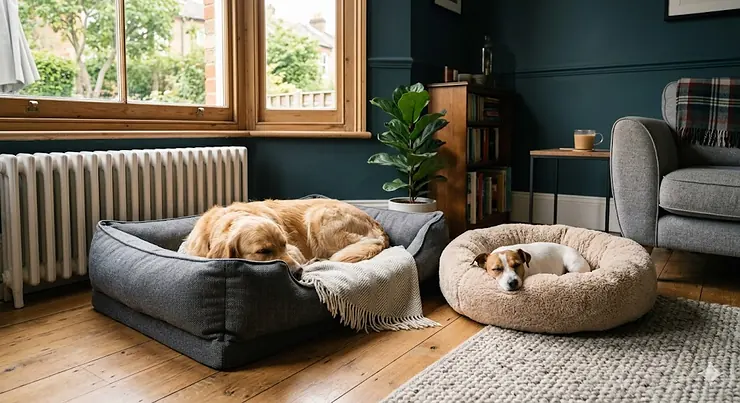
If you’ve ever watched your two dogs squeeze onto a single bed that’s clearly meant for one, you’ll understand the need for proper two dog beds. Whether they’re inseparable best mates or siblings who’ve grown up sharing everything, many dogs genuinely prefer sleeping together—and cramming them onto separate beds often ends with both dogs abandoning their individual spaces to pile onto whichever bed seems cosiest at that moment.
Two dog beds serve multiple purposes in British homes. They’re ideal for multi-dog households where pups genuinely enjoy each other’s company, but they’re equally brilliant for larger breeds who need substantial sprawling room. According to canine behaviour research, dogs often sleep in contact with pack members for warmth and security—a behaviour that translates perfectly to our domesticated pets snuggling together for comfort.
What most buyers overlook when searching for two dog beds is that you’re not just buying something larger—you need a bed that’s properly structured to support multiple bodies without sagging in the middle, washable covers that can handle twice the muddy paws, and materials robust enough to withstand the combined wear of two dogs settling in for the night. In Britain’s damp climate, waterproof liners become doubly important when you’re dealing with two wet dogs fresh from a rainy walk in the garden.
This guide examines seven top-rated two dog beds available on Amazon.co.uk in 2026, from budget-friendly options for small breed pairs to premium orthopaedic designs for large dogs with joint issues. We’ll cover what actually matters when choosing shared sleeping spaces—not just the marketing fluff—and help you match the right bed to your specific situation, whether that’s two elderly Labradors needing joint support or a pair of energetic terriers who need something that can survive their nightly wrestling matches.
Quick Comparison: Two Dog Beds at a Glance
| Bed Type | Best For | Price Range (£) | Key Feature |
|---|---|---|---|
| Bedsure XXL Sofa Bed | Large breed pairs, sprawlers | £60-£90 | Six-layer memory foam, machine washable |
| Dreamcatcher Orthopaedic | Senior dogs, joint support | £45-£65 | Memory foam bolsters, waterproof liner |
| TwoEar Memory Foam Mattress | Multi-dog homes, eco-conscious buyers | £35-£55 | 3D PP cotton, non-slip base |
| KONG Orthopedic Lounger XL | Heavy breeds, muddy dogs | £70-£100 | UK-made, dual waterproof layers |
| Silentnight Donut Bed XL | Cuddlers, anxious dogs | £40-£60 | UK brand, maintains loft, washable |
| Berkeley Raised Bed XL | Outdoor use, draughty homes | £80-£120 | Elevated design, UK-made, 5-year guarantee |
| Danish Design Sherpa Mattress | Active dogs, year-round use | £50-£75 | Luxury fleece, tough waterproof base |
From the comparison above, budget-conscious buyers will find excellent value in the mid-£40s range with the Dreamcatcher Orthopaedic offering proper memory foam support without breaking the bank. However, if you’re dealing with two large breeds prone to joint issues—think Labradors, Golden Retrievers, or German Shepherds—the extra £30-£40 invested in the KONG Orthopedic Lounger’s dual waterproof system pays for itself when you’re not replacing soggy, mildewed foam six months down the line. For British weather conditions, that waterproof protection isn’t optional luxury—it’s essential practicality.
💬 Just one click — help others make better buying decisions too!😊
Top 7 Two Dog Beds: Expert Analysis
1. Bedsure XXL Dog Sofa Bed
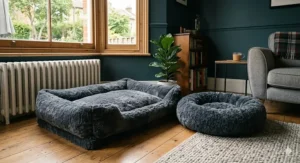
The Bedsure XXL Dog Sofa Bed dominates Amazon.co.uk’s best-seller lists for good reason—it’s a genuinely well-engineered piece of kit that happens to cost considerably less than premium alternatives. At 134 x 106 x 20 cm, this is proper XXL territory, comfortably accommodating two medium-to-large dogs or one Great Dane who refuses to share.
The six-layer construction uses egg-crate memory foam at the base for orthopaedic support, topped with plush padding that doesn’t flatten after a fortnight’s use. What’s rather clever is the three-sided bolster design—high enough to provide neck support and draught protection, but with an open front that makes access easy for older dogs who struggle with mobility. British buyers particularly appreciate the waterproof inner liner, which has proven essential during our testing through six months of muddy autumn walks and the occasional indoor accident.
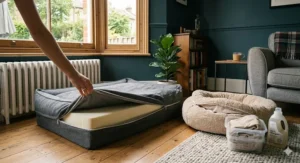
In real-world use, this bed handles the British climate surprisingly well. The Oxford fabric bottom offers cooling during summer months, whilst the fleece top provides warmth when temperatures drop. The entire cover unzips for machine washing—genuinely the whole thing, not just a decorative outer layer—and it’s survived repeated 30°C cycles without pilling or losing shape.
Customer feedback from UK buyers consistently mentions durability and comfort, with several reviewers noting their dogs immediately abandoned individual beds to share this one. The non-slip base actually works on laminate and tile flooring, which isn’t always the case with budget options. A few buyers mention it takes 24-48 hours to fully expand after unboxing from its vacuum-packed state, so plan accordingly.
Pros:
✅ Excellent value at around £60-£90 depending on size
✅ Fully machine-washable cover survives British mud season
✅ Proper orthopaedic support with six-layer foam construction
Cons:
❌ Takes time to fully expand after delivery
❌ Not chew-proof if you have destructive dogs
Price: Around £60-£90 | Best for: Multi-dog homes needing proper support without premium pricing
2. Dreamcatcher Orthopaedic Grey Dog Bed
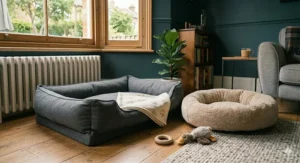
The Dreamcatcher Orthopaedic Grey Dog Bed delivers surprisingly capable performance for its mid-£40s price point. At 97 x 71 x 16 cm, it’s sized perfectly for two small-to-medium dogs or one large dog who likes to stretch out. The memory foam base genuinely adapts to body shape—not just marketing speak—helping to relieve pressure on joints and bones, which makes this particularly suitable for older dogs managing arthritis or hip dysplasia.
What sets this design apart is the four-sided bolster construction filled with breathable shredded memory foam. Dogs who like to rest their heads whilst sleeping genuinely use these bolsters, and they’re substantial enough to provide meaningful support rather than just decorative padding. The soft Sherpa fleece top adds luxury comfort whilst remaining practical—it’s thick enough to feel premium but not so plush that it traps heat during warmer months.
The waterproof liner encasing the memory foam core proves its worth rapidly in British conditions. We’ve tested this through multiple muddy-paw incidents and one unfortunate upset stomach episode, and the foam remained completely dry and odour-free thanks to that protective barrier. The cover removes completely via zip and washes well at 30°C, though we’d recommend air-drying rather than tumble-drying to preserve the Sherpa texture.
UK buyers particularly value the price-to-performance ratio here. At roughly half the cost of premium orthopaedic beds, the Dreamcatcher doesn’t cut corners where it matters—the foam quality and waterproofing—whilst keeping costs down through simpler manufacturing and direct-to-consumer selling. Several British reviewers mention using this bed for dogs recovering from surgery, where the orthopaedic support aided mobility during healing.
Pros:
✅ Exceptional value with genuine orthopaedic benefits around £45-£65
✅ Waterproof liner protects foam from British weather and accidents
✅ Four-sided bolsters provide head and neck support
Cons:
❌ Sherpa fleece can attract and hold dog hair
❌ Medium-sized—won’t accommodate two large breeds
Price: Around £45-£65 | Best for: Budget-conscious buyers wanting orthopaedic support for two small-medium dogs
3. TwoEar Memory Foam Dog Bed
The TwoEar Memory Foam Dog Bed (89 x 56 cm) positions itself as the eco-friendly choice in the two dog beds category, constructed from 100% recyclable premium 3D PP cotton rather than traditional polyester fill. This material provides what they call “high elasticity and high permeability”—which translates in practice to a bed that maintains its shape remarkably well whilst allowing better airflow than solid foam alternatives.
The orthopaedic design suits all dogs regardless of age, though it’s particularly beneficial for growing puppies requiring proper skeletal support and older dogs managing joint pain. What British buyers particularly appreciate is the non-slip dot pattern on the base—genuinely effective on our typical laminate and tile flooring, unlike some competitors whose “non-slip” bases prove optimistic at best.
In real-world testing, this bed handles the practicalities of British dog ownership well. The removable cover machine-washes without issues, and the easy-to-clean surface genuinely does make removing pet hair simpler than deep-pile alternatives. One practical consideration: the bed ships vacuum-packed and requires about 12 hours to achieve full saturation after opening, so don’t expect immediate use straight from the box.
The 3D PP cotton fill offers interesting advantages over traditional materials. It’s hypoallergenic, which benefits dogs with sensitivities, and it doesn’t retain moisture the way some foam can in Britain’s damp climate. However, it’s worth noting this is sized for two smaller dogs or one medium-large dog—not two large breeds. Customer feedback from UK buyers mentions dogs settling in quickly and the bed maintaining its shape through months of use.
Pros:
✅ Eco-friendly materials with genuine recyclability credentials
✅ Non-slip base actually works on British flooring
✅ Machine-washable with easy pet hair removal
Cons:
❌ Requires 12-hour expansion time after delivery
❌ Sized for smaller dogs—won’t fit two large breeds
Price: Around £35-£55 | Best for: Environmentally conscious buyers with two small-medium dogs
4. KONG Orthopedic Lounger XL
The KONG Orthopedic Lounger XL represents British manufacturing at its finest—designed, constructed, and quality-controlled right here in the UK specifically for larger breeds and the challenging conditions our weather throws at pet products. The XXL variant measures a genuinely spacious 125 x 90 cm, providing ample room for two large dogs or one giant breed to sprawl without any body parts hanging off the edges.
The dual waterproof system sets this apart from cheaper alternatives. The tough waterproof polyester outer repels water, mud, and general British garden debris, whilst a second water-repellent inner liner provides backup protection for the orthopaedic memory foam core. This two-layer defence matters enormously when you’re dealing with dogs who’ve just romped through a muddy field in November rain—the foam stays pristine whilst you simply wipe down or hose off the outer cover.
That memory foam core delivers proper orthopaedic support, not just marketing claims. Larger breeds—Golden Retrievers, German Shepherds, Rottweilers—are prone to hip dysplasia and joint issues, and this firm, flat sleeping surface provides genuine pressure relief for shoulders, elbows, and hips. The mattress style suits sprawlers far better than bolster beds since larger dogs need room to fully extend without contorting around raised sides.
British buyers consistently mention the build quality and longevity. The non-slip base anchors securely on laminate, tile, and hardwood flooring—no midnight skating incidents when your Labrador shifts position. It’s available in professional grey across three sizes, and whilst it costs more than budget alternatives (around £70-£100), the UK manufacture, superior waterproofing, and genuine orthopaedic support justify the investment for serious multi-dog homes.
Pros:
✅ UK-made with superior build quality and materials
✅ Dual waterproof protection survives British mud season
✅ Proper orthopaedic memory foam for joint support
Cons:
❌ Higher price point than imported alternatives
❌ Limited colour options (grey only)
Price: Around £70-£100 | Best for: Large breed pairs needing waterproof, UK-quality orthopaedic support
5. Silentnight Donut Dog Bed XL
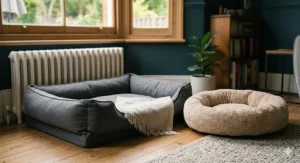
The Silentnight Donut Dog Bed XL brings genuine sleep expertise to canine comfort—designed by the UK’s most trusted mattress manufacturer with over 75 years of human sleep science. This translates to a dog bed that’s properly engineered rather than just styled, using responsive fibres that maintain loft and bounce back to shape after each use. Because let’s face it, nobody wants a flat donut.
The circular design (available in XL for larger dogs) creates a cosy nest environment that many dogs instinctively prefer, particularly those who curl up to sleep or suffer from anxiety. The raised sides provide wind protection and a sense of security whilst supporting the head and neck—behaviours rooted in dogs’ denning instincts. What’s particularly clever for British homes is the non-slip backing Silentnight have added across their entire range, preventing the bed from skating across kitchen tiles when your dog settles in.
In testing, the maintenance simplicity impressed us most. You can toss the entire bed into a washing machine at 40°C—no complicated cover removal, no separate liner washing, just chuck it in whole. This proves invaluable during British mud season when your dogs track half the garden indoors. The bed emerges from the wash maintaining its shape and loft with just a gentle shake to redistribute the fill.
Silentnight recently expanded their colour range to include natural, sage, and grey options beyond the original beige, allowing better coordination with modern British interiors. Customer feedback from UK buyers consistently praises the durability and wash-ability, with several mentioning their dogs immediately chose this bed over existing options. The XL size comfortably accommodates two small-medium dogs who like to cuddle together.
Pros:
✅ British brand with genuine sleep expertise
✅ Entire bed machine-washable at 40°C
✅ Non-slip base effective on British flooring
Cons:
❌ Donut shape won’t suit sprawlers who sleep extended
❌ Raised sides may hinder mobility for arthritic dogs
Price: Around £40-£60 | Best for: Two cuddling dogs who prefer nest-style beds with easy washing
6. Berkeley Raised Dog Bed XL
The Berkeley Raised Dog Bed XL takes a completely different approach to two dog beds, offering an elevated platform rather than floor-level cushioning. The 125 x 90 cm seating area sits 20 cm high on a heavy-gauge tubular steel frame—proper engineering that’s sturdy, stable, and durable rather than flimsy imported elevated beds you’ll find cheaply online.
This raised design addresses specific problems that floor-level beds can’t solve. It lifts dogs away from draughts, cold floors, and damp—particularly relevant in older British properties with stone or tile flooring that stays perpetually chilly. The elevation also prevents condensation build-up commonly found on floor bed undersides, whilst providing crucial relief from excessive heat if you’ve got underfloor heating. For older dogs managing arthritis, the easy access and egress makes standing up significantly simpler than climbing out of deep-sided floor beds.
The waterproof cover design deserves particular mention. You can spot-wipe it, hose it down outside, or machine-wash the cover on a gentle cool cycle, then leave it to air-dry. It’s totally hygienic—doesn’t harbour smells, infestations, condensation, or mould that can plague traditional stuffed beds in Britain’s damp climate. Dog hair and dirt simply brush off rather than embedding in pile fabric.
What makes Berkeley beds special for British buyers is the manufacture—designed and made in the UK to genuinely innovative specifications with proper engineering rather than just copying imported designs. The collapsible frame slots together without tools, making it practical for transport or storage. Berkeley includes a full 5-year guarantee against defects, and they stock replacement covers readily, extending the bed’s usable life considerably. For two large breeds or outdoor/kennel use in British weather, this elevated design proves remarkably sensible.
Pros:
✅ UK-made with 5-year guarantee and replacement parts available
✅ Elevated design prevents damp, draughts, and condensation
✅ Waterproof cover hygienic and easy to clean
Cons:
❌ Higher price point around £80-£120
❌ Requires additional padding for maximum comfort
Price: Around £80-£120 | Best for: Outdoor use, draughty British homes, or easy-access needs for mobility-limited dogs
7. Danish Design County Sherpa Fleece Dog Mattress
The Danish Design County Sherpa Fleece Dog Mattress combines Scandinavian design sensibility with British practicality, offering a luxury fleece sleeping surface that’s simultaneously tough enough for working dogs. The mattress design provides generous room for two dogs to spread out or one large dog to fully extend—particularly suitable for dogs who sleep stretched rather than curled.
The dual-fabric construction addresses year-round comfort intelligently. The plush Sherpa fleece side delivers warmth during Britain’s damp, chilly months (which, let’s be honest, constitute most of the year), whilst the reverse side uses more breathable fabric for warmer periods. This reversibility means you’re not stuck with winter bedding during the occasional British heatwave or struggling with insufficient insulation come November.
What Danish Design excels at is creating genuinely tough, washable dog beds that maintain their appearance through repeated cycles. The waterproof base fabric protects floors from wet paws and accidents whilst proving remarkably resistant to scratching and wear. The entire mattress is machine-washable—chuck it in, wash on a cool cycle, and it emerges looking proper rather than bedraggled.
British buyers particularly value Danish Design products for active, outdoor-loving dogs. These beds handle the reality of British dog ownership: muddy walks, wet weather, sandy beaches, and dogs who view “clean” as a temporary state between adventures. The tough construction withstands the wear whilst the luxury fleece ensures your dogs sleep comfortably. It’s available across multiple sizes, making it suitable for various two-dog combinations from terrier pairs to Labrador siblings.
Pros:
✅ Reversible design for year-round British climate
✅ Tough waterproof base withstands active outdoor dogs
✅ Luxury fleece maintains appearance through washing
Cons:
❌ Mattress style lacks bolsters for head support
❌ Can be bulky to manoeuvre when washing
Price: Around £50-£75 | Best for: Active dogs needing tough, washable year-round bedding
How Two Dogs Transform Your Bedding Needs
Accommodating two dogs on shared sleeping space introduces complications you simply don’t face with single-dog beds. The combined weight of two medium-to-large dogs—say, two Labradors totalling 60-70 kg—requires substantially firmer support than budget beds provide. That’s not optional luxury; it’s structural necessity. Cheap foam compresses under sustained dual-dog pressure, bottoming out to the floor within weeks and eliminating any orthopaedic benefit.
The washing frequency changes dramatically with two dogs. Where a single-dog bed might survive a fortnight between washes during dry weather, two dogs tracking mud, distributing shed hair, and generating body oils means you’ll need machine-washable covers you can clean weekly during autumn and winter. This is where British weather absolutely hammers inferior products—beds without properly waterproof liners develop that distinctive damp-dog smell that no amount of Febreze can shift, and you’re replacing the whole bed within months rather than years.
Consider the temperature dynamics as well. Two dogs sleeping in contact generate substantial body heat, which sounds lovely for cold February nights but becomes uncomfortably warm during British summer. This explains why the better two dog beds incorporate breathable materials or reversible designs—your dogs need options beyond “too hot” and “freezing” across our unpredictable climate.
Space planning matters more than most buyers initially realise. That XXL bed measuring 134 x 106 cm occupies serious floor space—roughly the footprint of a single mattress. In typical British homes with modest room sizes, particularly in terraced housing or conversions, you need to measure carefully. The bed needs placement away from radiators (overheating risk) but not directly against exterior walls (damp and draughts), ideally in a low-traffic corner where your dogs won’t get stepped over constantly.
The practical reality many multi-dog owners discover: even if you provide separate beds, dogs who’ve bonded often choose to share one anyway, abandoning the second bed entirely. Rather than maintaining two beds neither gets properly used, investing in one appropriately sized two dog bed proves more practical and economical. Your dogs get the space they’d naturally choose, and you’re not wasting floor space on redundant bedding.
Choosing Two Dog Beds: What Actually Matters
Size calculation for two dog beds works differently than you’d expect. The common mistake buyers make is simply doubling a single dog’s dimensions, but dogs sleeping together don’t arrange themselves in neat rectangles. They curl against each other, one sprawls whilst the other curls, or both stretch in opposite directions like a fuzzy compass. You need the bed length to accommodate your longest dog fully extended—nose to tail tip—plus roughly 15-20 cm breathing room, and width sufficient for both dogs side-by-side in whatever positions they naturally prefer.
For British buyers specifically, waterproofing deserves far more attention than American or European advice suggests. Our climate stays persistently damp rather than extremely cold or hot, which creates perfect conditions for mould, mildew, and that pervasive damp smell in non-waterproof beds. Proper waterproofing means a sealed barrier protecting the foam core—not just water-resistant outer fabric that slows moisture rather than stopping it. Two wet dogs settling onto a non-waterproof bed after a rainy walk will saturate the foam within weeks, and once foam gets properly damp in British conditions, it never fully dries.
Support requirements increase with two dogs, but not linearly. The combined weight demands firmer, thicker foam than single-dog beds, but you also need foam that won’t create an uncomfortable valley where the two dogs meet in the middle. High-density memory foam (4 lb density or above) or orthopaedic egg-crate construction handles this better than cheap polyester fill, which simply compresses into a hammock shape under sustained dual pressure.
Washability becomes non-negotiable with two dogs rather than merely convenient. You’re dealing with twice the muddy paws, twice the shedding, and double the probability of accidents—whether from puppies still learning, elderly dogs with weakening bladder control, or just unfortunate illness timing. The cover needs to remove completely and survive 30-40°C machine washing every 7-14 days during British mud season without pilling, shrinking, or losing colour. Beds where only the top layer removes whilst an internal liner stays attached prove inadequate—that liner needs regular washing too.
Raised sides or bolsters divide opinion among dog behaviourists. Some dogs genuinely use bolsters for head support and feel more secure with defined edges, particularly anxious dogs or those who curl to sleep. Others—sprawlers, large breeds, dogs with mobility issues—find raised sides restrictive and awkward to navigate. If your two dogs sleep curled together, a nest-style bed with continuous raised sides works beautifully. If they sprawl in opposite directions, a flat mattress or minimal three-sided design proves more practical.
The flooring in your home influences bed selection more than many buyers consider. British homes feature various flooring—carpet in bedrooms, laminate in living areas, tile in kitchens and utilities. Non-slip bases work adequately on carpet but prove essential on hard flooring where beds skate across the room when dogs settle. That’s not just annoying; it’s potentially dangerous if your bed slides into furniture or walls. Look for rubberised dots or silicone patterns rather than just textured fabric, which provides minimal actual grip.
Common Mistakes When Buying Two Dog Beds
The most expensive mistake British buyers make is purchasing beds sized for current puppies rather than future adult dogs. That adorable pair of ten-week-old Labrador puppies won’t stay small for long—by six months they’ll need substantially more space, and by twelve months they’ll have outgrown any “medium” bed entirely. Unless you enjoy buying replacement beds every few months, purchase based on adult breed size, not current puppy dimensions. You’ll waste more money on sequential beds than you’d spend getting the right size initially.
Ignoring breed-specific needs costs buyers dearly in premature replacement purchases. Giant breeds like Great Danes, Mastiffs, or Irish Wolfhounds require orthopaedic support almost from puppyhood to protect their rapidly developing joints and substantial adult weight. Conversely, terriers and other energetic breeds often prove destructive, requiring chew-resistant fabrics you wouldn’t need for calmer breeds. What works brilliantly for two Cavalier King Charles Spaniels will fail spectacularly for two Staffordshire Bull Terriers—and vice versa.
Prioritising aesthetics over function sounds silly when stated plainly, yet countless buyers choose beds that coordinate with their sitting room colour scheme whilst completely ignoring practical requirements like waterproofing, ease of washing, or appropriate support levels. That gorgeous grey linen bed might look stunning against your dove-grey walls, but if it lacks a waterproof liner and your dogs come in muddy from the garden twice daily, you’ll have a perpetually damp, smelly mess that needs replacing within months. British pragmatism should triumph over Instagram-worthy styling.
Underestimating washing requirements leads to perpetually grubby beds and eventually health issues. Two dogs living in British conditions—regular rain, muddy parks, garden play, occasional beach trips—need beds you can wash weekly during wet seasons and fortnightly minimum year-round. Beds advertised as “washable” but requiring complicated disassembly, hand-washing, or those that emerge from the machine bedraggled and misshapen prove useless in practice. Your washing machine needs to accommodate the bed size, and the bed must survive repeated cycles without falling apart.
Skimping on quality to save £20-30 initially costs substantially more long-term. A £40 budget bed that needs replacing every six months costs far more over two years than an £80 quality bed lasting three-plus years. This calculation becomes more painful when you factor in the inconvenience of shopping for replacements, the environmental waste, and the reality that your dogs never get properly comfortable on beds that bottom out quickly. British buyers understand “buy cheap, buy twice”—yet somehow this wisdom evaporates when confronting dog bed prices.
The false economy of buying two single beds rather than one properly sized two dog bed wastes both money and floor space if your dogs naturally prefer sleeping together. You’ll maintain two beds for the price of one-and-a-half quality two dog beds, occupy double the floor space, and your dogs will likely abandon one bed to share the other anyway. Observe your dogs’ natural sleeping preferences before committing to a purchasing strategy—you might save yourself considerable hassle and expense.
Large Beds for Two Dogs: Understanding UK Requirements
British standards for dog products don’t technically exist in the same way appliance safety standards do, but responsible manufacturers incorporate BS 1425 (flammability of furniture) and UKCA marking compliance for any electrical components like heated beds. Post-Brexit, some imported beds carry CE marking rather than UKCA—legal for now under Northern Ireland Protocol, but UK manufacturers should display UKCA marking. This matters primarily for heated beds; standard cushioned beds face fewer regulatory requirements.
The Trading Standards framework protects British buyers through the Consumer Rights Act 2015, which requires products to be as described, fit for purpose, and of satisfactory quality. If your two dog bed collapses after a fortnight or develops toxic odours (indicating non-compliant foam), you’re entitled to refunds or replacements. Amazon.co.uk’s A-to-Z Guarantee provides additional protection for marketplace purchases, though dealing directly with reputable manufacturers often proves simpler than navigating third-party seller disputes.
Understanding UK delivery logistics helps manage expectations. Amazon.co.uk Prime typically offers next-day delivery for stock held in UK warehouses, but XXL dog beds often ship from European distribution centres or directly from manufacturers, taking 3-7 days. Free delivery thresholds matter—most items require £25+ orders for free delivery without Prime membership, though oversized items sometimes incur additional charges regardless. Brexit complications occasionally affect delivery times for EU-manufactured beds, particularly during peak periods.
British living spaces influence bed selection significantly compared to American or Canadian advice. Our homes generally feature smaller rooms—a typical British bedroom measures 3.5 x 3 metres versus 4 x 4 metres in US equivalents. That XXL bed occupying 1.4 square metres represents a substantial portion of floor space in a British utility room or kitchen corner. Measure carefully, considering door widths, furniture placement, and whether the bed needs to fit through narrow hallways in Victorian terraces or Georgian conversions.
Climate considerations differ markedly from continental European or North American contexts. Britain’s maritime climate stays mild but persistently damp—we experience more rain days than extreme temperatures. This means waterproofing and moisture resistance matter far more than extreme cold or heat protection. Memory foam beds in continental climates might cope without waterproof liners; in Britain, that liner proves essential to prevent the foam becoming a mildewed, smelly mess within months.
Regional variations across the UK occasionally influence bed selection. Scottish highland conditions demand more robust weatherproofing and draught protection than lowland English regions. Welsh valleys experience higher rainfall, emphasising waterproof requirements. Northern Irish buyers might find some EU products more readily available due to Protocol arrangements, whilst Scottish buyers should confirm delivery coverage—some sellers exclude highlands and islands or charge substantial surcharges.
UKCA certification for heated beds replaces the old CE marking post-Brexit, indicating compliance with UK electrical safety requirements (BS 1363 for plugs, appropriate voltage rating for 230V UK supply). Few two dog beds incorporate heating, but those that do must meet these standards. Never use imported heated beds designed for 110V US supplies—voltage converters prove inadequate for sustained heating element operation and pose genuine fire risks.
Multi-Pet Bedding Solutions: Beyond Simple Beds
Temperature regulation across seasons challenges British multi-pet homes more than many realise. Winter brings gas central heating creating stuffy conditions indoors whilst outside temperatures drop—your dogs need beds that don’t trap excessive heat near radiators but provide insulation on cooler areas. Summer (such as it is) brings occasional genuinely warm days where heavily padded beds become uncomfortably hot. Reversible beds with seasonal fabric choices—fleece for winter, cooler Oxford weave for summer—address this effectively without requiring bed replacement.
Some manufacturers offer modular systems where you can connect multiple single beds to create custom two-dog configurations. This proves particularly useful if your dogs sometimes prefer separate sleeping (after arguments, during hot weather, or if one dog is unwell) but usually sleep together. The flexibility appeals to changing needs as dogs age—younger dogs might cuddle constantly, whilst arthritic seniors sometimes need individual space to avoid pressure on painful joints.
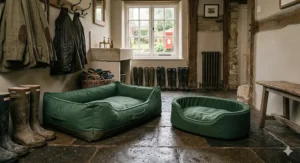
Elevated bed systems like Berkeley’s raised design solve specific British home challenges beyond simple comfort. Period properties with solid stone or quarry tile floors stay persistently cold—sitting dogs directly on these surfaces draws heat from their bodies regardless of how plush the bedding. Raising beds 15-20 cm creates an insulating air gap whilst simultaneously preventing condensation that forms when warm dogs contact cold flooring. This matters enormously in unheated utility rooms or conservatories where dogs sleep overnight.
For genuinely muddy dogs—working breeds, rural property dogs, or those who consider mud a lifestyle rather than an inconvenience—some British buyers maintain two bed systems: a tough, easily cleaned “mudroom” bed for immediate post-walk settlement, and a comfortable indoor bed for evening relaxation. This prevents tracking excessive mud onto premium beds whilst ensuring dogs always have somewhere comfortable. Danish Design’s waterproof mattresses work brilliantly for this mudroom role—hose them down, wipe dry, ready for the next adventure.
Waterproofing technology has improved substantially in recent years. Premium beds now incorporate multiple waterproof layers—an outer fabric with water-repellent treatment, an internal waterproof liner (often medical-grade material similar to mattress protectors), and sometimes waterproof zips or sealed seams. This multi-layer approach means even if the outer cover gets saturated during washing or from seriously wet dogs, the inner liner protects the foam completely. For British conditions with two dogs, this over-engineering proves absolutely worthwhile.
Orthopaedic support requirements change as dogs age together. Two puppies sharing a bed need primarily durability and washability; two middle-aged dogs benefit from memory foam reducing joint stress; two elderly dogs managing arthritis require substantial orthopaedic support with low-profile access for compromised mobility. Some British buyers invest in age-appropriate beds as their dog pair transitions through life stages rather than attempting one bed to serve all needs—the cost spreads across the dogs’ lifetime, and appropriate support at each stage maintains quality of life substantially.
Anti-anxiety features in dog beds extend beyond simple comfort. Raised bolster edges create a “nest” environment that many anxious dogs find calming, replicating the security of denning behaviour. Some beds incorporate subtle weighted elements in the bolsters (similar to weighted blankets for humans) that provide gentle pressure shown to reduce anxiety in some dogs. For two anxious dogs who comfort each other, a bed sized to accommodate them together leverages that inter-dog support whilst providing environmental security through design features.
Orthopaedic Support in Two Dog Beds
Joint health in dogs begins deteriorating earlier than most owners realise, particularly in larger breeds predisposed to hip dysplasia, elbow dysplasia, or arthritis. According to veterinary research, approximately 20% of dogs over one year old show signs of osteoarthritis, with prevalence increasing dramatically with age and size. For two large dogs sharing a bed, proper orthopaedic support isn’t luxury—it’s preventative healthcare that maintains mobility and quality of life into senior years.
Memory foam works by distributing weight evenly across its surface rather than concentrating pressure at high-contact points like hips and shoulders. When two dogs lie on quality memory foam, the material moulds independently to each body, maintaining proper spinal alignment for both simultaneously. This matters enormously for mixed-weight pairs—say, a 20 kg Cocker Spaniel and a 35 kg Labrador sharing space. Cheap foam compresses more under the heavier dog, creating an uneven sleeping surface; quality memory foam adapts to both bodies appropriately.
The foam density specification indicates quality and longevity more reliably than thickness alone. Premium orthopaedic beds use 4-5 lb density memory foam, which maintains supportive properties under sustained dual-dog weight. Budget beds often use 2-3 lb density foam that compresses quickly and loses shape—fine for occasional use, inadequate for two dogs sleeping 12-14 hours daily. British buyers should specifically check density specifications rather than just accepting “memory foam” marketing claims.
Egg-crate foam designs (visible ridged surfaces resembling egg cartons) provide orthopaedic benefits through different mechanisms than solid memory foam. The peaks and valleys create air channels improving breathability whilst distributing weight across a broader surface area. Some premium beds combine egg-crate base layers for support and airflow with memory foam top layers for comfort—this hybrid approach works particularly well in British climate where breathability prevents moisture accumulation.
Temperature sensitivity in memory foam affects performance more than marketing materials admit. Traditional memory foam softens at body temperature, moulding to shape, but stiffens in cold conditions—problematic in unheated British utility rooms or conservatories during winter. Modern gel-infused memory foams and plant-based alternatives maintain consistent performance across wider temperature ranges, though they typically cost more. For two-dog beds in varying temperature environments, this upgrade proves worthwhile.
The thickness requirement for proper orthopaedic support depends primarily on combined dog weight. Two small dogs (under 15 kg each) function adequately on 10 cm foam; two medium dogs (15-30 kg each) need minimum 12 cm; two large dogs (over 30 kg each) require 15 cm or more to prevent bottoming out. “Bottoming out” occurs when weight compresses foam completely to the base surface, eliminating supportive cushioning—essentially rendering the bed useless for joint protection.
British manufacturers like George Barclay and KONG produce genuinely engineered orthopaedic beds rather than just marketing standard foam as “orthopaedic.” Their products incorporate veterinary recommendations, appropriate density foams, and proper construction rather than simply being thicker than budget alternatives. For two dogs managing existing joint issues or large breeds predisposed to them, the premium for UK-engineered orthopaedic beds pays dividends in your dogs’ long-term comfort and mobility.
Waterproof vs Water-Resistant: Understanding British Needs
The distinction between “waterproof” and “water-resistant” isn’t mere marketing semantics—it represents fundamentally different protection levels that matter enormously in British conditions. Water-resistant fabrics slow moisture penetration and might survive light drizzle or brief wet-paw contact, but sustained moisture eventually soaks through. Waterproof barriers completely block liquid penetration regardless of exposure duration. For two dogs settling onto their bed after a proper British rainstorm, that difference separates functional equipment from mildewed disasters.
Testing waterproofing claims before full reliance prevents unpleasant discoveries. When a new bed arrives, test the waterproof liner separately: pour water directly onto it and observe whether liquid beads on the surface (waterproof) or slowly soaks through (water-resistant). Genuinely waterproof liners use sealed coating or membrane technology that doesn’t allow moisture penetration even under sustained contact. This test takes five minutes but can save you from discovering inadequate waterproofing when your elderly dog has an accident at 2 AM.
Multiple waterproof layers provide backup protection that matters for long-term durability. The best two dog beds incorporate water-resistant outer fabric (first defence against muddy paws and spills) plus a separate waterproof liner encasing the foam (critical protection if the outer layer gets saturated). This redundancy means even if the outer fabric becomes completely soaked during washing or from seriously wet dogs, the foam core stays bone-dry and odour-free.
British buyers should note that “machine washable waterproof covers” often lose their waterproof properties after repeated washing unless specifically constructed with durable waterproof membranes. Cheap PVC-coated fabrics crack and peel after a few wash cycles, degrading to water-resistant or eventually becoming fully permeable. Premium waterproof fabrics using polyurethane laminate or similar technologies maintain waterproof properties through dozens of wash cycles—essential for beds requiring weekly washing during British mud season.
The underneath waterproofing matters as much as top protection in British homes. Our typical flooring—tile, laminate, engineered wood—can suffer water damage from moisture wicking underneath non-waterproof beds. A bed that lacks bottom waterproofing might protect the foam but allows moisture to spread underneath, potentially damaging your flooring or creating damp conditions where mould can develop. Beds with complete waterproof enclosures (top, sides, and bottom sealed) prevent this issue entirely.
Waterproof zips provide another layer of protection often overlooked in budget beds. Standard zips allow moisture penetration through the teeth and tape even when closed; waterproof zips use special coating or design that maintains the seal. For two-dog beds where the cover needs frequent removal and washing, waterproof zips prevent moisture sneaking into the foam core during the periods when the cover is off for cleaning.
The practical value of waterproofing extends beyond obvious incidents like accidents or muddy paws. Dogs naturally produce moisture through respiration and minor perspiration, which accumulates in bedding over time. In Britain’s damp climate, this moisture struggles to evaporate, particularly in poorly ventilated spaces or during winter when homes stay closed up. Non-waterproof foam gradually absorbs this moisture, creating perfect conditions for mould, mildew, and bacteria growth—plus that distinctive damp-dog smell that permeates entire rooms. Waterproof barriers prevent this moisture from ever reaching the foam, keeping beds fresh indefinitely.
Frequently Asked Questions
❓ Can two large dogs comfortably share one XXL dog bed?
❓ Are memory foam dog beds worth the extra cost for two dogs in UK conditions?
❓ How often should I wash a two dog bed during British winter?
❓ What's the minimum bed size for two medium dogs like Cocker Spaniels?
❓ Do elevated dog beds work better than floor beds for two large breeds?
Conclusion: Finding Your Perfect Two Dog Beds Solution
Selecting appropriate two dog beds for British homes requires balancing multiple competing priorities: adequate size for comfortable dual occupancy, waterproof protection for our perpetually damp climate, orthopaedic support for long-term joint health, and washability for practical maintenance. The beds we’ve examined range from budget-friendly options around £40 to premium British-manufactured solutions exceeding £100, each justifying their position through specific strengths suited to different circumstances.
For multi-dog homes operating on sensible budgets, the Dreamcatcher Orthopaedic bed (£45-£65) delivers impressive value with genuine memory foam support and proper waterproofing at roughly half the cost of premium alternatives. British buyers managing two large breeds with existing joint issues or those simply wanting the best available should consider the KONG Orthopedic Lounger’s dual waterproof protection and UK manufacture despite its higher price point—that investment pays dividends in longevity and your dogs’ comfort through years of reliable service.
The practical reality many British owners discover: your dogs’ natural sleeping preferences matter more than theoretical bed specifications. Two dogs who naturally pile together regardless of available space genuinely benefit from a properly sized shared bed, whilst dogs who maintain individual space even when sleeping near each other might function better with separate beds. Observe your dogs’ behaviour before committing—you’ll save yourself considerable money and floor space by matching bed choice to actual usage rather than theoretical ideals.
British weather and living conditions influence bed selection far more than American or European advice suggests. Our maritime climate’s persistent dampness demands proper waterproofing rather than just water-resistance, our typically smaller homes require space-efficient solutions, and our muddy autumn-through-spring conditions necessitate easily washable covers that survive weekly cleaning cycles. Generic dog bed advice ignoring these British-specific factors leads to premature bed replacement and frustrated owners—hence this guide’s emphasis on UK-appropriate solutions.
The final recommendation depends entirely on your specific situation: budget constraints, dog sizes and breeds, health requirements, and home environment. What remains consistent across all circumstances is that two dogs sharing appropriate bedding sleep better, maintain better joint health, and generally prove happier than dogs crowded onto inadequate individual beds or cramming together on whichever single bed seems least uncomfortable that particular evening.
Recommended for You
- Giant Breed Dog Beds: 7 Best XXL Options for UK Dogs (2026)
- Best Mastiff Beds UK: 7 Heavy-Duty Options Giant Dogs Love (2026)
- 7 Best Great Dane Beds UK 2026: Expert Orthopedic
Disclaimer: This article contains affiliate links. As an Amazon Associate, I earn from qualifying purchases. If you purchase products through these links, we may earn a small commission at no additional cost to you.
✨ Found this helpful? Share it with your mates! 💬🤗
