In This Article
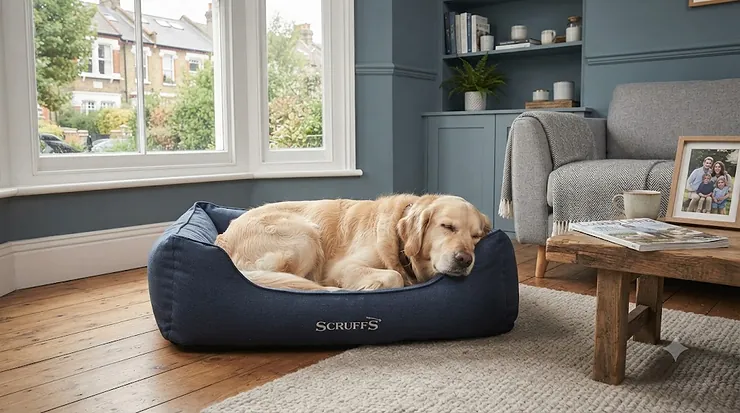
Here’s a grim little fact your dog would rather you didn’t dwell on: a bed that looks perfectly clean can still be hosting a thriving colony of bacteria, yeast and dust mites, all quietly multiplying in the warm, damp fibres your pet naps on every single day. That’s the whole reason the anti-microbial dog bed category exists, and it’s also why so many product listings throw the term around without explaining what it actually means. This guide cuts through that noise. We’ve researched real, currently available beds sold on amazon.co.uk, dug into the actual treatments manufacturers use, and worked out which claims hold up and which are mostly marketing polish.

An anti-microbial dog bed is any pet bed whose fabric, foam or filling has been treated (or naturally behaves) in a way that slows the growth of bacteria, fungi and other microbes on its surface. It’s not the same as “clean,” and it’s not a substitute for washing — think of it as a head start, not a magic shield. As NHS inform explains, it isn’t pet fur itself that triggers most allergic reactions, but rather the flakes of dead skin, saliva and dried urine caught within it — precisely the organic material that also feeds bacteria and odour-causing microbes on unwashed bedding. Below, we compare seven genuine anti-microbial dog beds across budget, mid-range and premium price points, explain the difference between anti-microbial and anti-bacterial claims, and give you a proper framework for choosing one that actually suits your dog rather than your Amazon search bar.
Quick Comparison Table: Anti-Microbial Dog Beds at a Glance
| Bed | Anti-Microbial Approach | Price Range | Best For |
|---|---|---|---|
| Vetbed Original | Naturally hygienic, high-temp washable fibre | Around £15–£30 | Puppies and budget buyers |
| Vetbed Gold | Permafresh anti-bacterial treatment | Around £20–£40 | Allergy-prone dogs |
| Danish Design Anti-Bacterial Duvet | Fabric-embedded anti-bacterial finish | Around £40–£75 | Style-conscious owners |
| Scruffs Chester Box Bed | Stain- and odour-resistant plush weave | Around £30–£55 | Everyday mid-range comfort |
| PetFusion Ultimate Dog Bed | Waterproof liner limiting bacterial ingress | Around £70–£120 | Orthopaedic support seekers |
| Scruffs Chateau Orthopaedic Bed | Memory foam with washable, treated cover | Around £55–£95 | Senior and large-breed dogs |
| Aspen Pet Antimicrobial Orthopedic Bed | Microban-infused faux suede cover | Around £35–£60 | Multi-dog, high-odour households |
Looking across the table, there’s a clear split between beds that lean on chemical anti-microbial technology (Permafresh, Microban) and those that rely on hygienic, easy-wash construction instead. Neither approach is automatically “better” — a Permafresh-treated bed slows bacterial regrowth between washes, while something like the Vetbed Original simply survives repeated 60°C washing without falling apart, which achieves a similar practical outcome through elbow grease rather than chemistry. Budget shoppers gravitate toward the £15–£40 bracket, while anyone chasing orthopaedic support alongside hygiene will spend closer to £70–£120 for the PetFusion Ultimate Dog Bed.
💬 Just one click — help others make better buying decisions too!😊
Top 7 Anti-Microbial Dog Beds: Expert Analysis
1. Vetbed Original — budget-friendly veterinary-grade fleece staple
The Vetbed Original has been the default bedding in UK veterinary practices for decades, and that pedigree matters more than any marketing badge. Its deep-pile fibre construction wicks moisture away from the surface, which starves surface bacteria of the damp conditions they need to multiply, and the whole thing can be machine washed at temperatures high enough to knock back dust mites and odour-causing microbes. Based on the spec comparison with treated alternatives, this isn’t a chemically anti-microbial product — it’s a fabric that behaves hygienically because of its structure and washability, which is an honest distinction worth making before you buy. It’s best suited to puppies, whelping bitches and owners who prioritise frequent, hot washing over built-in treatments. Reviewers consistently note that it holds up remarkably well after dozens of hot washes without matting or losing loft, and vets frequently recommend it for post-surgical recovery precisely because of how easy it is to keep genuinely clean.
Pros:
- ✅ Withstands high-temperature washing without degrading
- ✅ Naturally moisture-wicking, discouraging bacterial growth
- ✅ Trusted by UK veterinary practices for decades
Cons:
- ❌ No chemical anti-microbial treatment built in
- ❌ Thin profile offers minimal orthopaedic cushioning
At around £15–£30 depending on size, the Vetbed Original represents outstanding value for anyone who’s happy to wash regularly rather than pay extra for treated fabric.
2. Vetbed Gold — built-in Permafresh anti-bacterial technology
Where the standard version relies on washability alone, the Vetbed Gold range adds Permafresh, a fabric treatment specifically engineered to combat bacterial growth between washes. What most buyers overlook about this model is that the anti-slip backing matters just as much as the anti-bacterial claim — a bed that slides around a hard floor gets kicked, dragged and re-soiled far more than one that stays put, undermining any hygiene benefit. The combination of anti-mite properties and genuine antibacterial protection makes this a sensible step up for households managing a dog with skin sensitivities or seasonal allergies. Reviewers consistently report reduced “doggy smell” between wash cycles compared with the standard Vetbed, which tracks with what Permafresh treatments are designed to do on a chemical level. It suits dogs prone to hot spots, itchy skin or recurring ear and paw infections, where minimising bacterial load on bedding genuinely supports veterinary treatment plans rather than working against them.
Pros:
- ✅ Permafresh treatment actively slows bacterial regrowth
- ✅ Anti-slip backing keeps the bed properly positioned
- ✅ Well suited to allergy-prone and itchy-skinned dogs
Cons:
- ❌ Costs noticeably more than the untreated original
- ❌ Anti-bacterial effect diminishes gradually with each wash
Expect to pay somewhere in the £20–£40 range, which is a fair premium for a genuinely treated, allergy-conscious upgrade.
3. Danish Design Anti-Bacterial Duvet — anti-bacterial duvet-bed for sensitive households
This is one of the few UK pet brands that puts “anti-bacterial” directly in the product name rather than burying it in bullet points, and the duvet-style construction is worth understanding before you buy. Unlike a foam-based bed, this is a soft, fibre-filled duvet with an anti-bacterial fabric finish, designed to be plumped, folded and moved around the house rather than staying in one fixed spot. Here’s what to weigh: the treatment targets the fabric surface rather than the filling, so regular washing at the recommended temperature is still essential to keep the anti-bacterial performance working as intended. It’s a strong pick for owners who like a snuggly, sofa-style bed but are wary of the bacterial buildup that soft furnishings are notorious for. Aggregated customer sentiment for this range tends to praise the plush feel and washability, while some buyers note the filling compresses over time with heavy daily use, which is a fairly typical trade-off for duvet-style construction versus denser foam.
Pros:
- ✅ Anti-bacterial fabric finish built into a soft duvet design
- ✅ Lightweight and easy to move between rooms
- ✅ Machine washable to maintain the treatment’s effectiveness
Cons:
- ❌ Filling can compress faster than foam-based beds
- ❌ Less structural support for dogs with joint problems
Priced around £40–£75, it sits comfortably in the mid-range and suits dogs without significant orthopaedic needs.
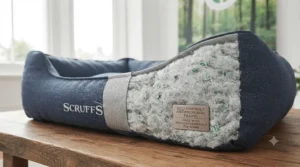
4. Scruffs Chester Box Bed — plush box design with stain- and odour-resistant weave
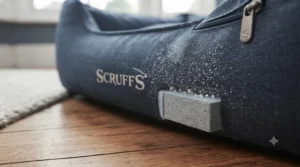
British brand Scruffs built its reputation on solving practical dog-owner problems, and the Chester Box Bed is a good example: a deep, structured box shape with a super-soft plush pile lining that resists staining and holds up to daily wear without flattening. The standout feature here isn’t a chemical treatment so much as smart fabric choice — the weave is engineered to resist absorbing odours and moisture in the first place, meaning there’s simply less for bacteria to feed on. Based on the spec comparison with looser, cushion-style beds, the raised box walls also give anxious or nesting dogs a sense of enclosure, which can reduce restlessness and, indirectly, the amount of digging and scratching that grinds dirt and skin cells into the fabric. The non-slip base keeps it from migrating across laminate or tile floors. Reviewers consistently mention that colours stay vibrant and the fabric doesn’t develop that “kennel smell” nearly as quickly as cheaper alternatives, though a handful note the cover takes a while to dry fully after washing.
Pros:
- ✅ Stain- and odour-resistant plush weave
- ✅ Box shape offers cosy, enclosed comfort
- ✅ Non-slip base prevents sliding on hard floors
Cons:
- ❌ Cover can take longer than average to air dry
- ❌ Limited orthopaedic support for older dogs
At around £30–£55, the Scruffs Chester Box Bed is a sensible mid-range choice for design-conscious owners.
5. PetFusion Ultimate Dog Bed — orthopaedic memory foam with a waterproof hygiene barrier
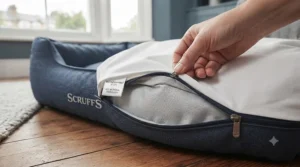
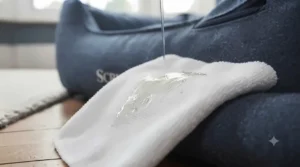
The PetFusion Ultimate Dog Bed takes a different route to hygiene: rather than treating the outer fabric, it seals a dense 4-inch memory foam core inside a waterproof liner, physically blocking urine, drool and spills from ever reaching the foam where bacteria could otherwise take hold. What the spec sheet won’t tell you, but reviewers note, is how much this liner also protects against the musty smell that ruins so many cheaper memory foam beds within a year. The breathable cotton-blend outer cover zips off separately using YKK zippers, a small detail that matters because cheap zippers are one of the most common failure points on washable pet beds. This is the pick for owners managing arthritis, hip dysplasia or simple old-dog stiffness, where genuine orthopaedic support matters as much as hygiene. Aggregated reviews are strongly positive on durability and firmness retention, with the most common complaint being that the outer cover, while breathable, isn’t quite as plush-feeling as fleece-covered competitors.
Pros:
- ✅ Waterproof liner blocks bacteria from reaching the foam
- ✅ Genuine 4-inch orthopaedic memory foam support
- ✅ Durable YKK zippers on a fully removable cover
Cons:
- ❌ Premium price compared with most beds on this list
- ❌ Outer fabric feels less plush than fleece alternatives
Expect a price range of roughly £70–£120, which reflects genuine orthopaedic-grade materials rather than marketing markup.
6. Scruffs Chateau Orthopaedic Bed — memory foam bolster sides for joint and hygiene support
The Scruffs Chateau Orthopaedic Bed pairs a memory foam base with raised memory foam side walls, giving larger or older dogs something to lean against while sleeping, which in practice keeps more of the body off cold, hard floors where bacteria and damp tend to accumulate. Based on the spec comparison with flat orthopaedic mats, those bolster sides do double duty: they cut draughts and they reduce the amount of fur and skin debris that migrates off the bed edges onto surrounding carpet. The zip-off cover is fully machine washable, and the brand’s own testing claims resistance to common odour-causing bacteria on the fabric surface. Reviewers consistently praise how well large breeds like Labradors and Cocker Spaniels settle into the bolstered shape, though a few buyers with giant breeds note the largest size still runs slightly snug. It’s a genuinely strong option for multi-dog households where communal snuggling accelerates both wear and microbial buildup.
Pros:
- ✅ Bolstered memory foam sides support joints and posture
- ✅ Fully removable, machine-washable cover
- ✅ Well suited to large and giant breeds
Cons:
- ❌ XL size can run smaller than expected for giant breeds
- ❌ Heavier and bulkier to move than flat foam beds
Priced around £55–£95, this sits at the premium end of the mid-range bracket.
7. Aspen Pet Antimicrobial Orthopedic Bed — Microban-infused faux suede cover
Available through Amazon’s international storefronts and increasingly stocked by UK sellers, the Aspen Pet Antimicrobial Orthopedic Bed uses Microban technology, one of the most widely studied commercial anti-microbial treatments, bonded into its faux suede and micro-terry cover specifically to slow the growth of odour-causing bacteria, mould and mildew on the surface. On paper this means the fabric itself is actively hostile to microbial colonisation rather than simply resisting stains, which is a genuinely different mechanism from the weave-based approach used by brands like Scruffs. The low-profile orthopaedic foam suits older dogs or those recovering from surgery who need easy, low-effort access without clambering over raised sides. Because it’s often sold via Amazon’s Global Store, delivery times and returns can work slightly differently than for beds dispatched from UK warehouses, which is worth checking before you commit. Reviewers consistently highlight noticeably reduced “wet dog” smell retention compared with untreated equivalents, with the main criticism being that the neutral grey and stripe design won’t suit every home’s decor.
Pros:
- ✅ Microban-treated fabric actively resists bacteria and mould
- ✅ Low-profile orthopaedic foam ideal for older or recovering dogs
- ✅ Machine-washable zippered cover for easy maintenance
Cons:
- ❌ Sold via Amazon Global Store, so delivery terms may differ
- ❌ Limited colour options compared with UK-based rivals
At around £35–£60, it’s a genuinely well-specified mid-range pick for anyone prioritising proven anti-microbial chemistry over design flair.
Anti-Microbial vs Anti-Bacterial Dog Bed: Same Thing?
Not quite, and the distinction matters more than most listings let on. Anti-bacterial specifically targets bacteria — the organisms responsible for most bad “doggy bed” smells and a fair share of skin infections. Anti-microbial is the broader umbrella term, covering bacteria alongside fungi, mould and yeast, which is why treatments like Microban and Permafresh are marketed as anti-microbial rather than the narrower anti-bacterial. Here’s what to weigh: if your dog’s main issue is persistent odour, an anti-bacterial-focused treatment like Permafresh (found in the Vetbed Gold) is doing most of the practical work. If you’re dealing with a damp climate, a dog who swims regularly, or mould-prone housing, the broader anti-microbial protection in products like the Aspen Pet Antimicrobial Orthopedic Bed covers more bases. Neither term is regulated tightly enough in general retail to guarantee a specific bacterial kill rate, so treat both as directional claims rather than clinical guarantees, and lean on aggregated review evidence over marketing copy alone.
Hypoallergenic vs Anti-Microbial Dog Bed: Which Does Your Dog Actually Need?
These two get conflated constantly, and they solve genuinely different problems. A hypoallergenic dog bed is designed to minimise allergens — dust mite droppings, dander and pollen — that trigger reactions in allergy-prone dogs or their owners. An anti-microbial dog bed is designed to slow the growth of living organisms like bacteria and fungi. A bed can be one without being the other: as Patient Info notes, house dust mites are microscopic creatures found in essentially every UK home, feeding on shed skin cells and thriving in the warm, humid conditions that beds and bedding provide — and reducing them is a physical and washing-frequency problem as much as a fabric-treatment one. Based on the spec comparison across this list, the Vetbed Original leans hypoallergenic through washability and natural fibre structure, while the Microban-treated Aspen Pet Antimicrobial Orthopedic Bed leans anti-microbial through active chemistry. If your dog (or a family member) has a diagnosed dust mite or dander allergy, prioritise hypoallergenic, frequently-washable materials first. If the bigger concern is odour and bacterial buildup from a dog who gets muddy, wet or simply sleeps a lot, prioritise genuine anti-microbial treatment instead.
How to Choose an Anti-Microbial Dog Bed
- Check the specific technology, not just the word “anti-microbial.” Permafresh, Microban and silver-ion treatments all work differently, and only one of those may suit your household’s actual needs.
- Match the wash temperature to your bacterial risk. A bed you can wash at 60°C, as recommended for reducing dust mite and bacterial load, will often outperform an untreated bed washed cold.
- Consider your dog’s size and joint health first. No amount of anti-microbial treatment compensates for a bed that’s too small or offers zero orthopaedic support.
- Think about where the bed lives. Damp utility rooms and conservatories favour mould-resistant anti-microbial fabrics over simple anti-bacterial ones.
- Read aggregated reviews for odour complaints at the 6-month mark. Treatments fade with washing, so long-term feedback tells you more than launch-week reviews.
- Factor in multi-pet households. Shared beds accumulate microbial load faster, making chemically treated fabric more worthwhile.
- Don’t skip the price-range check. Genuinely treated fabric costs more to manufacture, so suspiciously cheap “anti-microbial” claims deserve scepticism.
The Science Bit: Bacterial Growth, Odour Resistance and Treated Fabric Explained
Bacterial growth on dog bedding
Bacterial growth thrives wherever three conditions overlap: warmth, moisture and organic matter, and a dog bed ticks all three boxes almost by design. Skin cells, saliva, sweat from paw pads and the occasional damp walk home all deposit nutrients into the fabric, and body heat keeps the whole environment at an ideal incubation temperature overnight. On paper this means every dog bed, treated or not, is a viable bacterial habitat; the difference an anti-microbial finish makes is slowing the rate of colonisation, not eliminating it outright.
Odour resistance in practice
Odour resistance isn’t really about masking smell — it’s about limiting the bacterial metabolic byproducts that cause it in the first place. What most buyers overlook is that odour resistance and anti-bacterial performance are essentially two sides of the same coin: fewer bacteria breaking down organic waste on the fabric means fewer of the compounds your nose registers as “dog bed smell.” That’s why treatments like Permafresh are marketed on odour control almost as heavily as hygiene.
Treated fabric: what’s actually in it
Treated fabric generally falls into three camps: silver-ion treatments that disrupt bacterial cell walls on contact, synthetic antimicrobial agents like Microban bonded to fibres during manufacturing, and proprietary blends like Permafresh. Reviewers consistently note that treated fabric performs best in the first 12–18 months and gradually loses potency with repeated hot washing, which is a genuine limitation worth setting expectations around rather than glossing over.
Practical Usage Guide: Getting the Most from Your Anti-Microbial Bed
Buying the bed is only step one; how you use it in the first month determines whether that anti-microbial treatment actually earns its keep. Start by washing the cover before first use, even on a brand-new bed, since manufacturing residues and packaging chemicals can sit on treated fabric and slightly reduce its initial effectiveness. Establish a washing schedule from day one rather than waiting for visible dirt — a weekly wash at the temperature specified on the care label keeps bacterial load consistently low, whereas monthly deep cleans let colonies rebuild between washes and undermine the treatment’s whole purpose. Vacuum the bed base and surrounding floor at least twice weekly, since loose fur and skin flakes that aren’t directly on the bed still migrate back onto it. A common mistake in the first 30 days is drying treated covers on high heat in a tumble dryer, which can degrade certain fabric treatments faster than air drying or a low-heat cycle. Finally, rotate two beds if your budget allows — one in the wash while the other’s in use — because that single habit does more for genuine hygiene than any single product claim.
Real-World Scenarios: Which Bed Suits Which Dog
Consider a young family with a six-month-old Labrador puppy prone to accidents and constant chewing on bed edges: the Vetbed Original, at a lower price point and machine washable at high temperatures, absorbs the inevitable mess-ups without financial heartbreak while the puppy is trained. Compare that with a semi-retired working Springer Spaniel who swims most days and lives in a damp boot room — here, the Microban-treated Aspen Pet Antimicrobial Orthopedic Bed or the Permafresh-backed Vetbed Gold make far more sense, since both are built to actively resist the mould and bacterial growth that a persistently damp environment encourages. Finally, picture an elderly Staffordshire Bull Terrier with early-stage arthritis sharing a home with two other dogs: the bolstered, orthopaedic Scruffs Chateau Orthopaedic Bed or the waterproof-lined PetFusion Ultimate Dog Bed address both the joint-support need and the higher microbial load that comes with multiple dogs sharing sleeping space.
✨ Ready to Upgrade Your Dog’s Sleep Hygiene?
🔍 Take your dog’s bedtime routine to the next level with genuinely treated, vet-informed bed options. Click through to check current availability and pricing on any bed above — a healthier, fresher-smelling home for your family starts here!
Common Mistakes When Buying an Anti-Microbial Dog Bed
The single biggest mistake is assuming “anti-microbial” is a regulated, standardised claim — it isn’t, and coverage varies wildly between brands. A second common error is buying based on size alone and ignoring wash-temperature compatibility; a bed that can only handle a cool 30°C wash will never fully reset its bacterial load the way a 60°C-washable option can. Owners also frequently underestimate how quickly treatments fade, expecting day-one performance to last years without factoring in gradual degradation through washing. Another frequent slip is choosing a beautiful, plush-looking bed over one with a removable, washable cover — appearance tells you nothing about hygiene maintainability. Finally, many buyers skip checking whether the anti-microbial treatment covers just the outer fabric or the foam filling too, which matters enormously for beds that absorb moisture, like memory foam models without a waterproof liner.
Long-Term Cost & Maintenance
A £20 untreated bed that needs replacing every 8–10 months due to odour buildup and fabric breakdown can easily cost more over three years than a £70 treated bed that lasts twice as long. Based on the spec comparison across this list, the PetFusion Ultimate Dog Bed‘s waterproof liner and durable YKK zippers represent genuinely strong total cost of ownership, since the core foam is protected from the moisture damage that typically kills cheaper beds early. Maintenance-wise, budget roughly one wash cycle per week for the cover, an annual deep-clean or foam replacement check for orthopaedic models, and a realistic 2–3 year lifespan for mid-range beds versus 4–5 years for well-maintained premium options like the Scruffs Chateau Orthopaedic Bed. Factor detergent and electricity costs from weekly washing into your comparison too — they’re modest individually but add up meaningfully across a bed’s working life.
Benefits vs Traditional Dog Beds
| Factor | Anti-Microbial Bed | Traditional Untreated Bed |
|---|---|---|
| Bacterial regrowth speed | Slower, treatment-dependent | Faster, no resistance |
| Odour between washes | Noticeably reduced | Builds up quickly |
| Typical lifespan | 2–5 years | 1–3 years |
| Price range | Around £15–£120 | Around £10–£60 |
| Best For | Allergy-prone or multi-dog homes | Occasional, low-budget use |
The table makes the trade-off fairly clear: traditional beds cost less upfront but tend to need replacing sooner once odour and bacterial buildup become noticeable, while anti-microbial options like the Scruffs Chester Box Bed or Vetbed Gold spread that cost over a longer, fresher-smelling lifespan. For multi-dog households or anyone managing allergies, the anti-microbial category earns its premium fairly quickly once you account for reduced replacement frequency.
Price Range & Value Analysis
| Tier | Price Range | Representative Pick |
|---|---|---|
| Budget | Around £15–£30 | Vetbed Original |
| Mid-Range | Around £30–£75 | Scruffs Chester Box Bed, Danish Design Anti-Bacterial Duvet |
| Premium | Around £70–£120 | PetFusion Ultimate Dog Bed |
Budget beds win on upfront cost but rely more heavily on your washing discipline to stay hygienic, while premium beds like the PetFusion Ultimate Dog Bed bake genuine hygiene engineering — waterproof liners, durable zippers — into the construction itself. Mid-range options generally offer the best value-per-pound for most households, balancing real anti-microbial or anti-bacterial technology against a price that doesn’t demand a second mortgage.
Safety, Regulations and What “Anti-Microbial” Claims Actually Mean
Unlike medical devices, general consumer pet bedding in the UK isn’t required to prove specific anti-microbial kill rates before making a claim, so treat percentage-based marketing figures with healthy scepticism unless a brand cites independent lab testing. That said, dog welfare more broadly is legally underpinned: the gov.uk code of practice for the welfare of dogs sets out practical guidance to help owners meet their duty of care under Section 9 of the Animal Welfare Act 2006, which includes providing a suitable, clean environment as part of a dog’s basic needs. Look for OEKO-TEX STANDARD 100 certification where available, since it independently verifies that chemicals used in textile treatment — including anti-microbial finishes — meet safety thresholds for both pets and the humans handling the bedding. If your dog has broken skin, an open wound, or a diagnosed allergy, check with your vet before introducing any newly treated fabric, since a small minority of dogs can react to certain fabric-bound chemical treatments.
FAQ
❓ Do anti-microbial dog beds actually work?
❓ How often should I wash an anti-microbial dog bed?
❓ Is anti-microbial the same as waterproof?
❓ Can anti-microbial dog beds help with allergies?
❓ Are anti-microbial dog beds worth the extra cost?
Conclusion
The honest takeaway from all this research is that “anti-microbial dog bed” isn’t a single, standardised product — it’s a spectrum running from naturally hygienic, washable fleece like the Vetbed Original through to chemically treated fabrics like the Microban-infused Aspen Pet Antimicrobial Orthopedic Bed. None of the seven beds covered here are magic; all of them still need regular washing to perform as intended, and all of them work best when matched to your specific dog’s size, health needs and environment rather than chosen on marketing language alone. If budget is tight, start with the Vetbed Original and a disciplined wash routine. If you’re managing allergies, joint pain or a genuinely damp household, the treated, structurally supportive options further up this list — particularly the PetFusion Ultimate Dog Bed and Scruffs Chateau Orthopaedic Bed — earn their higher price tags through real engineering rather than buzzwords.
Recommended for You
- Dust Mite Resistant Dog Bed Reviews: 7 Best Picks for 2026
- Donut Calming Bed for Anxious Dogs: 7 Picks That Actually Help (2026)
- Dog bed for thunderstorm anxiety: 7 Calming Picks for 2026
Disclaimer: This article contains affiliate links. As an Amazon Associate, I earn from qualifying purchases. If you purchase products through these links, we may earn a small commission at no additional cost to you.
✨ Found this helpful? Share it with your friends! 💬🤗
