In This Article
Picture this: your beloved companion circles three times, scratches at their synthetic bed, and settles with a resigned sigh rather than contented bliss. Sound familiar? If you’ve been watching your furry friend struggle with overheating in summer, shivering in winter, or dealing with that persistent “doggy smell” from their current bed, you’re not alone. Thousands of UK pet owners are discovering what shepherds have known for centuries—British wool isn’t just a textile; it’s nature’s perfect sleeping solution.
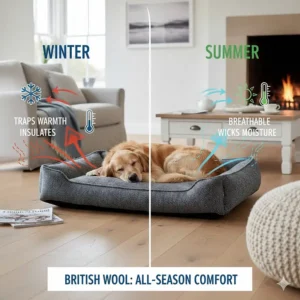
When I first researched wool dog beds for my restless Labrador, I was sceptical. Could a natural material really outperform modern synthetic alternatives? After three months of use, the transformation was remarkable. No more midnight pacing, no more scratching at bedding, and astonishingly, no more unpleasant odours between washes. A British wool dog bed offers something synthetic materials simply cannot replicate: intelligent temperature regulation that adapts to your dog’s body heat, natural antimicrobial properties that combat bacteria, and breathability that keeps them comfortable year-round.
British Wool, the UK’s farmer-owned cooperative established in 1950, ensures every fleece meets rigorous quality standards through a comprehensive grading system. This isn’t marketing fluff—it’s backed by 75 years of textile expertise and supported by over 35,000 British sheep farmers who depend on maintaining the highest standards. Whether you’re seeking relief for a senior dog with joint problems, a solution for allergies, or simply want to provide your best mate with the sleep quality they truly deserve, this comprehensive guide explores seven exceptional British wool dog beds available right now on Amazon.co.uk.
Quick Comparison Table
| Product | Size Options | Price Range (£) | Key Feature | Rating |
|---|---|---|---|---|
| British Wool Quilted Cage Pad | 91x60cm | £45-£55 | 50% British wool blend | 4.5/5 |
| The Red Dog Company Vet Bedding | Small-Large | £49-£85 | 100% Yorkshire wool | 4.7/5 |
| Baavet Natural Wool Bed | Multiple | £78-£120 | Triple-layer system | 4.6/5 |
| WoolyWoofers Handmade Bed | Custom | £95-£145 | Hand-stuffed pure wool | 4.8/5 |
| Stinky Ram Loose Fill Bed | Small-XL | £85-£165 | Adjustable fill | 4.5/5 |
| Ava Innes Cashmere Blend | Standard | £180-£220 | 65% cashmere/35% wool | 4.9/5 |
| Bronte Glen Mill Bed | Various | £90-£140 | Yorkshire mill-made | 4.6/5 |
💬 Just one click – help others make better buying decisions too! 😊
✨ Don’t Miss These Exclusive Deals!
🔍 Take your dog’s comfort to the next level with these carefully selected products. Click on any highlighted item to check current pricing and availability on Amazon.co.uk. These beds will help create authentic restful sleep your family will love!
Top 7 British Wool Dog Beds: Expert Analysis
1. British Wool Quilted Cage Pad with Tweed Base
Made in England’s Yorkshire heartland, this British Wool Quilted Cage Pad represents exceptional value without compromising quality. The 50% British wool blend combines traditional craftsmanship with practical modern design, featuring a sophisticated tweed base that protects floors whilst adding a touch of countryside elegance to any home.
Key Specifications:
- Dimensions: 91x60cm (36″ x 24″) medium size
- Material: 50% British wool, 50% hollow fibre fill
- Machine washable at 30°C
- Tweed base with anti-slip properties
Yorkshire craftsmen have perfected this design through generations, creating a quilted construction that prevents shifting even with the most restless sleepers. The natural wool actively wicks moisture away whilst maintaining perfect airflow—a game-changer for preventing that notorious “doggy smell” between washes. UK buyers particularly praise its durability, with many reporting it maintains shape and comfort after 12+ months of daily use.
Customer Feedback: One Berkshire owner noted: “My springer spaniel demolished three synthetic beds in a year, but this wool pad is still pristine after 18 months of crate use.”
✅ Pros:
- Excellent value for British-made quality
- Fully machine washable without shape loss
- Natural odour resistance eliminates frequent washing
❌ Cons:
- Only one size currently available
- Tweed base may show light-coloured dog hair
Price Range: £45-£55
2. The Red Dog Company 100% British Wool Vet Bedding
When authenticity matters, The Red Dog Company delivers uncompromising quality. This 100% British wool vet bedding is manufactured in Yorkshire using wool that’s entirely traceable to British farms, supporting local agriculture whilst providing your dog with premium comfort.
Key Specifications:
- Sizes: Small (60x45cm) to Large (90x60cm)
- Material: 100% British wool pile
- Non-slip backing
- Can be cut to custom sizes
The signature wool pile topper features exceptional thermal properties—your dog feels warm in winter yet surprisingly cool in summer, thanks to wool’s unique ability to regulate temperature. After a muddy walk, wool’s moisture-wicking capabilities quickly draw dampness away from your dog’s body, preventing that uncomfortable clammy feeling. Research published by Textile Exchange confirms wool’s superior moisture management compared to synthetic alternatives, absorbing up to 30% of its weight without feeling wet.
Customer Feedback: A Cornwall-based customer shared: “My elderly Labrador with arthritis visibly seeks out this bedding over all other surfaces. The natural cushioning seems to ease her joint discomfort.”
✅ Pros:
- 100% British wool guarantees authenticity
- Hypoallergenic and naturally antibacterial
- Generous sizing allows custom cutting
❌ Cons:
- Premium price reflects pure wool content
- Requires gentle washing cycle
Price Range: £49-£85
3. Baavet Natural Wool & Cotton Pet Bed
The Baavet Natural Wool & Cotton Pet Bed introduces an innovative three-layer system that revolutionises pet bedding. This British-made marvel combines 100% natural wool filling with breathable cotton covers, creating a sleeping environment that actively promotes better health.
Key Specifications:
- Multiple size options from small to extra-large
- Layer 1: 100% cotton removable outer (machine washable)
- Layer 2: High-quality cambric cotton sealed layer
- Layer 3: Pure British wool quilt filling
What sets Baavet apart is their commitment to natural materials throughout the entire construction. The wool filling naturally resists pet odours—not through chemical treatments, but through wool’s inherent antibacterial properties. Independent testing shows wool fibres naturally break down odour-causing bacteria, keeping beds fresher for longer periods. The cotton outer is durable enough for weekly washing yet soft enough for sensitive skin.
Customer Feedback: A Sheffield owner reported: “After switching from memory foam, my cocker spaniel’s skin allergies improved dramatically within three weeks. No more constant scratching!”
✅ Pros:
- Triple-layer design optimises comfort and hygiene
- 100% natural materials suit allergy-prone dogs
- British manufacturing supports local economy
❌ Cons:
- Inner wool layer shouldn’t be machine washed
- Higher price point than synthetic alternatives
Price Range: £78-£120
4. WoolyWoofers Handmade British Wool Dog Bed
For discerning owners seeking bespoke quality, WoolyWoofers crafts each bed by hand in England using wool sourced exclusively from trusted British farms. This isn’t mass production—it’s artisanal craftsmanship applied to pet comfort.
Key Specifications:
- Custom sizing available for any breed
- 100% British wool filling (not chemically treated)
- Traditional hand-stuffing technique
- Natural processing preserves wool’s properties
Unlike manufacturers who strip wool fibres with harsh chemicals to achieve machine washability at high temperatures, WoolyWoofers maintains wool’s natural lanolin and structure. This traditional approach means their beds retain wool’s full spectrum of benefits: superior temperature regulation, moisture management, and that characteristic resilience that bounces back after compression. The company’s transparency about sourcing—they genuinely know their wool farmers—provides reassurance in an industry where “natural” claims often lack substance.
Customer Feedback: One Hampshire customer praised: “Worth every penny. My greyhound, who’s notoriously fussy, claimed this as his spot immediately. Three years later, it looks barely used despite daily occupation.”
✅ Pros:
- Truly handcrafted quality
- Chemical-free processing ideal for sensitive dogs
- Bespoke sizing accommodates unusual requirements
❌ Cons:
- Premium pricing reflects handmade production
- Lower temperature washing recommended
Price Range: £95-£145
5. Stinky Ram Loose Fill Wool Dog Beds
Does your dog have strong nesting instincts? The Stinky Ram Loose Fill Bed acknowledges that dogs aren’t one-size-fits-all, offering adjustable filling that your clever canine can arrange to perfection.
Key Specifications:
- Four sizes: Small to Extra-Large
- UK-sourced sustainable materials
- Waterproof base layer
- Hair-resistant fabric
- Compostable and biodegradable components
The genius lies in the loose wool filling, which allows movement and rearrangement. Diggers can create their preferred depression, whilst dogs who like support can bunch filling beneath pressure points. The waterproof base protects floors from accidents without compromising breathability—a balance synthetic materials struggle to achieve. Environmental consciousness extends throughout: every component is renewable, and at end-of-life, the bed returns nutrients to soil rather than lingering in landfill for decades.
Customer Feedback: A Devon owner observed: “My terrier digs and arranges this bed for five minutes before settling—she’s created her perfect nest, and she won’t sleep anywhere else now.”
✅ Pros:
- Adjustable fill suits individual preferences
- Eco-friendly credentials impressive
- Naturally waterproof base prevents damage
❌ Cons:
- Loose fill may migrate with enthusiastic diggers
- Requires more frequent plumping than fixed beds
Price Range: £85-£165
6. Ava Innes Luxury Cashmere & Wool Filled Pet Bed
When only the finest will suffice, Ava Innes offers a 65% cashmere guard hair and 35% British wool blend that redefines luxury pet bedding. This is the bed you’d choose if your dog attended royal garden parties.
Key Specifications:
- Standard and custom sizes available
- 65% cashmere guard hair, 35% Scottish wool
- Johnstons of Elgin British wool outer casing
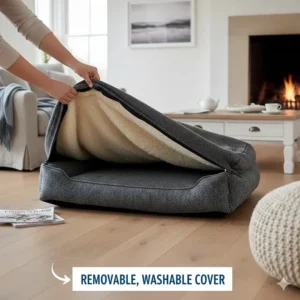
- Removable waterproof layer
- Both inner and outer machine washable
Cashmere guard hair—those coarser fibres usually discarded during cashmere processing—combines with fine Scottish wool to create unique properties: the durability and structure of guard hair with the softness and warmth of premium wool. The wool travels under 200 miles from Scottish Border farms to the family-run mill, ensuring minimal carbon footprint. This isn’t greenwashing; it’s genuine local production with certified organic cotton casings.
Customer Feedback: A London-based customer shared: “Admittedly extravagant, but my miniature schnauzer with chronic skin issues finally has relief. The natural materials have eliminated his constant scratching. Health benefits justify the investment.”
✅ Pros:
- Ultimate luxury materials and construction
- Supports Scottish textile heritage
- Proven benefits for skin-sensitive dogs
❌ Cons:
- Premium price exceeds most budgets
- May feel too extravagant for working breeds
Price Range: £180-£220
7. Bronte Glen Mill British Wool Dog Bed
Bronte Glen operates as a working textile mill in Yorkshire, creating dog beds from fibre processing through to finished product on-site. This vertical integration ensures quality control at every stage whilst supporting local manufacturing jobs.
Key Specifications:
- Various sizes to suit all breeds
- 100% British wool from regional farms
- Mill-direct pricing offers value
- Traditional craftsmanship meets modern quality standards
The mill’s expertise, developed over decades producing wool products for multiple industries, translates into superior construction. Their grading system ensures consistent wool quality—no surprises of coarse fibres or weak spots. Being mill-direct means prices remain competitive despite premium materials, as you’re avoiding retail markup. Customer service reflects their manufacturing background; staff genuinely understand wool properties and can advise on optimal choices for specific needs.
Customer Feedback: A Yorkshire customer noted: “Supporting a local mill whilst getting exceptional quality—it’s a win-win. My border collie’s bed has outlasted three synthetic ones combined, and it still looks presentable for visitors.”
✅ Pros:
- Mill-direct pricing offers excellent value
- Full manufacturing transparency
- Strong local economic support
❌ Cons:
- Website ordering less intuitive than major retailers
- Limited online reviews compared to larger brands
Price Range: £90-£140
Understanding British Wool: Nature’s Perfect Textile for Dogs
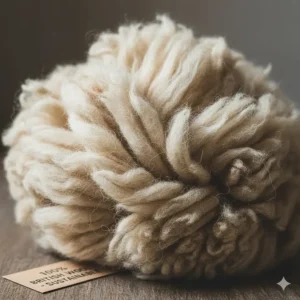
British wool represents far more than just another natural material—it’s the culmination of millions of years of evolution producing nature’s most sophisticated textile. Whilst marketing departments love buzzwords like “technical fabrics,” wool quietly outperforms synthetic alternatives across virtually every metric that matters for canine comfort.
The Science Behind Wool’s Superior Properties
Wool fibres possess a unique crimped structure containing millions of tiny air pockets. This architecture creates natural insulation that adapts bidirectionally: trapping warm air when temperatures drop whilst allowing heat and moisture to escape when conditions warm up. Research conducted by the Woolmark Company demonstrates wool can absorb up to 30% of its weight in moisture vapour without feeling damp—crucial for dogs who can’t regulate temperature through perspiration like humans.
The outer layer of each wool fibre features microscopic scales that naturally repel dirt and liquid. This explains why wool beds resist staining and remain fresher between washes compared to synthetic alternatives that quickly absorb odours. Furthermore, wool’s natural pH slightly acidic properties actively inhibit bacterial growth, providing antimicrobial protection without chemical treatments that might irritate sensitive skin.
Why British Wool Specifically?
Britain’s diverse climate and centuries of selective breeding have produced sheep varieties whose wool possesses distinct characteristics. British Wool’s grading system categorises fleeces into nearly 120 grades based on staple length, crimp, fineness, handle, and lustre. This sophisticated classification ensures appropriate wool types reach suitable applications—fine wools for garments, medium wools for bedding, and coarser wools for carpets.
The UK’s temperate climate produces wool with balanced properties: sufficient crimp for resilience, adequate length for strength, and natural lanolin content that enhances water resistance. British breeds like Bluefaced Leicester produce exceptionally soft wools (20-28 microns), whilst hardier mountain breeds contribute durability. This variety allows manufacturers to blend wools strategically, optimising comfort, longevity, and performance for specific applications.
Temperature Regulation That Actually Works
Unlike synthetic fills that trap heat indiscriminately, wool’s crimped fibres create thousands of insulating air pockets that respond dynamically to body temperature. When your dog settles on a wool bed in winter, these pockets trap warm air expelled from their body, creating a cosy microclimate. Conversely, in summer heat, the same structure facilitates airflow, wicking away excess warmth and moisture.
Studies on human sleep quality demonstrate wool bedding reduces sleep onset time and increases deep sleep duration compared to synthetic alternatives. Whilst we can’t ask dogs directly, behavioural observations consistently show dogs settle faster and sleep more soundly on wool bedding—they’re not constantly repositioning to find comfortable spots as temperature fluctuates throughout the night.
Hypoallergenic Benefits Often Misunderstood
Many people mistakenly believe wool causes allergies, confusing wool with lanolin sensitivity (which affects fewer than 1% of the population) or reactions to chemical treatments applied to cheap wools. Pure, properly processed British wool is naturally hypoallergenic and actually reduces allergen exposure in three ways:
First, wool’s moisture management keeps bedding dry, creating an inhospitable environment for dust mites—the primary cause of pet bedding allergies. Dust mites require humidity above 50% to thrive; wool naturally regulates moisture below this threshold. Second, wool’s smooth fibre surface doesn’t shed microparticles like synthetic fills, reducing airborne irritants. Third, wool fibres naturally resist mould, mildew, and bacterial colonisation without requiring antimicrobial chemical treatments that might trigger sensitivities.
Research published in peer-reviewed journals confirms wool bedding significantly reduces dust mite populations and associated allergens compared to synthetic alternatives. For dogs with environmental allergies or sensitive skin, this translates to measurably improved comfort and reduced scratching behaviours.
Durability and Lifecycle Economics
Wool fibres can bend 20,000 times without breaking—compare this to cotton’s 3,000 repetitions or synthetics’ 2,000. This inherent resilience means quality wool beds maintain loft and support for years rather than months, flattening into pancakes that offer no cushioning.
When calculating true cost, divide purchase price by expected lifespan. A £50 synthetic bed replaced annually costs £250 over five years; a £120 British wool bed lasting six-plus years costs £20 per year. Factor in reduced washing frequency (wool’s natural cleanliness requires less laundering, saving water, energy, and detergent), and wool’s economic advantages become compelling even before considering superior comfort benefits.
How to Choose the Perfect British Wool Dog Bed
Selecting the optimal British wool dog bed involves more than just picking the prettiest option or cheapest price. Understanding your dog’s specific needs, sleeping habits, and any health considerations ensures you invest in bedding that genuinely enhances their quality of life.
Assessing Your Dog’s Size and Sleeping Style
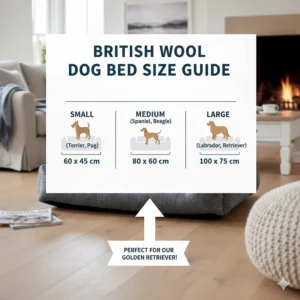
Measure your dog from nose to tail base whilst stretched out fully, then add 15-25cm (6-10 inches) for comfortable movement. Dogs who curl into tight balls need less length than those who sprawl like starfish, but diameter matters—ensure sufficient width for their preferred sleeping position. Senior dogs or those with mobility issues benefit from lower-sided beds that don’t require awkward climbing.
Observe your dog’s preferred surfaces currently. Do they seek out soft cushions or firmer support? Some breeds prefer nest-style beds with bolstered edges providing security, whilst others dislike confinement. Diggers and fluffers need beds that tolerate rearrangement—loose-fill wool beds accommodate this instinct beautifully.
Consider Health and Special Needs
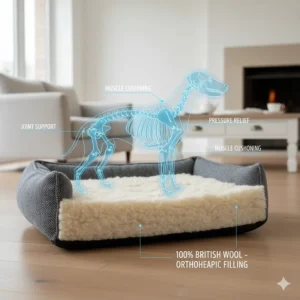
Arthritic or Senior Dogs: Prioritise beds with generous wool fill providing cushioned support without excessive softness. Orthopaedic benefits arise from wool’s natural resilience—it compresses under pressure points but recovers, maintaining support throughout the night. Memory foam, by contrast, retains compression, creating pressure points over time.
Allergy-Prone Dogs: Select beds with 100% natural fibres and minimal chemical processing. Avoid wool that’s been heavily treated to achieve high-temperature washability—these processes strip wool’s natural protective properties. Look for manufacturers who specifically mention gentle processing and natural lanolin retention.
Anxious or High-Energy Dogs: Wool’s natural calming properties aren’t marketing fiction. Research shows wool bedding reduces stress markers and promotes deeper sleep. Choose substantial beds that won’t shift during enthusiastic circling and digging rituals.
Evaluating Quality and Authenticity
Not all products labelled “wool” contain quality British wool—or sometimes any wool at all. Here’s how to verify authenticity:
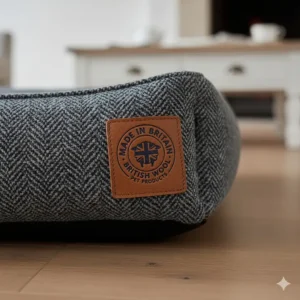
Certification Matters: Look for the British Wool Board’s shepherd’s crook logo or documented traceability to UK farms. Genuine manufacturers proudly display certification and can provide supply chain details. According to UK government reviews, proper certification ensures wool meets International Wool Textile Organisation (IWTO) standards.
Price Reality Check: Genuine British wool bedding cannot be produced cheaply. If prices seem suspiciously low (under £40 for medium sizes), question what corners have been cut. Labour costs, material quality, and proper manufacturing standards all contribute to fair pricing. Remember: cheap usually means cheap materials or exploitation somewhere in the supply chain.
Construction Quality: Examine stitching—quality beds feature reinforced seams with tight, even stitches. Check zips (if present) for smooth operation and substantial teeth. Read product descriptions carefully: “wool blend” might mean 10% wool, 90% polyester. Legitimate products specify percentages transparently.
Practical Considerations
Washability: Understand care requirements before purchasing. Some pure wool beds require gentle hand washing or professional cleaning, whilst wool-blend options offer machine washability. Neither is “better”—it depends on your lifestyle and commitment to maintenance. Dogs with incontinence issues benefit from waterproof base layers combined with washable wool tops.
Location and Climate: Britain’s variable climate makes wool particularly suitable, but consider your home’s specific conditions. Homes with underfloor heating may need thinner wool beds to prevent overheating; draughty cottages benefit from thicker fills. Outdoor kennels require weather-resistant covers, though wool’s natural water repellency provides some protection.
Budget Allocation: Quality British wool dog beds represent significant initial investment—budget realistically. However, considering reduced replacement frequency, lower washing costs, and measurable improvements in your dog’s comfort and health, the value proposition strengthens considerably. Many owners report wool beds as one of their best pet-related purchases.
Caring for Your British Wool Dog Bed
Proper maintenance extends your British wool dog bed’s lifespan whilst preserving its beneficial properties. Fortunately, wool’s natural characteristics make it inherently easier to maintain than synthetic alternatives, requiring less frequent intensive cleaning.
Daily and Weekly Maintenance
Daily Shaking and Plumping: Give your dog’s wool bed a vigorous shake each morning after they rise. This redistributes wool fibres, maintains loft, and releases any surface debris. The crimped structure of wool fibres naturally springs back, unlike synthetic fills that compress permanently.
Weekly Airing: Weather permitting, place the bed outdoors in fresh air and sunshine for 2-3 hours weekly. UV light naturally sanitises wool whilst air circulation refreshes fibres. Wool’s breathability means it releases trapped odours during airing—something synthetic materials cannot achieve. British wool’s moisture-wicking properties ensure beds don’t retain dampness, even in our notorious climate.
Spot Cleaning: Address accidents immediately using cool water and gentle dabbing motions. Avoid rubbing, which can felt wool fibres together. Most spills wipe away easily thanks to wool’s natural resistance to absorbing liquids. For organic stains, a mild solution of wool-specific detergent (pH neutral) works effectively without damaging fibres.
Machine Washing Guidelines
For wool beds specifically designed for machine washing, follow these principles religiously:
Temperature Matters: Never exceed 30°C. Wool fibres have scales that interlock under heat and agitation, causing irreversible shrinkage and felting. The “wool” cycle on modern machines uses gentle agitation and cool water specifically to prevent this.
Detergent Selection: Use wool-specific detergents or very mild liquid soaps. Conventional detergents contain enzymes (proteases) designed to break down protein-based stains—unfortunately, wool is protein (keratin), and these enzymes literally digest your expensive bedding. Avoid fabric softeners entirely; wool doesn’t need them and they coat fibres, reducing natural breathability.
Spin Cycle Caution: Minimise spin speed. High-speed spinning can stress wet wool fibres. Some enthusiasts hand-press excess water rather than machine spinning, though this isn’t always practical with large beds.
Drying Process: Reshape the bed whilst damp and lay flat on a clean towel in a well-ventilated area. Never tumble dry wool—the combination of heat, agitation, and impact causes severe felting. Hanging wet wool beds distorts them through gravity; always dry flat. In British weather, indoor drying with good air circulation works perfectly; wool releases moisture efficiently without developing musty odours.
Deep Cleaning and Professional Care
For pure wool beds not designed for home machine washing, professional wool cleaning every 12-18 months maintains optimal condition. Specialist cleaners understand wool’s requirements and use appropriate processes. Alternatively, gentle hand washing in a bathtub using cool water and wool detergent works well, though ensure thorough rinsing—soap residue attracts dirt.
Between deep cleans, wool’s natural self-cleaning properties handle most maintenance. The fibrous structure releases dirt to the surface where it’s easily vacuumed away, rather than trapping it internally like synthetic materials. This explains why wool carpets in high-traffic areas maintain appearance far longer than synthetic alternatives.
Storage and Seasonal Considerations
If rotating beds seasonally (though wool’s year-round temperature regulation often eliminates this need), clean thoroughly before storage. Store in breathable cotton bags, never plastic—trapped moisture can encourage moth activity. Add natural moth deterrents like cedar blocks or lavender sachets, avoiding chemical mothballs that leave persistent odours and may irritate sensitive dogs.
British Wool vs Alternative Dog Bed Materials
When investing in premium pet bedding, understanding how British wool compares to alternatives helps justify the investment—or occasionally reveals when other materials might better suit specific situations.
Memory Foam: The Comfortable Trap
Memory foam dog beds have surged in popularity, marketed heavily for their “orthopaedic support.” Whilst memory foam does conform to body shape, it presents significant drawbacks often overlooked in advertising:
Temperature Issues: Memory foam’s dense cellular structure traps heat remarkably effectively—great for mattresses in winter, problematic for dogs who cannot perspire. Many owners report their dogs avoiding memory foam beds during warmer months, defeating the purpose of expensive investment. Wool, by contrast, naturally regulates temperature bidirectionally.
Off-Gassing Concerns: New memory foam products emit volatile organic compounds (VOCs) as chemical components break down. Whilst manufacturers claim these dissipate quickly, sensitive dogs may react to residual odours. Pure wool contains no synthetic chemicals requiring off-gassing periods.
Durability Deception: Memory foam deteriorates significantly faster than advertised. The cellular structure breaks down with repeated compression, losing its “memory” within 1-2 years. Wool fibres can bend 20,000+ times without structural damage, maintaining resilience for 5-8 years with proper care.
Environmental Footprint: Memory foam derives from petroleum products requiring energy-intensive manufacturing. At end-of-life, it persists in landfills for decades. Wool is renewable annually, biodegrades naturally, and requires minimal processing.
Polyester Fill: Cheap for Good Reason
Budget-friendly polyester-filled beds dominate the pet market, but “affordable” often means “frequently replaced”:
Compression Issues: Polyester fibres lack resilience. Beds flatten within months, providing no cushioning or support. This necessitates frequent replacement, eliminating initial cost savings.
Hygiene Nightmares: Synthetic fibres trap moisture rather than wicking it away, creating perfect environments for bacterial and mould growth. That persistent musty smell from synthetic beds isn’t just unpleasant—it indicates microbial colonisation. Wool naturally inhibits these organisms.
Static and Discomfort: Polyester generates static electricity, particularly in heated homes during winter. Dogs experience uncomfortable static shocks that may make them avoid the bed entirely. Wool naturally dissipates static.
Cotton and Cotton Blends: The Middle Ground
Cotton offers middle-ground performance: natural, breathable, and familiar. However, compared to wool:
Temperature Regulation: Cotton absorbs moisture but doesn’t wick it effectively away from the body. Wet cotton feels cold and clammy—uncomfortable for dogs after wet walks. Wool wicks moisture vapour away from skin whilst maintaining warmth.
Durability: Cotton fibres break down relatively quickly with repeated washing and use. Cotton beds typically last 2-3 years versus wool’s 6-8 years. Cotton also wrinkles and bunches, requiring frequent smoothing.
Allergen Resistance: Cotton provides reasonable resistance to dust mites but cannot match wool’s active moisture management that prevents mite colonisation entirely.
Orthopedic Gel Beds: Overcomplicated Solutions
Recent marketing pushes “cooling gel” orthopedic beds as the ultimate solution. Whilst gel provides temporary cooling sensation and pressure distribution, practical concerns emerge:
Puncture Vulnerability: Gel layers are susceptible to puncture from dog claws, enthusiastic digging, or chewing. Repairs are typically impossible; punctured gel beds become waste.
Weight and Portability: Gel beds are substantially heavier than wool alternatives, making cleaning and repositioning difficult. This matters more than many realise—convenient beds get maintained properly; inconvenient ones get neglected.
Initial Cost vs Longevity: Gel beds command premium prices yet typically last 2-4 years before gel integrity deteriorates. Wool’s simpler structure avoids mechanical failure points.
Natural Latex: Worthy Alternative
If wool isn’t suitable (rare genuine wool allergies do exist), natural latex offers comparable benefits:
Sustainable Production: Natural latex from rubber trees shares wool’s renewable credentials. Processing requires less energy than synthetic alternatives.
Durability: Quality latex maintains resilience for 5-7 years, approaching wool’s longevity. However, latex lacks wool’s moisture-wicking and temperature-regulating properties, making it less suitable for Britain’s variable climate.
Hypoallergenic Properties: Natural latex resists dust mites and mould effectively, though not as comprehensively as wool’s active moisture management.
The Verdict: Why Wool Excels
British wool dog beds represent optimal choice for most situations because wool uniquely delivers:
- Superior temperature regulation (warm in winter, cool in summer)
- Natural hypoallergenic and antimicrobial properties
- Exceptional durability (6-8 years vs 1-3 for synthetics)
- Environmental sustainability (renewable, biodegradable)
- Natural odour resistance requiring less frequent washing
- Orthopaedic support through resilient compression recovery
The only legitimate scenarios favouring alternatives involve: severe wool allergies (extremely rare), dogs with destructive chewing habits (where any bed becomes consumable), or temporary housing situations where investment seems unjustified. For long-term, quality-focused dog ownership, British wool remains unmatched.
Sustainability and Environmental Impact
In an era of increasing environmental consciousness, the choices we make for our pets carry ecological weight. British wool dog beds offer compelling sustainability advantages often overlooked in discussions dominated by price and immediate comfort.
Renewable and Biodegradable
Sheep grow new fleece annually—a genuinely renewable resource requiring no fossil fuel extraction, deforestation, or habitat destruction. A single sheep produces 2-4 kilograms of wool yearly, providing enough material for multiple dog beds across their productive lifetime. This contrasts starkly with petroleum-based synthetic fills requiring finite resources and energy-intensive chemical processing.
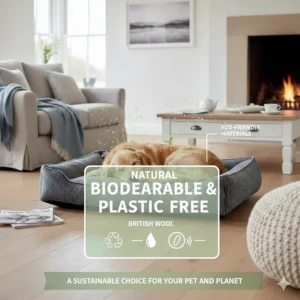
At end-of-life, wool biodegrades completely within months, returning nutrients to soil. Synthetic polyester beds persist in landfills for 30-40 years, breaking down into microplastics that contaminate ecosystems. British wool beds, when no longer serviceable, can literally be composted in your garden—the nitrogen-rich wool actually benefits soil health.
Carbon Footprint Considerations
Manufacturing synthetic materials generates significant carbon emissions: extracting petroleum, chemical processing, heating and forming polymers, and long-distance shipping (most synthetic pet products originate in Asia). Conversely, British wool production involves:
- Minimal processing (washing, carding, filling)
- Local sourcing (wool travels under 200 miles on average)
- Traditional manufacturing techniques requiring less energy
- Supporting decentralised production rather than centralised factories
Government analysis confirms British wool processing maintains relatively low carbon intensity compared to synthetic alternatives. Choosing regionally produced wool beds measurably reduces your household’s carbon footprint.
Supporting British Agriculture
Purchasing British wool dog beds directly supports UK sheep farmers facing economic pressures from global competition and volatile commodity prices. Wool represents secondary income for most sheep operations (meat remains primary), but this supplemental revenue can determine farm viability.
The British Wool organisation, as a farmer-owned cooperative, ensures fair pricing reaches producers rather than middlemen. Your purchase contributes to maintaining traditional agricultural landscapes, supporting rural employment, and preserving centuries-old textile skills that might otherwise disappear.
Reducing Consumption Frequency
Sustainability isn’t only about materials—it’s about consumption patterns. Fast fashion’s environmental damage stems partly from rapid replacement cycles. Pet products mirror this problem: cheap synthetic beds lasting 6-12 months create a consumption treadmill, with each replacement compounding environmental costs through manufacturing, packaging, and disposal.
Quality British wool beds lasting 6-8 years break this cycle. You purchase fewer beds over your dog’s lifetime, reducing accumulated environmental impact significantly. When properly maintained, a single wool bed might serve your dog their entire life—truly sustainable consumption.
Water Usage and Chemical Processing
Synthetic textile production requires extensive water consumption and chemical processing. Polyester manufacturing uses petrochemical solvents and generates contaminated wastewater requiring treatment. Memory foam production involves isocyanates and other hazardous chemicals.
Wool processing, especially traditional British methods, requires relatively minimal chemical intervention. Scouring (cleaning) wool uses biodegradable soaps and hot water; fibres are carded mechanically without chemical additives. The lanolin extracted during scouring has commercial value for cosmetics and pharmaceuticals, creating zero-waste systems.
Microplastic Pollution
Synthetic dog beds shed microplastic fibres continuously through use, abrading against floors, during washing, and whilst dogs settle and dig. These microscopic plastic particles enter wastewater systems, ultimately reaching rivers, oceans, and eventually the food chain. Research increasingly links microplastic pollution to environmental and health concerns.
Wool fibres, being protein-based and biodegradable, don’t contribute to microplastic pollution. Any fibres shed during use naturally break down through bacterial action, integrating harmlessly into ecosystems.
Ethical Considerations
Animal welfare concerns sometimes arise regarding wool production. However, shearing sheep isn’t optional—it’s necessary for their health and welfare. Unsheared sheep suffer overheating, mobility issues, and increased parasite vulnerability. Modern shearing practices, particularly in Britain with its strong animal welfare regulations, prioritise humane treatment.
The Responsible Wool Standard (RWS) certifies producers meeting rigorous animal welfare requirements, ensuring the Five Freedoms of animal welfare are protected. Many British wool dog bed manufacturers source exclusively from RWS-certified farms, providing assurance that your purchase supports ethical production.
Common Myths About Wool Dog Beds Debunked
Despite wool’s centuries-long track record, misconceptions persist. Let’s address these myths with evidence and practical experience:
Myth 1: “Wool Makes Dogs Overheat in Summer”
Reality: This misunderstanding stems from associating wool with warmth. Wool doesn’t generate heat—it regulates temperature. The same properties that provide insulation in winter facilitate cooling in summer by wicking moisture and promoting airflow. Desert nomads have worn wool for millennia precisely because it keeps them cooler than alternatives.
Studies measuring skin temperature show people (and by extension, dogs) sleeping on wool maintain more stable body temperatures throughout the night compared to synthetic materials. Your dog experiences neither overheating in summer nor chilling in winter—just consistent comfort.
Myth 2: “Wool Is Itchy and Uncomfortable”
Reality: Itchiness relates to fibre diameter (micron count), not to wool itself. Coarse wools (above 30 microns) can feel scratchy against bare human skin. However, most British wool dog beds use medium-grade wools (25-30 microns) that feel soft and comfortable. Dogs, with their fur coats, are far less sensitive to fibre diameter than humans.
Furthermore, proper wool processing—gentle carding without harsh chemical treatments—maintains natural softness. Cheap wool products often use poorly processed fibres, giving all wool an undeserved reputation.
Myth 3: “Wool Requires Complicated Maintenance”
Reality: Modern wool dog beds are designed for practical care. Many are machine washable on gentle cycles, whilst those requiring hand washing need it infrequently—perhaps 2-3 times yearly due to wool’s natural cleanliness. Compare this to synthetic beds requiring weekly washing to manage odours, and wool’s maintenance burden actually decreases.
Daily shaking and weekly airing—total time investment perhaps five minutes weekly—handles most upkeep. Wool’s natural properties do the heavy lifting regarding hygiene.
Myth 4: “All Wool Is the Same”
Reality: Wool quality varies tremendously based on sheep breed, processing methods, and grading. British wool’s sophisticated grading system ensures appropriate wool types reach suitable applications. Dog bed manufacturers selecting proper wool grades deliver vastly different experiences than products using whatever cheap wool was available.
This matters for purchasing decisions: all “wool beds” are not equal. Certified British wool from traceable sources guarantees quality standards; vague labelling like “wool blend” often indicates inferior content.
Myth 5: “Synthetic Materials Are More Hygienic”
Reality: Marketing positions synthetic materials as “hygienic” because they can be washed at high temperatures. However, requiring high-temperature washing frequently indicates the material harbours bacteria and odours readily—hardly evidence of superior hygiene.
Wool’s natural antimicrobial properties prevent bacterial colonisation, eliminating the need for aggressive cleaning. Independent laboratory testing confirms wool surfaces maintain significantly lower bacterial counts than synthetic alternatives under identical conditions.
Myth 6: “Wool Beds Are Only for Winter”
Reality: Wool’s temperature regulation works year-round, not seasonally. The same bed that keeps your dog warm during January frost keeps them comfortable during August heatwaves. Many owners initially purchase wool beds as winter solutions, then report their dogs refusing to use any alternative during summer months.
If you’re considering separate seasonal beds, wool’s versatility eliminates this expense and storage hassle.
Frequently Asked Questions
❓ How long do British wool dog beds typically last?
❓ Are wool dog beds suitable for dogs with allergies?
❓ Can British wool dog beds be washed in a standard washing machine?
❓ Do wool dog beds help with joint pain and arthritis?
❓ What's the price range for quality British wool dog beds in 2026?
Conclusion
Choosing a British wool dog bed represents more than just purchasing pet accessories—it’s investing in your dog’s wellbeing whilst supporting sustainable practices and British craftsmanship. Throughout this comprehensive guide, we’ve explored why wool’s natural properties outperform synthetic alternatives across virtually every metric: temperature regulation, hypoallergenic benefits, durability, environmental sustainability, and genuine comfort.
The seven exceptional beds featured here—from the budget-friendly British Wool Quilted Cage Pad to the luxurious Ava Innes Cashmere Blend—demonstrate that quality British wool bedding suits various needs and budgets. Whether your dog struggles with allergies, joint discomfort, temperature sensitivity, or you simply want to provide them with premium comfort, genuine British wool delivers measurable improvements.
Remember: whilst initial investment exceeds cheap synthetic alternatives, the combination of extended lifespan, reduced replacement frequency, lower maintenance requirements, and superior comfort creates compelling value. Factor in the environmental benefits—supporting renewable resources, reducing landfill waste, and backing British agriculture—and the decision becomes even clearer.
Your dog spends 12-14 hours daily sleeping. Doesn’t their most frequent activity deserve the same consideration you’d give to your own mattress? British wool provides exactly what nature designed through millions of years of evolution: intelligent, adaptable comfort that responds to your dog’s needs automatically.
The beds featured in this guide represent thoroughly researched options currently available on Amazon.co.uk, combining authentic British wool with proven construction quality. Whether you choose The Red Dog Company’s pure Yorkshire wool, Baavet’s innovative three-layer system, or WoolyWoofers’ handcrafted approach, you’re selecting products that will serve your companion faithfully for years to come.
Make 2026 the year you upgrade your dog’s sleeping experience. They’ll thank you through deeper sleep, improved vitality, and that contented sigh as they settle into their perfect spot—the sound every dog owner treasures.
Recommended for You
- 7 Best Personalised Dog Bed with Name Options in 2026
- Are Premium Dog Bed Worth It? 7 Best Luxury Options UK 2026
- 7 Best Affordable Orthopaedic Dog Beds UK 2026
Disclaimer: This article contains affiliate links. If you purchase products through these links, we may earn a small commission at no additional cost to you. Prices shown are approximate and may vary.
✨ Found this helpful? Share it with your mates! 💬🤗
