In This Article
If you’ve been scrolling through Amazon late at night wondering whether your beloved pooch deserves a memory foam vs orthopaedic dog bed, you’re not alone. With over 200,000 UK dogs affected by arthritis annually according to the Royal Veterinary College, choosing the right bed isn’t just about comfort—it’s about your dog’s long-term joint health.
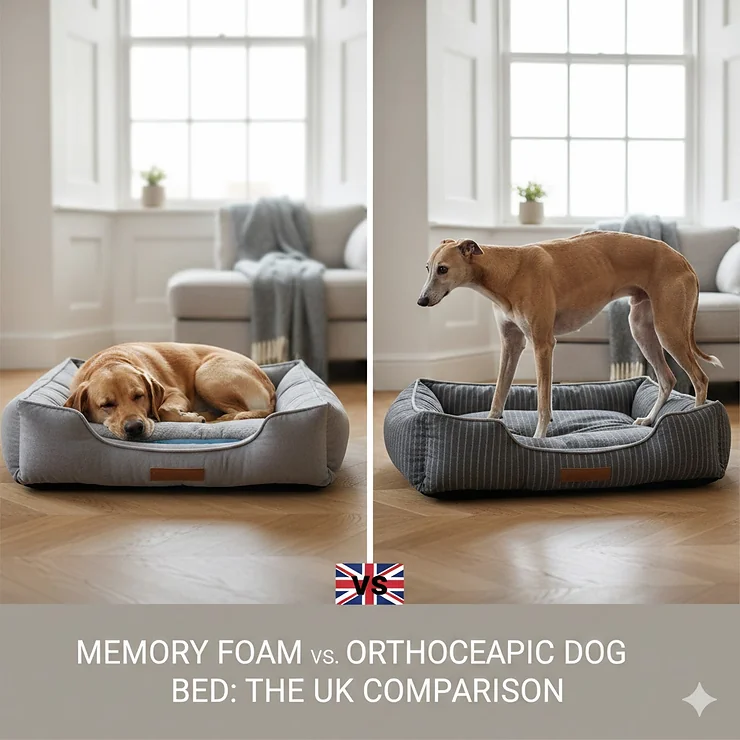
Here’s the thing: these terms are often used interchangeably, which creates confusion. Memory foam is actually a type of orthopaedic material, but not all orthopaedic beds contain memory foam. Some use high-density polyurethane foam, egg-crate foam, or gel-infused foam instead. Understanding this distinction can save you hundreds of pounds and ensure your dog gets proper support.
I’ve spent weeks researching UK-available options, comparing specifications, and analysing customer feedback from British dog owners. Whether you’ve got a arthritic Labrador, a sprightly Spaniel who needs preventative care, or a senior rescue needing joint relief, this guide covers everything you need to know about the memory foam vs orthopaedic dog bed debate—plus seven brilliant products you can order on Amazon.co.uk today.
Quick Comparison Table
| Feature | Memory Foam Beds | Orthopaedic Beds |
|---|---|---|
| Material Type | Viscoelastic polyurethane foam | Various supportive foams (may include memory foam) |
| Support Level | Medium to firm; moulds to body shape | Firm; consistent support across surface |
| Heat Retention | Higher (unless gel-infused) | Lower with open-cell or gel options |
| Best For | Dogs with arthritis, hip dysplasia, post-surgery | Large breeds, senior dogs, joint issues |
| Durability | 2-4 years with quality foam | 3-5+ years with high-density foam |
| Price Range (UK) | £40-£120 | £30-£150 |
| Weight Distribution | Excellent; eliminates pressure points | Very good; even support |
💬 Just one click – help others make better buying decisions too!😊
Top 7 Memory Foam vs Orthopaedic Dog Bed Options: Expert Analysis
1. Laifug Orthopedic Memory Foam Dog Bed
This multi-layered beauty combines high-density base foam with premium memory foam on top, creating what UK customers describe as “worlds apart” from standard beds. The Laifug Orthopedic Memory Foam Dog Bed features a waterproof liner and removable washable cover in a sophisticated grey finish.
Key Specifications:
- Sizes: Medium (34″x22″x6″), Large (46″x28″x8″)
- Foam Construction: Dual-layer (high-density support + memory foam top)
- Weight Capacity: 25-100 lbs (11-45 kg)
Price: £54.99-£79.99
UK Customer Feedback: One Brighton reviewer whose 13.5-year-old arthritic Lab tested this bed noted it “feels like a human mattress” with dense foam that doesn’t collapse. They appreciated the thick waterproof cover and found it perfect for senior dogs.
✅ Pros:
- Excellent value for dual-layer construction
- Waterproof protection extends bed life
- Pillow feature provides neck support
❌ Cons:
- Takes 24-48 hours to fully expand
- Grey colour may not suit all décor
2. Bedsure Large Dog Bed Sofa with U-Shape Bolster
The Bedsure Large Dog Bed Sofa delivers orthopaedic support through egg-crate foam technology whilst providing that cosy “sofa” feeling dogs adore. Available on Amazon.co.uk with over 29,000 reviews, it’s become a UK favourite for good reason.
Key Specifications:
- Dimensions: 89x63x16 cm
- Foam Type: High-density egg-crate orthopaedic foam
- Cover Material: Velvety soft flannel fabric
Price: £63.19 (reduced from £89.99)
UK Customer Feedback: British buyers consistently mention this bed works brilliantly for arthritic elderly Labradors and even accommodates leggy Greyhounds. The large size provides ample stretching room whilst the bolsters offer security.
✅ Pros:
- Four-sided bolster design for versatile positions
- Waterproof liner protects foam core
- Machine washable cover simplifies maintenance
❌ Cons:
- Some customers found the large size slightly smaller than expected
- Bolsters may flatten over time with heavy use
3. EHEYCIGA XL Memory Foam Dog Bed
For those seeking premium features without the premium price tag, the EHEYCIGA XL Memory Foam Dog Bed combines memory foam and egg-crate foam for balanced support. At 106.7x76x18.9 cm, it’s genuinely spacious for large breeds.
Key Specifications:
- Size: XL (106.7x76x18.9 cm)
- Foam Composition: Memory foam + egg-crate foam hybrid
- Special Features: Non-slip bottom, waterproof liner
Price: £70-£95 (varies by size)
UK Customer Feedback: A Surrey owner of two Dalmatians praised how both dogs fit comfortably on this bed. The memory foam mattress provides supportive sides that remain sturdy, and the zippered cover makes washing straightforward.
✅ Pros:
- Genuinely large sizing for multiple dogs
- Memory foam provides pressure relief
- Non-slip bottom prevents sliding on hardwood
❌ Cons:
- Some reports of sides not standing as upright as advertised
- May require blanket for extra softness initially
4. PetFusion Ultimate Solid Memory Foam Dog Bed
The PetFusion Ultimate Solid Memory Foam Dog Bed is what UK dog shelter staff at RescueDogs.co.uk describe as potentially “the Aston Martin of dog beds.” This premium option features solid memory foam construction throughout.
Key Specifications:
- Dimensions: XL 86.4 x 11.8 cm
- Foam Density: 3.2 lbs density medical-grade memory foam
- Cover: Waterproof, tear-resistant fabric
Price: £112.87
UK Customer Feedback: Testing at a UK dog rescue centre revealed this bed withstood climbing, playing, and chewing attempts whilst remaining pristine after washing. Dogs gravitated to the raised headrests for snuggling or watching the world go by.
✅ Pros:
- Medical-grade solid memory foam construction
- Tear-resistant cover incredibly durable
- Raised headrests provide versatile resting options
❌ Cons:
- Higher investment (though potentially “everlasting”)
- Cover makes slight squeaky noise when dogs settle
5. The Dog’s Bed Orthopaedic Memory Foam Mattress
For traditionalists who prefer a simple mattress design, The Dog’s Bed Orthopaedic Memory Foam Mattress delivers straightforward orthopaedic support. UK rescue centres use these regularly due to their reliability.
Key Specifications:
- Size Range: Large to XXL (up to 131 x 100 cm)
- Thickness: Premium density throughout
- Design: Flat mattress style (no bolsters)
Price: £85-£112.49 (XXL)
UK Customer Feedback: Rescue staff noted dogs immediately recognised the soft yet firm quality. One dog named Kyra, who spent years in kennels, was first to discover its comfort and refused to leave.
✅ Pros:
- Flat design perfect for crates or car travel
- Versatile placement options
- Solid, supportive base throughout
❌ Cons:
- No bolsters for dogs who like edges
- Higher price point for XXL sizes

6. Bedsure Reversible Orthopaedic Dog Mattress
The clever Bedsure Reversible Orthopaedic Dog Mattress offers two sleeping surfaces: soft sherpa for winter warmth and Oxford backing for summer cooling. This dual-season approach makes it particularly practical for unpredictable British weather.
Key Specifications:
- Design: Reversible (sherpa/Oxford)
- Sizes: Medium to XL (117 x 71 cm XL)
- Thickness: 15 cm solid mattress
Price: £32.49-£55
UK Customer Feedback: A Manchester owner appreciated how this lightweight bed fits perfectly in crates and cars. The quality foam provides genuine comfort whilst the reversible design eliminates need for seasonal bed changes.
✅ Pros:
- Exceptional value for reversible design
- Lightweight and portable
- Winter/summer versatility
❌ Cons:
- Softer support compared to premium options
- Thinner than some competitors
7. Scruffs Château Orthopaedic Dog Mattress
The Scruffs Château Orthopaedic Dog Mattress uses crumb memory foam technology, offering a slightly different feel than traditional solid memory foam whilst maintaining excellent support qualities.
Key Specifications:
- Filling: Crumb memory foam
- Protection: Inner water-resistant liner
- Sizes: Large and XL available
Price: £65-£95
UK Customer Feedback: Available through UK pet retailers, this bed receives praise for its luxurious feel and practical water-resistant liner that keeps foam fresh longer. The crumb foam construction provides gentle cushioning.
✅ Pros:
- Crumb memory foam provides unique comfort
- Water-resistant liner protects investment
- Removable, washable microfibre cover
❌ Cons:
- Limited size range
- Crumb foam may shift slightly over time
✨ Don’t Miss These Exclusive Deals!
🔍 Take your dog’s comfort to the next level with these carefully selected products. Click on any highlighted item to check current pricing and availability on Amazon.co.uk. These beds will help you create authentic restful sleep your furry family member deserves!
Understanding the Memory Foam vs Orthopaedic Dog Bed Distinction
Let’s clear up the confusion once and for all. Memory foam is a specific material—viscoelastic polyurethane foam originally developed by NASA for aircraft cushioning. It responds to heat and pressure by moulding to your dog’s body shape, then returns to its original form when pressure is removed.
Orthopaedic, meanwhile, is a broader term describing any bed designed to support bones, joints, ligaments, and tendons. According to research from the University of Pennsylvania’s clinical studies, orthopaedic beds reduce joint pain and stiffness in large dogs with arthritis whilst improving nighttime restfulness.
Here’s where it gets interesting: an orthopaedic bed might contain memory foam, but it could also use high-density polyurethane foam, gel-infused foam, or egg-crate foam. All these materials can provide orthopaedic support—the key is whether they distribute weight evenly and maintain their shape over time.
The term “orthopaedic” isn’t regulated in the pet industry, which means quality varies dramatically. Always look for CertiPUR-US certification or similar quality markers when comparing the memory foam vs orthopaedic dog bed options.
How Memory Foam Technology Benefits Your Dog’s Health
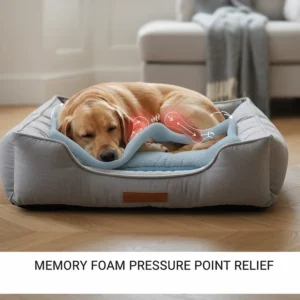
Memory foam’s unique properties make it particularly effective for dogs with joint conditions. When your dog lies down, the foam softens in response to body heat and moulds around their frame. This creates a custom cradle that eliminates pressure points—those areas where bones press against harder surfaces.
For dogs with arthritis or osteoarthritis, which affects 2.5% of UK dogs annually according to VetCompass data, this pressure relief is crucial. The condition causes cartilage deterioration, making joints painful and stiff. Memory foam’s body-contouring ability reduces stress on affected joints whilst promoting proper spinal alignment.
Think of it like this: if you place a bowling ball on memory foam, it sinks but doesn’t roll off. The foam bends to the weight whilst supporting it on all sides. When you lift the ball, the mattress returns to normal. This “memory” effect means dogs don’t need to constantly “fluff” their bed as they would with traditional bedding.
Temperature Considerations
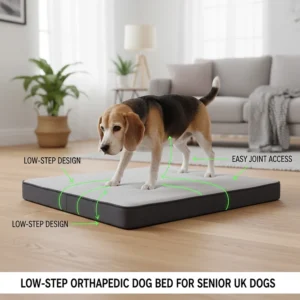
Standard memory foam has one significant drawback: heat retention. The dense cellular structure that makes it supportive also traps body heat. For breeds prone to overheating—like Bulldogs, Pugs, or thick-coated breeds—this can be uncomfortable during warmer months.
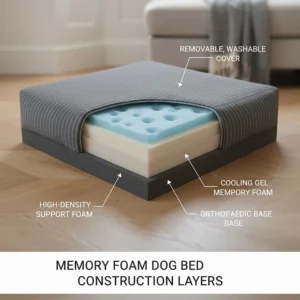
Modern gel-infused memory foam addresses this issue. Cooling gel micro-beads absorb excess body heat when dogs become too warm, then release heat back when body temperature drops. This thermo-regulation technology makes gel-infused options particularly valuable in the UK’s variable climate.
What Makes a Bed Truly Orthopaedic?
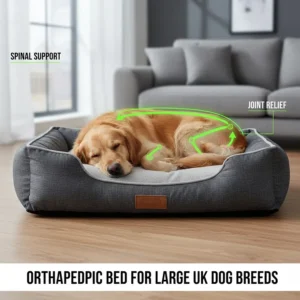
An orthopaedic bed’s primary function is providing medical-grade support for bones and joints. Unlike memory foam which emphasises contouring, orthopaedic beds prioritise consistent, firm support across the entire sleeping surface.
High-quality orthopaedic beds feature:
High-Density Base Foam: The foundation typically uses foam with at least 3 pounds per cubic foot density. This prevents “bottoming out”—when a dog’s weight compresses the bed until they feel the floor beneath.
Multi-Layer Construction: Premium orthopaedic beds combine different foam types. A common configuration includes a firm high-density base (4 inches) topped with softer memory foam or egg-crate foam (1-2 inches). This delivers both support and comfort.
Consistent Support: Unlike memory foam which creates a body-shaped divot, orthopaedic foam maintains relatively even support. This makes it easier for dogs to change positions or get up without struggling out of a “sinkhole.”
According to research published by the PDSA, maintaining proper joint alignment during sleep is essential for dogs with musculoskeletal issues. Orthopaedic beds excel at this, particularly for large breeds whose weight can compress lesser-quality bedding.
Foam Density: The Critical Factor Most People Miss
When evaluating the memory foam vs orthopaedic dog bed debate, foam density trumps almost everything else. Density measures how much foam is packed into each cubic foot and directly impacts support, durability, and comfort.
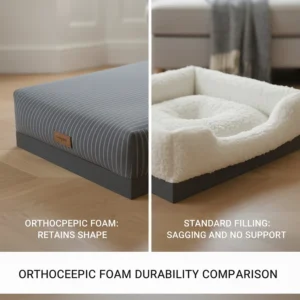
Low Density (Under 3 lbs/cubic foot): These softer beds use less foam material, creating more air pockets. They feel plush initially but compress quickly under a dog’s weight. Budget beds often use low-density foam, which explains why they flatten within months. For small dogs under 10 kg, low-density foam may suffice. For anything larger, it’s a false economy.
Medium Density (3-4 lbs/cubic foot): This middle ground provides decent support for medium-sized dogs whilst remaining comfortable. Most quality pet beds fall into this category. The foam responds to weight whilst maintaining enough structure to prevent excessive sinking.
High Density (4+ lbs/cubic foot): Premium orthopaedic beds use high-density foam that feels noticeably firmer. Large breeds (Labradors, German Shepherds, Rottweilers) need this level of support to prevent joint stress. The trade-off is slower response time—the foam takes longer to mould and return to shape—but the durability and support justify this for dogs over 20 kg.
Here’s a practical test: press your hand firmly into the bed. Low-density foam compresses easily and springs back instantly. High-density foam resists pressure and recovers more slowly. For the memory foam vs orthopaedic dog bed comparison, higher density generally wins for dogs with joint issues.
Size Selection: Getting the Measurements Right
Too many dog owners undersize their pet’s bed, forcing dogs to curl uncomfortably or hang over edges. Proper sizing is fundamental for orthopaedic support—a bed that’s too small defeats its purpose entirely.
Measure your dog from the base of their neck (where it meets the shoulders) to the base of their tail. Add 15-30 cm (6-12 inches) to this measurement. This ensures your dog can stretch fully without constraint. Dogs instinctively need to extend their spine periodically during sleep; cramped positions negate orthopaedic benefits.
For dogs who love sprawling on their backs—common in breeds like Greyhounds or Whippets—consider sizing up further. If your measurements fall between sizes, always round up. The Kennel Club notes that proper rest positioning reduces joint stiffness, so generous sizing pays dividends.
Weight capacity matters equally. Check manufacturer specifications against your dog’s weight. A 35 kg Labrador needs a bed rated for at least 45 kg to ensure the foam doesn’t compress excessively. This buffer zone maintains proper support throughout the bed’s lifespan.
Cover Material and Maintenance Essentials
The best memory foam core means nothing if the cover deteriorates rapidly. UK dog owners should prioritise these cover features:
Waterproof Inner Liner: Essential for protecting foam from accidents, spills, or post-walk dampness. Look for moisture-resistant liners with Moisture Shield or similar technology. Once water penetrates foam, it’s nearly impossible to dry thoroughly and can develop odours or mould.
Removable Outer Cover: Machine-washable covers with robust zippers simplify maintenance. Check that covers can withstand 30-40°C washing without shrinking. Some manufacturers recommend air-drying to preserve waterproof coatings—tumble drying can cause plastic-backed fabrics to crack.
Durable Fabric: Microsuede, denim, or heavy-duty canvas outlast lighter fabrics. If your dog tends to dig or scratch their bed (instinctive nesting behaviour), avoid delicate materials. Tear-resistant doesn’t mean indestructible, but it extends longevity significantly.
Non-Slip Base: Particularly important on laminate, tile, or hardwood flooring common in UK homes. Anti-slip dots or silicone bottoms prevent the bed sliding around, which can be distressing for dogs with mobility issues trying to settle.
Wash covers every 2-3 weeks to manage dog hair, dirt, and oils. UK homes benefit from having spare covers—whilst one is washing and drying, your dog’s bed remains usable. Many brands sell replacement covers, extending the bed’s useful life beyond the typical 2-3 years.
Comparing Support Levels for Different Conditions
Not all joint issues require the same support. Tailoring your choice in the memory foam vs orthopaedic dog bed debate to your dog’s specific condition optimises their comfort.
Hip Dysplasia
This genetic condition, common in Labradors, German Shepherds, and Retrievers, causes abnormal hip joint development. Dogs with hip dysplasia benefit from memory foam’s pressure-relief properties. The foam moulds around the hip area, reducing stress on the malformed joint. Look for beds at least 10 cm thick to prevent hip contact with the floor.
Arthritis and Osteoarthritis
According to the Blue Cross, arthritis affects multiple joints progressively. These dogs need consistent, firm orthopaedic support rather than contouring foam. A high-density base with a softer top layer balances comfort with support. Bolster designs with raised edges help arthritic dogs lever themselves up more easily.
Post-Surgery Recovery
Dogs recovering from joint surgery require specialised support. Veterinary advice typically recommends firm orthopaedic beds that maintain spine and joint alignment without excessive sinkage. Memory foam can be too soft for post-operative needs, potentially allowing harmful positions. Consult your vet before purchasing.
Preventative Care for Younger Dogs
Even healthy young dogs benefit from quality bedding. Supporting proper joint development prevents issues later. Medium-density memory foam or orthopaedic beds work well for prevention, providing comfort whilst accustoming dogs to supportive sleeping surfaces.
Temperature Regulation: Gel-Infused vs Standard Options
British weather’s unpredictability makes temperature regulation valuable. Standard memory foam retains heat—beneficial during damp November evenings but uncomfortable during unexpected heat waves.
Gel-infused memory foam uses micro-beads dispersed throughout the foam structure. These beads actively regulate temperature by absorbing body heat when dogs become too warm, creating a cooler sleeping surface. As ambient temperature drops, the gel releases stored heat gradually.
Open-cell foam technology offers another solution. Unlike closed-cell foam with sealed air pockets, open-cell structures allow air circulation. This passive cooling prevents heat build-up whilst maintaining support characteristics. Combined with breathable cover fabrics, open-cell foam suits dogs who overheat easily.
For the memory foam vs orthopaedic dog bed decision, consider your dog’s coat type and heat tolerance. Double-coated breeds (Huskies, German Shepherds, Collies) naturally retain more heat and appreciate cooling technologies. Short-haired breeds with less insulation may prefer standard foam’s warmth retention.
Price vs Value: Understanding the Investment
Budget beds (£20-40) typically use low-density foam that compresses within 6-12 months. You’ll replace them repeatedly, ultimately spending more than investing initially in quality. Mid-range options (£50-80) offer decent construction with medium-density foam, suitable for most dogs if not suffering joint issues.
Premium beds (£100-150) justify their cost through superior materials, higher foam density, and better construction. A £115 bed lasting 4-5 years costs £23-29 annually—less than replacing budget beds every 8 months at £35 each.
Calculate cost per year rather than upfront price. Factor in your dog’s expected usage, weight, and any health conditions requiring extra support. For senior dogs or those with diagnosed joint issues, premium orthopaedic options deliver better value through improved quality of life and reduced veterinary costs from joint complications.
💬 Considering these options? Help fellow dog owners by sharing your experience!😊
Common Mistakes When Choosing Dog Beds
Mistake 1: Prioritising Appearance Over Function That Instagram-worthy donut bed might photograph beautifully, but does it support your dog’s spine? Aesthetic appeal shouldn’t override orthopaedic needs.
Mistake 2: Trusting “Orthopaedic” Labels Without Verification The term isn’t regulated. Always check foam type, density, and thickness. Vague descriptions like “supportive filling” often mask low-quality materials.
Mistake 3: Undersizing to Save Money A cramped bed forces unnatural sleeping positions, negating any orthopaedic benefits. Proper sizing is non-negotiable.
Mistake 4: Ignoring Cleaning Requirements Non-removable covers doom beds to gradual filth accumulation. If you can’t wash it easily, don’t buy it.
Mistake 5: Expecting Instant Improvement Dogs need 2-3 weeks adjusting to new sleeping surfaces. Don’t judge the bed after one night—give your dog time to appreciate the support.
FAQ
❓ Is memory foam or orthopaedic better for dogs with arthritis?
❓ How long do memory foam dog beds last in the UK?
❓ Can I wash memory foam dog beds?
❓ Are cooling gel dog beds worth the extra cost?
❓ What thickness should an orthopaedic dog bed be?
Conclusion
The memory foam vs orthopaedic dog bed debate doesn’t have a universal answer—it depends entirely on your dog’s age, weight, health status, and sleeping preferences. Memory foam excels at pressure relief and body contouring, making it brilliant for dogs with hip dysplasia or localised joint pain. Orthopaedic beds offer firmer, more consistent support ideal for large breeds, severe arthritis cases, or dogs needing spinal alignment assistance.
For many UK dog owners, hybrid options combining both technologies deliver optimal results. A high-density orthopaedic base provides structural support whilst a memory foam top layer offers pressure relief and comfort. This approach suits the widest range of needs, from preventative care in young dogs to managing established joint conditions in seniors.
Remember that quality matters more than marketing claims. Verify foam density, check for CertiPUR-US or equivalent certification, ensure adequate sizing, and prioritise washable covers with waterproof protection. Whether you invest £55 in a excellent mid-range option like the Laifug or splash out £115 for the premium PetFusion, you’re supporting your dog’s joint health and sleep quality—investments that pay dividends in reduced veterinary bills and improved quality of life.
Your dog spends up to 14 hours daily sleeping. Making those hours restorative rather than uncomfortable transforms their wellbeing. Use the information and product recommendations in this guide to make an informed decision your furry friend will appreciate for years to come.
Recommended for You
- 7 Best Outdoor Waterproof Dog Beds UK 2026
- 7 Best Luxury Dog Bed UK Designer Options 2026
- 7 Best Cooling Dog Bed UK Summer 2026
Disclaimer: This article contains affiliate links. If you purchase products through these links, we may earn a small commission at no additional cost to you. Prices shown are approximate and may vary.
✨ Found this helpful? Share it with your mates! 💬🤗
