
In This Article
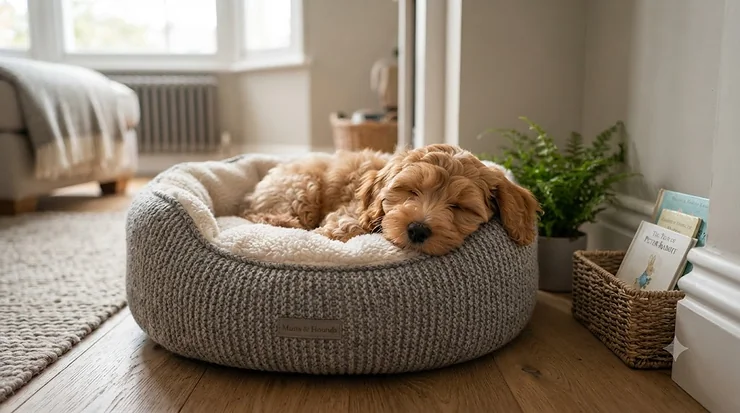
There’s a very particular kind of chaos that arrives with a new puppy: the excitement, the accidents, the 3am cries that make you question every life decision that led you to this moment. And somewhere in that whirlwind, usually forgotten until the actual night it’s needed, sits one question nobody warns you about properly — what on earth should the first bed for puppy actually look like?
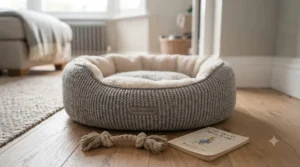
Here’s the short version: a first puppy bed should be small enough to feel den-like and secure, made from washable, low-toxicity materials that survive a determined round of teething, and sized for the puppy in front of you right now rather than the dog you imagine they’ll become. Buy for the eight-week-old, not the eighty-pound adult you’re picturing.
The trouble is that puppy beds are sold with the same breathless confidence as everything else in a pet shop, and it’s genuinely hard to tell “built to last” from “built to look nice in a product photo.” So this guide does the unglamorous work for you — seven real beds available on Amazon UK right now, what actually separates a good one from an expensive mistake, and the bits of puppy development that explain why your carefully chosen bed might get destroyed within a fortnight regardless of what you spent.
Quick Comparison Table
| Puppy Bed | Style | Best For | Approx. Price Range |
|---|---|---|---|
| Danish Design My Puppy’s First Bed | Purpose-built puppy bed | New puppies, first-week settling | £20-£30 |
| Rosewood Jumbo Cord Plush Dog Bed (Small) | Oval cushion bed | Snuggly small breeds and toy puppies | £15-£25 |
| Bedsure Small Dog Bed (Round) | Round bolster bed | Puppies who like to curl up tight | £12-£20 |
| Ancol Made From Dog Bed Set | Square cushion + blanket set | Eco-conscious buyers, gentle chewers only | £20-£28 |
| Amazon Basics Round Bolster Pet Bed | Round bolster bed | Straightforward budget buyers | £10-£18 |
| PawHut Small Puppy Bed | Raised-side bolster bed | Puppies who like leaning against something | £12-£20 |
| Nobleza Small Dog Bed | Rectangular cushion bed | Puppies who sprawl rather than curl | £13-£20 |
Scan that table and one thing jumps out immediately: this is not a category where the priciest option automatically wins. The Amazon Basics Round Bolster Pet Bed proves you can get a genuinely comfortable first bed for under twenty pounds, while the Danish Design My Puppy’s First Bed earns its slightly higher price by being designed for exactly this brief rather than adapted from a general adult dog bed range. If teething is already underway or clearly on the horizon, note that the Ancol Made From Dog Bed Set is explicitly not built to survive mouthing — a genuinely honest detail worth knowing before you buy, not after.
💬 Just one click — help others make better buying decisions too!😊
Top 7 First Puppy Beds: Expert Analysis
Buying a first bed for a puppy is a strange kind of gamble — you’re purchasing for an animal whose size, temperament, and chewing habits are still mostly a mystery to you. The seven beds below were chosen because each solves a genuinely different piece of that puzzle, spanning budget, mid-range, and purpose-built options, so whichever kind of puppy shows up at your door, something here should fit.
1. Danish Design My Puppy’s First Bed — literally built for this exact moment
Some products earn their name honestly, and the Danish Design My Puppy’s First Bed is exactly that: a bed designed from the ground up for the earliest weeks of puppy ownership rather than a shrunk-down version of an adult dog bed. It’s compact, soft-sided, and sized to feel appropriately den-like for a small, still-uncertain animal who was, until very recently, piled up against littermates for warmth.
What most buyers overlook about sizing at this stage is that “cosy” isn’t just an aesthetic preference — a bed that’s too large can genuinely leave a young puppy feeling exposed and less settled overnight, precisely the opposite of what you want during those first anxious nights. Based on the spec comparison with generic small dog beds, the raised, softly bolstered sides here do real work, giving a puppy something to lean into rather than sprawling across an open cushion. Aggregated buyer sentiment consistently praises how quickly puppies settle into it compared with a plain flat mat, with reviewers specifically noting it feels like a genuine “first bed” rather than a miniaturised adult product. The honest trade-off is that, like most soft-sided puppy beds, it’s not designed to withstand serious chewing once teething ramps up in earnest.
Pros:
- ✅ Purpose-designed sizing and shape for very young puppies
- ✅ Bolstered sides help anxious pups settle faster
- ✅ Genuinely different from a scaled-down adult bed
Cons:
- ❌ Not built to survive determined teething-stage chewing
- ❌ Smaller size means an earlier upgrade once your puppy grows
Expect to pay around £20-£30, which is reasonable for a bed specifically engineered for this narrow, important window.
2. Rosewood Jumbo Cord Plush Dog Bed (Small, 51x45cm) — best for snuggly small breeds
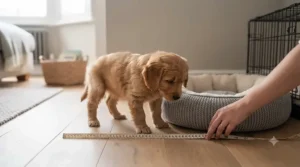
The Rosewood Jumbo Cord Plush Dog Bed in its small 51x45cm size is one of the steadiest sellers in this category for a reason: it’s an oval, deeply plush cushion with a non-slip base, and it photographs about as “instant puppy nap” as a bed possibly can. Rosewood has been making pet products for over half a century, and this bed reflects that experience in the small details — a snug oval shape that genuinely suits a puppy’s instinct to curl rather than sprawl.
Here’s what most buyers overlook when comparing beds purely by price: the non-slip base matters far more with a puppy than an adult dog, since young puppies are still working out basic coordination and a bed that slides across laminate or tile becomes a minor daily hazard rather than a comfort item. Reviewers consistently describe puppies claiming the bed as a favourite spot almost immediately, with several noting they bought the small size specifically for a new puppy and found it “just right” rather than swamping. Aggregated feedback does flag size expectations as a mixed bag overall across the range — some find it generous, others tight — so measuring your specific puppy rather than assuming based on breed name alone is worth the extra minute.
Pros:
- ✅ Deeply plush, genuinely cosy cushion design
- ✅ Non-slip base suits uncoordinated young puppies
- ✅ Established brand with decades of pet product experience
Cons:
- ❌ Sizing runs differently depending on puppy build, not just breed
- ❌ Not marketed as chew-resistant
Typically priced around £15-£25, sitting comfortably in the mid-range for a first puppy bed.
3. Bedsure Small Dog Bed (Round, 63x53x20cm) — best all-rounder with genuine grip
The Bedsure Small Dog Bed takes a round, bolstered approach with a reversible cushion and a slip-resistant bottom, and it’s become a genuine bestseller for puppies specifically rather than dogs in general. At 63x53x20cm, it sits at the generous end of “small,” giving a growing puppy a bit of room to stretch out as those first few months of rapid growth take hold.
On paper, this means the bed has slightly more longevity built in than some purpose-built newborn-puppy beds, since it can comfortably accommodate a puppy through its early growth spurt rather than needing an immediate upgrade. Reviewers consistently highlight the slip-resistant bottom as genuinely effective on hardwood and tile floors, and the reversible cushion means a quick flip rather than a full wash when one side gets grubby. What the spec sheet won’t tell you outright is that round bolster beds like this one tend to suit puppies who like pressing their back against something while sleeping, which covers a surprisingly large share of breeds — if your puppy sprawls flat instead, a rectangular option further down this list may suit better.
Pros:
- ✅ Slip-resistant base performs well on hard flooring
- ✅ Reversible cushion simplifies day-to-day cleaning
- ✅ Slightly roomier sizing accommodates early growth
Cons:
- ❌ Round shape doesn’t suit puppies who prefer to sprawl flat
- ❌ Not marketed as chew-proof for the teething stage
Priced around £12-£20, this represents strong value for a bed that should comfortably see out the first several months.
4. Ancol Made From Dog Bed Set — the honest eco-friendly pick, with a caveat
The Ancol Made From Dog Bed Set deserves genuine credit for transparency: made from the equivalent of 112 post-consumer recycled plastic bottles, it bundles a thickly stuffed 60x50cm bed with a matching blanket and toy bone, and Ancol states plainly that this set isn’t designed to withstand mouthing or chewing. That’s an unusually honest piece of product labelling in a category where plenty of listings quietly avoid the subject entirely.
Based on the spec comparison with other sets on this list, the sustainability angle here is genuinely differentiating rather than a marketing afterthought — recycled-content bedding remains relatively rare in mainstream pet retail, and Ancol has built decades of UK pet product credibility around exactly this kind of detail. The honest analytical take is straightforward: this is an excellent, thoughtfully made bed for a puppy who isn’t yet in a heavy chewing phase, or for supervised use, but it’s the wrong choice for a puppy already gnawing through everything within reach. Aggregated buyer sentiment reflects this split directly — plenty of praise for softness and the thoughtful matching set, alongside occasional notes that a determined chewer went through it faster than expected.
Pros:
- ✅ Made from recycled materials, genuine sustainability credentials
- ✅ Comes as a complete matching set with blanket and toy
- ✅ Refreshingly honest about its chewing limitations
Cons:
- ❌ Explicitly not designed to withstand mouthing or chewing
- ❌ Higher price than similarly sized non-eco alternatives
Expect to pay around £20-£28 for the full set, fair value if your puppy’s chewing phase hasn’t fully kicked in yet.
5. Amazon Basics Round Bolster Pet Bed — the sensible no-frills budget pick
Sometimes the right first bed genuinely is the simple one, and the Amazon Basics Round Bolster Pet Bed at 50×50.8×15.2cm is exactly that — a flannel-topped round bolster bed without much branding fuss, sold at a price that makes it easy to accept it might not survive the entire first year unscathed.
What most first-time puppy owners overlook is that the “first bed” almost never is the “only bed” — puppies grow, chew, and occasionally have accidents on bedding in ways that make an inexpensive starting point genuinely sensible rather than a compromise. Based on the spec comparison with pricier alternatives, this bed doesn’t skimp meaningfully on comfort for the cost; the flannel top and bolstered sides deliver the core “cosy den” experience without the premium branding markup. Reviewers consistently describe it as good value and appropriately sized for small dogs and puppies, and the straightforward design means fewer proprietary parts to worry about replacing if something wears out.
Pros:
- ✅ Genuinely comfortable despite the low price point
- ✅ Simple, no-fuss design with nothing complicated to break
- ✅ Sensible low-risk choice for a bed likely to need replacing anyway
Cons:
- ❌ Fewer size and colour options than dedicated pet brands
- ❌ No specific chew-resistant construction
At around £10-£18, this is arguably the lowest-risk starting point on the entire list.
6. PawHut Small Puppy Bed — best for puppies who like a lean-in
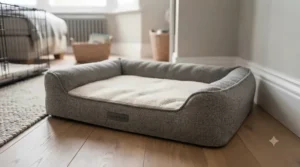
The PawHut Small Puppy Bed takes the raised-bolster-side approach further than most, giving a young puppy a genuinely elevated rim to press against from nearly every angle. PawHut has built a solid reputation in UK pet and home products for well-priced, functional design, and this bed reflects that positioning squarely.
Here’s the honest analytical take: puppies are creatures of instinct long before they’re creatures of habit, and the instinct to press against something solid while sleeping — a holdover from piling against littermates — is strong in the first few months. A bed with pronounced raised sides on every edge caters to that instinct more completely than a low-profile flat cushion, which is precisely why this style consistently performs well for anxious or easily startled young puppies specifically. The trade-off, as with most bolster-style beds, is that the raised sides are also the first thing a teething puppy tends to target, so expect this style to show wear somewhat faster than a flat mat if chewing kicks in early.
Pros:
- ✅ Raised sides on every edge suit puppies who like to lean in
- ✅ Well-priced given the construction and finish
- ✅ Solid UK brand reputation for functional pet products
Cons:
- ❌ Raised sides are often the first target of teething chewing
- ❌ Less suited to puppies who prefer to sprawl flat
Typically priced around £12-£20, a fair mid-range pick for anxious or clingy young puppies.
7. Nobleza Small Dog Bed (Rectangular, 60x50x18cm) — best for sprawlers
Not every puppy curls into a tight ball to sleep — plenty sprawl out on their side, limbs everywhere, looking more like a fallen scarecrow than a cosy pup. For that particular temperament, the Nobleza Small Dog Bed, rectangular rather than round or oval, with an anti-slip bottom, gives more usable flat floor space relative to its footprint than most bolster-style alternatives on this list.
Based on the spec comparison with the round and oval options above, the rectangular shape genuinely changes how much of the bed a sprawling puppy can actually use — a round bed of similar overall size wastes usable space in its curved corners, while a rectangle uses nearly all of it. Reviewers consistently mention the anti-slip bottom performing well, and the grey finish is a practical choice that hides fur and everyday grubbiness better than pale colourways. As with most beds on this list, it isn’t marketed as chew-resistant, so pairing it with appropriate chew toys during the teething window remains the sensible approach regardless of which bed style you choose.
Pros:
- ✅ Rectangular shape maximises usable space for sprawling puppies
- ✅ Anti-slip bottom performs reliably on hard floors
- ✅ Practical grey finish hides fur and daily mess
Cons:
- ❌ Less naturally den-like than rounded or bolstered styles
- ❌ Not chew-resistant
Priced around £13-£20, a solid pick specifically for puppies who like to stretch out rather than curl up.
Top 7 at a Glance: Specs and Style Comparison
| Bed | Shape | Slip-Resistant Base | Eco Materials | Chew-Resistant |
|---|---|---|---|---|
| Danish Design My Puppy’s First Bed | Bolstered oval | Yes | No | No |
| Rosewood Jumbo Cord Plush Dog Bed | Oval | Yes | No | No |
| Bedsure Small Dog Bed | Round | Yes | No | No |
| Ancol Made From Dog Bed Set | Square | Partial | Yes | No |
| Amazon Basics Round Bolster Pet Bed | Round | Yes | No | No |
| PawHut Small Puppy Bed | Bolstered round | Yes | No | No |
| Nobleza Small Dog Bed | Rectangular | Yes | No | No |
Worth being upfront about what this table shows plainly: none of these seven beds are genuinely chew-resistant, and that’s not an oversight in this guide — it reflects the reality that soft, comfortable first puppy beds and heavy-duty chew-proof construction are usually mutually exclusive at this price point and size. If your puppy is already deep into the teething phase and destroying everything in reach, the honest advice is a supervised soft bed alongside a genuinely tough crate mat, not a single bed trying to do both jobs at once
Practical Usage Guide: Introducing Your Puppy to Their First Bed
Getting a puppy to actually use their new bed, rather than treating it as an expensive obstacle in the middle of the floor, comes down to consistency more than product choice. Place the bed somewhere your puppy already spends time resting rather than somewhere convenient for your décor, and — particularly in the first few nights — keep it in the same room as you, since puppies settle far more easily when they can sense your presence rather than waking up alone in unfamiliar surroundings. A blanket or small item that smells like the breeder’s home, tucked into the new bed for the first week, genuinely helps bridge the transition from littermates to solo sleeping.
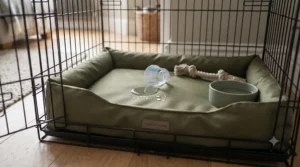
If you’re using a crate alongside the bed rather than a standalone bed in the open, the two should work together rather than compete: line the crate with a comfortable bed and blankets, leave the door open initially, and only gradually build up to closing it for short periods once your puppy is comfortable going in and out voluntarily. The most common mistake in the first thirty days isn’t choosing the wrong bed — it’s expecting the bed to be genuinely obstacle-free from day one. Some chewing at the edges, some initial reluctance to settle, and the occasional relocated toy are all completely normal parts of a puppy learning that this particular corner of the house belongs to them.
Real-World Scenarios: Matching a First Bed to Your Puppy
Picture three fairly different new-puppy households, each needing a genuinely different first bed for reasons that have nothing to do with brand loyalty. First, a family who’ve just brought home an eight-week-old toy breed puppy, still wobbly and clearly anxious about the sudden absence of littermates — the Danish Design My Puppy’s First Bed or Rosewood Jumbo Cord Plush suit this brief precisely, with their den-like, bolstered shapes offering exactly the sense of enclosure a very young, uncertain puppy craves.
Second, a household who’ve adopted a slightly older rescue puppy already well into the teething phase, chewing everything within reach on principle — here, the honest answer is the Amazon Basics Round Bolster Pet Bed, chosen specifically because its low price makes an early replacement financially painless rather than infuriating, paired deliberately with proper chew toys to redirect the behaviour. Third, a larger-breed puppy already showing signs of preferring to sprawl rather than curl, limbs starfished in every direction during naps — the Nobleza Small Dog Bed or Bedsure Small Dog Bed, both offering more genuinely usable flat space, suit this temperament far better than a snug bolstered design that would otherwise go mostly unused.
Problem → Solution: Common First Puppy Bed Issues
Problem: The puppy won’t settle in the new bed at all. This is often less about the bed and more about location and scent. Solution: move the bed into the same room you’re sleeping in for the first few nights, and add a blanket that smells familiar from the breeder’s home rather than something freshly washed and scent-free.
Problem: The bed is already showing chew damage within days. Solution: this is a completely normal part of the teething window rather than a faulty product, and the fix is behavioural rather than a fancier bed — redirect chewing onto appropriate puppy-safe chew toys and accept that a soft first bed and a determined teether may simply need an earlier-than-planned replacement.
Problem: The puppy has outgrown the bed within a couple of months. Solution: this is expected, particularly for medium and large breeds during their fastest growth period, and it’s exactly why starting with a genuinely affordable first bed, like the Amazon Basics Round Bolster Pet Bed, makes far more financial sense than investing heavily in a premium bed destined to be outgrown quickly.
Problem: The bed slides across the floor whenever the puppy moves. Solution: check specifically for a slip-resistant base rather than assuming all beds include one — most on this list do, but it’s worth confirming before buying if your floors are hard tile, laminate, or polished wood.
Developmental Stages of Puppies and How Sleep Needs Change
Understanding a puppy’s developmental timeline explains an enormous amount about why their relationship with a first bed shifts so quickly. Newborn puppies can’t regulate their own body temperature and rely entirely on their mother and littermates for warmth, which is exactly why a very young puppy’s first instinct is to press against something solid rather than sprawl in open space — a habit that carries over directly into bed preference during those first weeks at home. By around three to four weeks of age, baby teeth begin erupting, and by eight weeks, all 28 deciduous teeth are typically in place, which roughly coincides with the age most puppies arrive in their new homes and inherit their very first bed.
Between roughly seven and eight weeks, puppies enter a key socialisation window, naturally curious and less fearful than they’ll be in the months that follow — a useful stretch to introduce the bed as a calm, positive space rather than waiting until anxious phases set in later. From around three to seven months, the adult teeth push through as baby teeth fall out, and this is when chewing typically intensifies well beyond curiosity into something closer to genuine discomfort relief, explaining why a bed that survived the first two months calmly might suddenly come under serious assault. Recognising which stage your puppy is in helps set realistic expectations for both bed durability and settling behaviour, rather than assuming any single bed should perform identically across the entire first year.
Bed Size by Puppy Weight: A Sizing Guide
Getting bed size right matters more than most new owners expect, and the guiding principle is refreshingly simple: buy for your puppy’s current size, with just enough extra room to stretch out, not for the adult dog you’re anticipating. A bed that’s too large can genuinely leave a small puppy feeling exposed and unsettled, undermining exactly the den-like security a first bed is meant to provide.
| Current Puppy Weight | Suggested Bed Length | Typical Breed Examples |
|---|---|---|
| Under 5kg | 45-55cm | Chihuahua, toy breeds, very young puppies of any breed |
| 5-10kg | 55-65cm | Dachshund, small terriers, young medium-breed puppies |
| 10-15kg | 65-75cm | Cocker Spaniel, Beagle, adolescent medium breeds |
| 15kg+ | 75cm+ or upgrade tier | Larger breed puppies already growing quickly |
Looking at that table, the practical takeaway is straightforward: measure your puppy’s current length nose-to-tail rather than guessing from breed reputation alone, since growth rates vary enormously even within a breed. Toy and small breeds typically reach close to their adult size within eight to twelve months, meaning a correctly sized small bed may genuinely see them through to adulthood, while medium and large breed puppies should be budgeted for at least one size upgrade, and sometimes two, within their first year.
Teething-Safe Materials: What to Look For
Teething is where a first puppy bed either earns its price tag or quietly falls apart, and material choice matters here more than almost any other spec on the box. It’s also worth knowing that teething timing varies more by size than most owners expect — veterinary dental research on small-breed puppies has found meaningful variation in when baby teeth are lost and adult teeth erupt, so a toy breed still mouthing everything in sight at five months isn’t necessarily behind schedule. Look specifically for beds using tightly woven, low-toxicity fabrics — polyester and cotton blends without loose threading are far less likely to be swallowed in problematic chunks than beds with long, easily separated fibres or dangling trim. Stuffing matters too: polyester fibre fill is generally safer if ingested in small amounts than foam, which can expand and cause more serious blockages if a determined puppy manages to get inside the cover.
None of the seven beds featured in this guide are marketed as genuinely chew-proof, and that’s a deliberate, honest observation rather than an oversight — soft, cosy first beds and heavy-duty chew-resistant construction are largely different product categories at this price point. The safest practical approach during active teething is close supervision paired with appropriate chew toys offered proactively, redirecting the behaviour before the bed itself becomes the target, rather than relying on any single bed to survive unsupervised mouthing entirely unscathed.

How to Choose the Best Puppy Bed
- Size for now, not for later. A too-large bed can leave a young puppy feeling exposed rather than secure; upgrade as they grow rather than overbuying upfront.
- Check the base for slip resistance. Uncoordinated young puppies genuinely benefit from a bed that stays put on hard flooring.
- Match shape to temperament. Curlers do better in round or oval bolstered beds; sprawlers get more usable space from a rectangular design.
- Be realistic about teething. No soft bed at this price point is genuinely chew-proof; budget for at least one replacement during the teething window.
- Prioritise washability. Accidents happen constantly in the first few months, and a removable, machine-washable cover saves considerable frustration.
- Consider eco credentials only as a bonus, not a durability guarantee. Recycled-material beds like the Ancol set are genuinely good for sustainability but not necessarily tougher against chewing.
- Buy the cheap one first if chewing is already a concern. A budget bed you don’t mind replacing beats an expensive one you’re anxious about protecting.
Common Mistakes When Buying a First Puppy Bed
The single most common mistake is buying based on the adult size a breed is expected to reach, resulting in a bed that leaves a genuinely young puppy feeling unsettled and exposed during exactly the weeks when security matters most. A close second is assuming any bed marketed for “small dogs” will survive a teething puppy, when the two categories — small-dog beds and chew-resistant beds — frequently don’t overlap at all. Buyers also commonly overspend on a first bed specifically, not realising that puppies typically need at least one, often two, size upgrades within their first year regardless of how well the initial bed holds up. Finally, plenty of new owners skip checking the base for slip-resistance entirely, only discovering the problem once a young puppy has already had a startling slide across a hardwood floor mid-nap.
Small Puppy Bed vs Full-Size Bed: Do You Need Both?
It’s a fair question, and the honest answer is: usually yes, eventually, but not necessarily right away. A genuinely small puppy bed offers the den-like security young puppies instinctively want, while a full-size adult bed offers the room a fully grown dog needs to stretch out comfortably — and trying to make one bed serve both purposes across an entire first year rarely works well for either stage. Starting with an appropriately small bed, as this guide covers throughout, then transitioning to a larger bed once your puppy’s growth curve flattens out (typically eight to twelve months for small breeds, considerably longer for large ones) tends to suit both the puppy’s psychological needs and your wallet better than compromising on a single “in-between” size from day one.
The realistic middle ground many owners land on is deliberately buying an inexpensive small bed first, expecting it to be outgrown or possibly chewed within months, then investing more meaningfully in a durable full-size bed once the teething phase has passed and their dog’s adult proportions are clearer. This avoids the common regret of spending significantly on a large “grows with them” bed that leaves a small puppy feeling adrift in the meantime.
Puppy Bed for New Puppy: What to Expect the First Week
The first week with a new puppy bed rarely goes exactly to plan, and knowing that in advance genuinely helps manage expectations. Expect some reluctance initially — puppies accustomed to sleeping piled against littermates often need several nights before a solo bed feels normal rather than isolating, even when it’s objectively comfortable. Expect at least one accident on or near the bed; this is standard for house-training in progress rather than a sign anything’s gone wrong, and it’s precisely why a washable cover matters more in week one than almost any other spec.
Expect some exploratory chewing at the edges within the first few days, even from puppies not yet fully into their teething phase, simply because mouthing new textures is how young puppies investigate the world. And expect the bed’s role to shift fairly quickly from “novel object” to “genuinely preferred resting spot,” usually somewhere between the end of week one and the start of week two, once the scent of home has properly settled into the fabric and the routine around it becomes familiar.
✨ Don’t Miss These Exclusive Deals!
🔍 Take your puppy’s first weeks at home to the next level with these carefully selected beds. Click on any highlighted product above to check current pricing and availability on Amazon.co.uk. A proper first bed genuinely helps settle those anxious early nights for both of you!
Long-Term Cost and Replacement
Budgeting honestly for puppy beds means accepting upfront that the first bed is very rarely the last one. Small and toy breeds may get twelve months or more from a well-chosen first bed like the Rosewood Jumbo Cord Plush or Bedsure Small Dog Bed, while medium and large breed puppies should realistically expect at least one size upgrade, and sometimes a second, within their first year purely due to growth rate. Chewing adds its own unpredictable variable on top of growth — a puppy in the thick of teething might need a bed replaced every few months regardless of size, which is precisely why starting with an affordable option such as the Amazon Basics Round Bolster Pet Bed makes far more sense financially than committing to a premium bed during the least predictable stretch of a dog’s development. Once teething passes, typically by around six to eight months, bed longevity improves dramatically, and that’s the sensible point to invest in a more durable, longer-term bed built for the adult dog your puppy is becoming.

Frequently Asked Questions
❓ What size should a puppy's first bed be?
❓ Should a puppy's first bed go in a crate or out in the open?
❓ Is it normal for a puppy to chew their new bed?
❓ How often will I need to replace my puppy's first bed?
❓ Are eco-friendly puppy beds as durable as regular ones?
Conclusion
Choosing a first bed for a puppy is one of those decisions that feels bigger than it actually needs to be — mostly because you’re buying for an animal whose personality, growth rate, and chewing habits are still genuinely unknown quantities in those first few days. The good news is that getting it broadly right matters far more than getting it perfect: size sensibly for right now, expect some chewing and at least one replacement along the way, and don’t be afraid to start cheap if teething is already in full swing.
Whether that’s the purpose-built comfort of the Danish Design My Puppy’s First Bed, the reliable simplicity of the Amazon Basics Round Bolster Pet Bed, or the sprawl-friendly space of the Nobleza Small Dog Bed, the right first bed is simply the one that matches the actual puppy currently making a mess of your evenings — not the dog you’re picturing them becoming.
Recommended for You
- Faux Suede Dog Bed 2026: 7 Cosy Picks That Actually Last
- Best Corduroy Dog Bed UK 2026: 7 Stylish Picks Your Dog Will Love
- Best Chenille Dog Bed UK 2026: 7 Luxuriously Soft Picks Reviewed
Disclaimer: This article contains affiliate links. As an Amazon Associate, I earn from qualifying purchases. If you purchase products through these links, we may earn a small commission at no additional cost to you.
✨ Found this helpful? Share it with your friends! 💬🤗
