

In This Article
A kennel-fit dog bed is a bed chosen for one specific space: the kennel, sleeping area or run enclosure it will live in. It leaves room for the dog to stretch out beside it, shrugs off damp and chewing, and can be washed or hosed down without a fight. Size, durability and hygiene all have to work together.
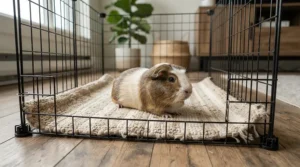
Most of us buy dog beds the way we buy pizza, by size label and photo. Then the “large” arrives, swallows two-thirds of the kennel floor, and the dog sleeps on the concrete beside it, looking smug. A proper kennel-fit dog bed starts from the space, not the product page.
The best benchmark we have is the official statutory guidance for dog kennel boarding in England. It asks for a draught-free sleeping area where a dog can stand, stretch, wag and turn. It wants a sleeping floor at least twice the area the dog needs to lie flat, and soft bedding that is easy to disinfect. If a dog destroys its bedding, the answer is an alternative bed, not no bed. Those rules cover licensed boarding premises, not your back garden. They still make a sound yardstick when you’re hunting for a raised kennel bed for dogs or a hard-wearing mattress.
This guide compares seven real products, from budget cots to a chew-resistant frame to a classic kennel mattress. It also covers kennel dimensions, run enclosure sizing and raised bed frames. One honest note first: it’s built from published specifications, retailer details and genuine, aggregated review themes. It does not rest on claims of personal testing.
Quick Comparison: Best Kennel-Fit Dog Bed Options at a Glance
| Product | Type | Standout trait | Indicative price range* | Best For |
|---|---|---|---|---|
| Amazon Basics Raised Dog Bed | Raised mesh cot | Big surface, small spend | Under £50 | Large, non-chewing dogs in roomy kennels |
| Coolaroo Original Elevated Pet Bed | Raised steel-frame cot | All-round airflow | £30-£60 range | Hot, shaded runs |
| Kuranda Chewproof Elevated Dog Bed | Chew-resistant raised bed | PVC or aluminium frame | Premium bracket | Chewers and heavy dogs |
| Bedsure Elevated Dog Bed Cot | Raised steel cot | 8-inch lift | Under £50 | Everyday kennel use |
| Veehoo Cooling Elevated Dog Bed | Raised cot | Small-to-XL size ladder | £30-£60 range | Precise kennel fitting |
| HiK9 Original Raised Dog Bed | Low mesh platform | UK-brand, no sides | Under £50 | Tight corners, easy step-on |
| Vetbed Original | Flat kennel mattress | Double-woven, washable | Under £30 | Mattress layer, puppies, crates |
*Indicative ranges only. Prices change constantly, so check current prices on the listing.
Look at the table and one pattern jumps out: the raised cots solve airflow and floor-contact problems, while Vetbed Original solves warmth and softness for a fraction of the cost. Few kennels are best served by just one of them. If chewing is your main worry, Kuranda Chewproof Elevated Dog Bed is the outlier worth the premium. If budget leads, Amazon Basics Raised Dog Bed or Bedsure Elevated Dog Bed Cot plus a Vetbed Original topper is the combination I’d weigh first.
💬 Just one click — help others make better buying decisions too!😊
Top 7 Kennel-Fit Dog Bed Picks: Expert Analysis
Each pick below is judged on how well it behaves as a kennel-fit dog bed, not just as a bed. That means footprint, frame, fabric and how it copes with damp and teeth.
1. Amazon Basics Raised Dog Bed — budget platform for big dogs
The standout here is footprint per pound spent. It’s a generous platform for a big dog without a premium bill.
The large model (item code 2007L-GY) measures 130 x 80 x 19.5 cm and weighs 3.44 kg. It’s rated for dogs up to 40.8 kg, with an iron frame and Textilene mesh. In practice, that 19.5 cm height lifts a sleeping dog off cold concrete and lets air circulate underneath. The low weight means you can carry it out and hose it down.
Based on the spec comparison, the footprint is the decision point. At just over 1 m², it would take roughly 55% of a minimum-size 1.9 m² sleeping area, which defeats the idea of lying beside the bed. In a roomier kennel or the covered half of a run, it’s superb value. It suits Labradors, collies and similar 25-40 kg dogs that don’t treat furniture as dinner. The mesh isn’t designed for determined chewing.
Owner reviews commonly describe it as easy to clean, lighter than expected, and sturdy enough that dogs swap cushioned beds for it. A recurring complaint is fiddly assembly, because the last screw holes need the fabric stretched to line up. Some owners add a softer bed on top for older dogs.
Pros:
- ✅ Generous 130 x 80 cm lying surface
- ✅ Breathable mesh keeps air moving underneath
- ✅ Light enough to lift out for cleaning
Cons:
- ❌ Last screw holes are fiddly during assembly
- ❌ Mesh offers little real chew resistance
Typically under £50 (indicative; check current price). Strong value for non-chewers with space to spare.
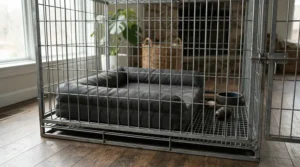
2. Coolaroo Original Elevated Pet Bed — best for summer airflow
The standout is ventilation. The fabric is suspended on a frame, so air moves around the dog rather than being trapped beneath a cushion.
It’s a steel-framed bed with a lift of roughly 8 inches (about 20 cm), and roundups highlight its all-round airflow. The large size is listed at around 51 inches (about 130 cm), so the same space arithmetic applies as for product 1. Check the UK listing for exact dimensions. That 20 cm clearance keeps a dog away from sun-warmed concrete and leaves room to sweep underneath.
What most buyers overlook is that airflow cuts both ways. In a shaded run in July, it’s ideal. In a January kennel, it becomes a draught-friendly hammock unless you add an insulating layer such as Vetbed Original. It suits thick-coated breeds and south-facing runs, and it pairs well with a roofed section.
On the US store, a recent roundup reports well over 54,000 ratings averaging about 4.6 stars. UK figures will differ, so check amazon.co.uk. Reviewers consistently praise airflow and the roomy large size. One roundup warns that not every raised-bed brand sells replacement covers, so check spare-part availability before committing.
Pros:
- ✅ Excellent airflow in warm weather
- ✅ Roughly 20 cm lift off hot or cold floors
- ✅ Large size suits bigger breeds
Cons:
- ❌ Needs a warm topper in winter kennels
- ❌ Mesh cover can be chewed through
Around the £30-£60 range (indicative). Best-in-class for hot-weather comfort.
3. Kuranda Chewproof Elevated Dog Bed — the chew-resistant frame
The standout is the frame. It’s built to survive dogs that destroy everything else, and the maker backs it with a one-year chew-proof warranty.
You can choose PVC (rated to around 100 lb or 45 kg) or aluminium (rated up to 250 lb). There are six sizes, four fabric options and stainless-steel fasteners, and the frame has a UV-resistant finish. A Cordura nylon option adds grip for older dogs, which matters because slick fabric on a raised bed makes getting on and off harder. The medium 40″ x 25″ size (roughly 102 x 64 cm, about 0.65 m²) fits inside tighter spaces than the big mesh cots.
My read: this is the pick when the bed’s survival is the problem, not its price. Owners of dogs with pica or heavy chewing habits report it holding up. It’s also popular with shelters and rescues. One owner combined a small version with a wire crate, noting the legs rest on the crate-pan edges. The maker can supply shorter legs.
Check UK stock and delivery before you commit. The downsides are cost and availability, since several reviewers describe it as pricey.
Pros:
- ✅ Chew-resistant frame with warranty backing
- ✅ Six sizes and a high weight rating
- ✅ Grippy fabric options for older dogs
Cons:
- ❌ Premium price compared with mesh cots
- ❌ UK availability and delivery vary
Premium bracket (check current price). Worth it for chewers, overkill for calm sleepers.
4. Bedsure Elevated Dog Bed Cot — classic 8-inch steel cot
The standout is simplicity: a straightforward steel cot with an 8-inch (about 20 cm) lift, done well.
It has a powder-coated steel frame, and the surface sits about 8 inches off the ground. That height keeps dogs clear of damp floors and lets you hose underneath without moving the bed. Powder coating resists rust, though chips at contact points deserve a periodic check on any outdoor steel.
I could only verify aggregate ratings for this one, not detailed review themes. The US store shows roughly 4.5 stars across more than 13,000 ratings, so treat that as a popularity signal, not a durability guarantee. Check the UK listing for recent reviews.
On the spec sheet, it’s a sensible mid-range kennel-fit dog bed for owners wanting a conventional cot without paying for chew-proofing. For a run enclosure, it works best in the covered half. For a kennel, measure the footprint against the half-floor rule covered later. Assembly is the usual flat-pack job, so budget twenty minutes and a screwdriver.
Pros:
- ✅ Powder-coated steel frame resists rust
- ✅ Roughly 20 cm lift for airflow
- ✅ Easy to hose down underneath
Cons:
- ❌ Fabric offers limited chew protection
- ❌ Detailed UK review themes are harder to verify
Typically under £50 (indicative). Solid, unfussy value.
5. Veehoo Cooling Elevated Dog Bed — widest size ladder
The standout is range: sizes run from small to extra-large, in eight colours.
For anyone who has ever tried to squeeze a bed into an awkward kennel, a size ladder is the real feature. It lets you match the footprint to the space instead of compromising. Roundups report that the mat gives dogs decent grip, and that the bed stays comfortable and cool outdoors in summer. Veehoo also makes separate chew-proof aluminium and bolster-mat versions, so confirm which variant you’re looking at.
Here’s the analysis: grip matters more than people think. Dogs hop on and off with wet paws, and a slippery surface is a joint-health problem for older animals. Like other cooling cots, though, it shares the winter weakness of all mesh designs: it will feel cold without a topper.
It suits owners who want a good fit rather than the cheapest option, and anyone running more than one kennel size.
Pros:
- ✅ Small-to-XL sizes for precise fitting
- ✅ Mat reported to give good grip
- ✅ Cool and comfortable outdoors in summer
Cons:
- ❌ Feels cold in winter without a topper
- ❌ Variants differ, so check the exact model
Around the £30-£60 range (indicative). Best choice when exact fit matters most.
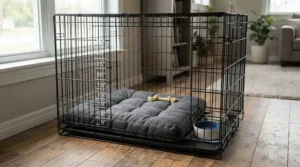
6. HiK9 Original Raised Dog Bed — low-profile UK-brand mesh platform
The standout is the slim, no-sides design, which tucks into awkward corners and is easy to step onto.
A UK review of the medium model describes a mesh base raised about 18 cm off the ground, with no raised sides. That makes it a gentle step-up for stiff or older dogs, and nothing around the edges to chew. Two trade-offs came up. The bed ran smaller than expected, so the reviewer suggests sizing up, and it tends to slide because there’s no non-slip base.
The honest take: no walls means no head support and no draught barrier, so this bed is a base layer, not a nest. Add a Vetbed Original on top and slip a rubber mat underneath, and it works well in a tidy kennel. Sizing up is smart when the dog is between sizes, but check the footprint against your half-floor limit first.
It’s a good fit for medium dogs in compact kennels, and for owners who want a platform that doubles as a place-training mat.
Pros:
- ✅ Low 18 cm profile suits stiff joints
- ✅ No raised edges to chew
- ✅ Slim shape fits awkward corners
Cons:
- ❌ Runs small, so sizing up is wise
- ❌ Slides on smooth floors without a mat
Typically under £50 (indicative). Good for compact kennels with a topper.
7. Vetbed Original — the classic kennel mattress
The standout is hard-wearing simplicity. It’s a double-woven pile that’s machine washable, quick to dry and widely used in kennels and crates.
The maker describes it as double-woven to make it harder to chew, and it drains and dries quickly after accidents. A retailer lists sizes including 26 x 20, 27 x 27, 28 x 24 and 36 x 24 inches. That makes it the mattress layer in a kennel-fit dog bed system: it goes on a raised cot or straight onto a clean, dry floor. A UK retailer notes it may shed some fibres at first.
Reviewer sentiment is mixed in a useful way. Several owners say it hasn’t encouraged shredding the way sewn beds do, including one whose pup had destroyed five beds. Another reports a cocker spaniel shredding it in hours, and one buyer complained about fluff and flimsiness. The lesson: it resists chewing better than most soft beds, but it isn’t chew-proof.
Retailers show prices from around £15 to £28 depending on size (check current price). Best value in this list, particularly as a washable layer you can swap weekly.
Pros:
- ✅ Machine washable and fast-drying
- ✅ Doesn’t invite shredding like sewn beds
- ✅ Cheap enough to keep a spare
Cons:
- ❌ Thin on its own over concrete
- ❌ Sheds fibres at first and isn’t chew-proof
Under £30 for most sizes. The most affordable upgrade in any kennel.
Spec Snapshot: What the Numbers Say
| Product | Frame / material | Verified size or limit | Review signal | Best For |
|---|---|---|---|---|
| Amazon Basics Raised Dog Bed | Iron, Textilene mesh | 130 x 80 x 19.5 cm; 40.8 kg | Owner reviews checked | Roomy kennels |
| Coolaroo Original Elevated Pet Bed | Steel frame | About 8 in lift; large listed ~51 in | ~4.6 stars (US store) | Hot runs |
| Kuranda Chewproof Elevated Dog Bed | PVC or aluminium | 100 lb (PVC) / 250 lb (aluminium) | Owner reviews checked | Chewers |
| Bedsure Elevated Dog Bed Cot | Powder-coated steel | About 8 in lift | ~4.5 stars (US store) | Everyday use |
| Veehoo Cooling Elevated Dog Bed | Frame plus mat | Small to XL | Roundup reports | Exact fit |
| HiK9 Original Raised Dog Bed | Mesh platform | ~18 cm lift (medium) | UK review checked | Tight corners |
| Vetbed Original | Double-woven pile | Four listed sizes | 238 reviews on one UK retailer | Mattress layer |
Read across the table and the story is about weight limits and footprint, not brand. Only Kuranda Chewproof Elevated Dog Bed publishes a large-dog weight ceiling high enough for giants. The mesh cots cluster around the 40 kg mark. And Vetbed Original isn’t competing with the cots at all, because it’s the layer that makes any of them kennel-ready.
Kennel Dimensions: How Much Floor Does a Kennel-Fit Dog Bed Need?
Short answer: in England’s boarding guidance, a new-build sleeping area must be at least 1.9 m², with 2.85 m² for the higher standard. The sleeping floor must also be at least twice the area the dog needs to lie flat. The RSPCA’s 2024 kennelling criteria go further for new builds, asking for at least 4 m² in total for dogs under 20 kg and 8 m² for dogs over 20 kg, with separate sleeping and activity areas.
Those kennel dimensions are minimums for licensed or contracted premises, not a legal test for your garden kennel. They’re still a useful benchmark. Here’s my rule of thumb: keep the bed’s footprint to no more than half the sleeping floor, so the dog can lie beside it as well as on it.
Run the numbers. A 1.9 m² sleeping area (roughly 1.4 m x 1.35 m) can take a bed up to about 0.95 m². The 40″ x 25″ Kuranda Chewproof Elevated Dog Bed (about 0.65 m²) fits comfortably, but the large Amazon Basics Raised Dog Bed (about 1.04 m²) does not. At 2.85 m², half the floor is about 1.4 m², and the big mesh cots fit easily.
Two further details from the guidance are worth borrowing. Where dogs share, resting areas should match or exceed the number of dogs. And the RSPCA wants raised sleeping platforms hinged on one side for safe access, which tells you something about how seriously welfare bodies treat what’s under and around a raised bed.

Run Enclosure Sizing: Fitting Bed, Shade and Toilet Zone
Run enclosure sizing is where good intentions meet awkward geometry. England’s guidance says a run must have a waterproof roof over at least half its area. It also says a run must not be the dog’s primary sleeping area, which is why the main bed belongs in the insulated kennel.
So what goes in the run? Think of it as three zones: a covered lounge zone, an open toilet zone, and a clear walkway to the gate. A raised cot like the Coolaroo Original Elevated Pet Bed suits the lounge zone, because it lets the dog cool off in shade without lying on a hot slab.
Here’s a worked example. Take a run measuring 3 m x 2 m (6 m²). Half roofed gives 3 m² of covered floor. A bed of about 1 m² takes roughly a third of that, leaving room to walk around it and a gap to the open zone. Choose a bigger bed and the covered zone becomes a cluttered obstacle course.
Two practical checks follow. First, keep the bed away from the gate swing, so a bouncy dog doesn’t skid over a mesh edge. Second, keep the open zone clear for toileting, and lift the bed out when you hose the floor.
How to Choose a Kennel-Fit Dog Bed
The short version: measure the sleeping area first, then the dog, then match frame and fabric to the dog’s habits and your climate. Here are the steps in order:
- Measure the sleeping area, not the whole kennel. Only the insulated, draught-free part counts, so use that as your floor figure.
- Apply the half-floor rule. Keep the bed footprint to roughly half the sleeping floor so the dog can lie beside it.
- Measure the dog stretched out. Nose to base of tail plus about 15-20 cm is a sensible lying length.
- Check the weight rating with headroom. One roundup estimates a dog landing on a bed exerts around 2.5 times its body weight, so don’t buy at the limit.
- Match the frame to chewing habits. Mesh suits calm dogs, while Kuranda Chewproof Elevated Dog Bed is for chewers.
- Think about climate. Mesh cools in summer but needs a topper like Vetbed Original in winter.
- Plan for washing. Pick bedding you can wash weekly, and keep a spare.
Raised Kennel Bed for Dogs vs Flat Kennel Mattress
Should you buy a raised kennel bed for dogs, a flat mattress, or both? Here’s the comparison at a glance:
| Factor | Raised cot | Flat mattress | Best For |
|---|---|---|---|
| Airflow | Excellent | Limited | Coolaroo Original Elevated Pet Bed, Veehoo Cooling Elevated Dog Bed |
| Warmth | Needs a topper | Good | Vetbed Original |
| Chew risk | Mesh can be chewed; frames vary | Soft edges invite chewing | Kuranda Chewproof Elevated Dog Bed |
| Cleaning | Hose down | Machine wash | Amazon Basics Raised Dog Bed, Vetbed Original |
The table shows why the best answer is usually both. A raised cot gives airflow and a dry, clean surface; a mattress gives warmth and softness. Dogs that chew need the tougher frame first, and a spare mattress second.
Joint comfort sits between the two. Raised beds can feel firm without padding, which is why older dogs often do better with a mattress layer on top. For a young, active dog in a well-ventilated kennel, a raised cot alone is often enough.
Best Kennel Mattress for Run Enclosure Use
The best kennel mattress for run enclosure use is washable, quick to dry and cheap enough to replace, because a run takes more abuse than a kennel. That’s the job Vetbed Original was built for: it’s double-woven, drains quickly and goes in the washing machine.
Remember the guidance, though. England’s rules say bedding should be easy to wash and disinfect, or disposable. They also say soft bedding should be adapted for old, young or infirm dogs. The RSPCA suggests materials such as shredded paper or fleece, and says that if a dog chews its bedding, you should try alternatives and seek behaviour advice rather than leave the dog without.
My practical take: put the mattress in the covered half of the run, on top of a raised cot where the dog wants a cooler surface. Keep a spare so you can rotate one while the other dries.
Be realistic about expectations. No mattress is chew-proof, and Vetbed Original reviewers split on this. If your dog shreds it, don’t keep re-buying; look at the frame and behaviour side instead.
Raised Bed Frames: What to Look For
Raised bed frames come in three broad families: steel or iron cots (Amazon Basics Raised Dog Bed, Coolaroo Original Elevated Pet Bed, Bedsure Elevated Dog Bed Cot), PVC or aluminium frames (Kuranda Chewproof Elevated Dog Bed), and low mesh platforms (HiK9 Original Raised Dog Bed).
Weight rating is the first filter, but remember it’s usually a static figure. The roundup estimate of roughly 2.5 times body weight on landing is a reminder to leave a margin. Frame corners matter for chewers, so a smooth, sealed frame beats exposed tubing.
Next, check the feet. Rubber caps protect kennel floors and reduce sliding, and the HiK9 Original Raised Dog Bed reviewer’s sliding complaint shows what happens without a non-slip base. Then look at the fabric: tension, grip and whether replacement covers exist. Finally, think about assembly. Flat-pack raised bed frames are usually simple, but the Amazon Basics Raised Dog Bed reviews show a stiff final screw can still catch you out.
Taller isn’t always better. A lift of about 18-20 cm gives airflow without making the step up a hurdle for older dogs.
✨ Don’t Miss These Top Picks!
🔍 Take your kennel set-up to the next level with these carefully selected beds and mattresses. Click on any highlighted item to check current pricing and availability. A good fit means a comfier, cleaner kennel for your dog all year round!

Features That Actually Matter (And Those That Don’t)
What matters: weight rating with headroom, frame material for your dog’s chewing habits, a fabric that grips, and washability. A spare cover or mattress is more useful than any extra feature.
What matters less: colour range, however tempting (Veehoo Cooling Elevated Dog Bed offers eight). “Cooling” labels on mesh also deserve some scepticism. The cooling is simple airflow, and it helps only if air can actually move, so a bed jammed against a wall in a stuffy kennel won’t do much.
Bolsters and raised edges are the grey area. They give head support and a sense of security, and the guidance on hiding places even mentions beds with high sides. But they also give a chewer something to grab. A low platform like the HiK9 Original Raised Dog Bed avoids that.
Ultimately, ignore marketing adjectives and read the numbers: footprint, lift height, weight limit and cover availability.
Common Mistakes When Buying a Kennel-Fit Dog Bed
Buying by size label. “Large” means different things to different brands, so compare footprints in centimetres.
Ignoring the half-floor rule. A bed that fills the sleeping area leaves the dog lying on the floor beside it.
Putting the main bed in the run. Guidance says a run shouldn’t be the primary sleeping area, so keep the sleeping bed in the insulated kennel.
Choosing a cushion for a chewer. Soft, sewn beds invite shredding. A frame like Kuranda Chewproof Elevated Dog Bed or a double-woven Vetbed Original is the more realistic option.
Forgetting winter. Mesh cots like Coolaroo Original Elevated Pet Bed need a topper when temperatures drop. Guidance asks for part of the sleeping area to stay above 10°C, and bedding plays a part in that.
Skipping the weekly wash. Boarding guidance requires kennels to be disinfected at least weekly, which is a sensible routine at home too.
Practical Setup and Maintenance Guide for a Kennel-Fit Dog Bed
Day one. Assemble the frame outside, check every fastener, and look for sharp edges. Place the bed in the draught-free, dry part of the kennel, away from the door. Scotland’s code of practice for the welfare of dogs puts it plainly: a dog should have its own bed in a quiet, dry, draught-free spot, with bedding cleaned regularly and replaced when needed. It also says the kennel should be big enough for the dog to lie both in and beside the bed.
First week. Add a non-slip mat under the feet if the bed slides, and put a Vetbed Original on top. Watch how the dog gets on and off. Hesitation can mean the surface is too slippery or the height too much.
Weekly. Wash the mattress, wipe the frame, and sweep or hose underneath. Check fabric tension and fasteners.
Monthly. Inspect for chewing, rust on steel frames, and worn covers. Replace any damaged parts promptly.
Common first-month mistakes. Overfilling the kennel with extras, leaving the bed damp, and forgetting to rotate mattresses. A second mattress makes the weekly wash painless.
Real-World Scenarios: Three Kennel Set-Ups
Scenario 1: a 30 kg Labrador in a roomy garden kennel (about 3 m² sleeping area). Half the floor is 1.5 m², so the Amazon Basics Raised Dog Bed fits with room to spare. Add a Vetbed Original for winter. Budget: roughly £50-£80 all in (indicative).
Scenario 2: a young chewer in a smaller kennel. Footprint is limited, and mesh would be a target. The Kuranda Chewproof Elevated Dog Bed in a smaller size is the realistic choice, with a spare Vetbed Original to swap in. Budget is higher, but replacements shrink.
Scenario 3: a senior dog with a covered run. Stiff joints mean grip and low height matter most. A Veehoo Cooling Elevated Dog Bed or the HiK9 Original Raised Dog Bed offers an easy step-up, topped with a Vetbed Original. The dog gets a warm, cushioned surface in a draught-free spot.
In each case, the logic is the same: measure first, size to half the floor, then match the frame to the dog’s habits.
Long-Term Cost and Maintenance
Cost per year beats sticker price. As an illustration (not a quote): a bed at around £150 that lasts eight years works out at about £19 a year. A £35 bed replaced every two years costs about £17 a year, plus the hassle and the discarded frames. The numbers land close, so the deciding factor is whether your dog destroys cheaper beds.
Cover replacement changes the maths too. Check whether a brand sells spare covers before you buy, as one roundup warns not all do. A spare Vetbed Original costs little and extends the life of any frame.
The conditions in Schedule 4 of the England licensing regulations underpin the boarding guidance used throughout this article. They’re written for businesses, but the principle of clean, dry, parasite-free bedding that’s easy to wash applies to any kennel.

FAQ
❓ What size raised kennel bed for dogs suits a Labrador?
❓ Can a kennel-fit dog bed go in an outdoor run?
❓ Are mesh beds too cold for winter kennels?
❓ How often should kennel bedding be washed?
❓ Is a chew-proof raised bed worth buying for a puppy?
Conclusion
A kennel-fit dog bed isn’t a single product. It’s a decision about space, materials and your dog’s habits. Start with the sleeping floor, apply the half-floor rule, and choose a frame that matches the way your dog treats furniture.
For most owners, I’d shortlist the Amazon Basics Raised Dog Bed or Bedsure Elevated Dog Bed Cot for value, Veehoo Cooling Elevated Dog Bed for exact fit, and Coolaroo Original Elevated Pet Bed for hot runs. Chewers should look at Kuranda Chewproof Elevated Dog Bed, and almost everyone benefits from a Vetbed Original layer. The HiK9 Original Raised Dog Bed earns its place in tight corners and for stiff joints.
Whatever you pick, check current prices and the exact UK dimensions on the listing, and keep a spare mattress in the cupboard. Your dog’s kennel is their bedroom, so it’s worth getting the fit right.
✨ Ready to find the right fit?
🔍 Click any highlighted product above to check current pricing and availability, and give your dog a comfier, cleaner place to rest! 🐾
Recommended for You
- Elevated Dog Bed For Hot Weather: 7 Best UK Picks (2026)
- UV-resistant Dog Bed For Garden: 7 Best Picks (2026)
- Garden Dog Bed For Large Dogs: 7 Tough Picks For UK Gardens (2026)
Disclaimer: This article contains affiliate links. As an Amazon Associate, I earn from qualifying purchases. If you purchase products through these links, we may earn a small commission at no additional cost to you.
✨ Found this helpful? Share it with your friends! 💬🤗
