
In This Article
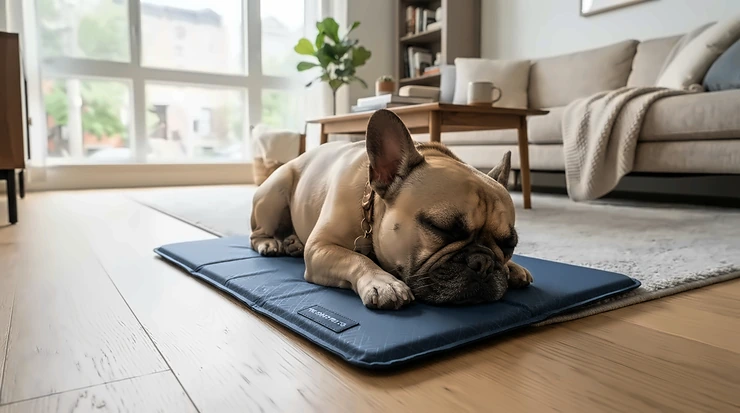
A cooling dog bed for summer is a bed or mat designed to help a dog shed body heat while resting. It does this through raised mesh that lets air flow underneath, a pressure-activated gel or phase-change layer, or damp evaporative fabric. It won’t replace shade, water or sensible walks, but it gives your dog a cooler place to settle.
Britain’s summers are no longer reliably mild. Dogs cool themselves mostly by panting, and the RSPCA’s summer advice points out that they can only sweat through their paws. Flat-faced breeds such as pugs, French bulldogs and boxers are at particular risk. A slab of memory foam in a stuffy conservatory is, for many dogs, a heat trap with a cushion on top.
So what actually helps? This guide compares seven real, UK-available options: three raised mesh beds, three gel or phase-change mats, and one water-activated pad. It also covers the secondary questions owners keep asking: how a cooling gel mat dog bed really works, what “self-cooling pet bed” means on the box, and why a breathable summer dog bed can beat gel in some homes. There’s also a plain-English section on heatstroke symptoms in dogs, plus hydration and shade tips that cost nothing.
One point on transparency: I haven’t hands-on tested these products. Everything below comes from published specifications, makers’ claims (flagged as claims) and aggregated owner-review themes. Where evidence is thin, I’ll say so.
Quick Comparison: Cooling Dog Bed for Summer Options at a Glance
| Product | Type | How It Cools | Indicative Price Band* | Best For |
|---|---|---|---|---|
| Veehoo Cooling Elevated Dog Bed | Raised mesh bed | Airflow above and below | £35–£70 | Large dogs, garden and indoor use |
| Coolaroo Original Elevated Dog Bed | Raised mesh bed | Airflow, UV-resistant fabric | £35–£75 | Outdoor decks and patios |
| Amazon Basics Raised Dog Bed | Raised mesh bed | Airflow | £25–£50 | Budget buyers wanting size choice |
| Pecute Dog Cooling Mat | Gel mat | Pressure-activated gel | £18–£28 (common sizes) | All-round indoor and crate use |
| Scruffs Self-Cooling Mat | Gel mat | Pressure-activated gel | £20–£45 | Large and giant breeds |
| Ancol Cooling Mat | Phase-change (PCM) mat | PCM core | £20–£35 | Owners whom standard gel underwhelmed |
| HyperKewl Evaporative Cooling Dog Pad | Evaporative pad | Soak-and-wring evaporation | £20–£40 | Hottest days, garden, tiled floors |
Indicative bands at the time of research. Prices vary by size and seller, so check current price.
Look at the pattern in the table. The raised beds run cheaper per square foot of sleeping space and keep working all day with no preparation. The mats cool a lying dog by contact and are far easier to move. For most households, the Amazon Basics Raised Dog Bed is the lowest-risk first purchase, but the Veehoo Cooling Elevated Dog Bed earns its extra cost if your dog is big. Anyone with a dog that chews should be wary of the three gel and phase-change mats, because one puncture ends their useful life.
💬 Just one click — help others make better buying decisions too!😊
Top 7 Cooling Dog Bed for Summer Picks: Expert Analysis
1. Veehoo Cooling Elevated Dog Bed — highest weight rating for the money
What sets the Veehoo Cooling Elevated Dog Bed apart is capacity: the brand rates its bigger sizes for dogs up to 68kg, which is generous at this price.
It pairs Textilene mesh with a powder-coated steel frame and non-slip rubber feet. The sleeping surface sits roughly 9 inches (about 23cm) off the floor, so air moves beneath the dog as well as through the fabric. That is the entire cooling trick, and it works because there’s no filling to hold heat. The frame is light, around 4kg for the largest size, which makes it easy to carry to the garden and just as easy for a storm to carry across the decking.
For a Labrador or German Shepherd that overheats on foam, it’s among the most sensible places to start. Based on the spec sheet, the larger sizes with a central support bar are the ones to choose for heavier dogs.
Reviewers consistently praise stability, simple assembly and the roomy surface. The recurring complaint is sagging mesh over time, especially near the weight limit or with dogs that leap on and off. UK site Smart Bark’s team built four of these and flagged it as a two-person job.
Pros:
- ✅ High weight rating across larger sizes
- ✅ Lightweight, so easy to move around
- ✅ Wipe-clean mesh with no filling to trap heat
Cons:
- ❌ Mesh can sag with heavy or jumpy dogs
- ❌ Awkward to assemble alone
Expect to pay roughly £35–£70 depending on size, which is good value for large breeds.
2. Coolaroo Original Elevated Dog Bed — outdoor-ready knitted fabric
The Coolaroo Original Elevated Dog Bed is built around its fabric: a knitted polyethylene mesh made to cope with sun, rain and repeated hosing down.
It lifts the dog about 8 inches (around 20cm), and the brand says the fabric blocks a large share of UV light. In the US sizing, the small is rated to roughly 50lb, the medium to 75lb and the large to 100lb. That’s about 23kg, 34kg and 45kg, so check the UK listing’s figures. In practice, those limits make it a better fit for medium dogs and gentle large breeds than for giants. Replacement covers are sold separately, which matters for long-term cost.
If your dog lives half the summer on the patio, the quick-drying fabric is the main selling point. Muddy paws and wet weather are less of a worry than with a stuffed bed.
Reviewers frequently report dogs taking to it within minutes and the fabric drying fast after rain. The common gripes are fiddly assembly, with holes that don’t always line up, and fabric that bows or stretches under heavier dogs.
Pros:
- ✅ Quick-drying, weather-tolerant fabric
- ✅ Replacement covers available separately
- ✅ Even support that reduces pressure on joints
Cons:
- ❌ Weight ratings top out below giant breeds
- ❌ Assembly frustrates some buyers
Budget roughly £35–£75 by size. It’s a solid-value outdoor pick.
3. Amazon Basics Raised Dog Bed — widest choice at the lowest cost
The Amazon Basics Raised Dog Bed wins on simplicity: a steel frame, breathable mesh and a size ladder that reaches XL.
The UK listing shows small, medium and XL options, with the XL at roughly 153 x 94 x 23cm, which is huge. The frame sits around 19cm off the floor on smaller sizes. Weight ratings vary by size, and the US large is rated to around 40kg, so read the figure for your exact size before buying. A rating that sounds fine for a 30kg dog needs a margin if the dog leaps onto it.
It’s an excellent trial bed for owners unsure whether their dog will use an elevated surface at all. At this price, finding out your dog hates it isn’t a disaster.
The UK listing carried a rating of around 4.6 stars across tens of thousands of ratings at the time of research. Reviewers praise easy assembly and dogs settling quickly. A US owner of a 105lb dog said it broke after a couple of camping trips, and others find the fabric slippery. Comparison sites note that replacing the whole bed, rather than a cover, is the usual route when the fabric fails.
Pros:
- ✅ Excellent size range, up to XL
- ✅ Low entry cost
- ✅ Simple, tool-light assembly
Cons:
- ❌ Modest weight limits for heavy dogs
- ❌ Fabric can feel slick underfoot
Roughly £25–£50 by size makes this the value benchmark.
4. Pecute Dog Cooling Mat — biggest size range among gel mats
The Pecute Dog Cooling Mat stands out for its sizing, which runs from XS to XXXL, so it fits everything from a Chihuahua’s crate to a Great Dane’s favourite spot.
Inside is a non-toxic, pressure-activated gel with a tough 300D Oxford PVC outer, and reviewers cite an 8mm sponge layer for cushioning. It cools by pulling warmth out of a lying dog, so there’s no fridge and no water. Think steady relief rather than icy cold. One UK reviewer reports that the gel resets in about 20 minutes off the mat.
Its sweet spot is a warm room, not a heatwave scorcher. Gel mats work best around 20–28°C, and above that they warm up faster than they can recover.
With 19,000+ Amazon reviews, the sentiment is mostly warm about size choice and easy wiping down. The critical reviews say the mat feels close to room temperature to the touch, that some dogs ignore it at first, and that claws or teeth can puncture it.
Pros:
- ✅ Huge size range from XS to XXXL
- ✅ No fridge, water or power needed
- ✅ Rolls up and wipes clean easily
Cons:
- ❌ Punctures easily with chewing or digging
- ❌ Cooling is gentle, not dramatic
A band of £18–£28 covers common sizes, with larger ones costing more. That makes it strong value for a first gel mat.
5. Scruffs Self-Cooling Mat — sized for the biggest breeds
The Scruffs Self-Cooling Mat is the pick when other mats are too small, with an XL stretching to about 120 x 75cm.
The maker claims it runs 5–10°C below room temperature using a non-toxic gel. Treat that as a claim, since I couldn’t find independent lab testing. Like other pressure gel mats, it cools while the dog lies on it, then needs time off to reset. A large dog stretching out fully needs real surface area, and this is where sizing matters more than any technology.
For a Newfoundland or Bernese that spreads across a tiled floor, this is more realistic than squeezing them onto a mid-sized mat. Check you’re buying the cooling mat, as Scruffs also sells a similarly named self-heating bed.
Reviewers usually like the size range and the brand’s availability. Durability is the main complaint, with tears and leaks reported over time. Supervise determined chewers.
Pros:
- ✅ Largest size ladder among UK gel mats
- ✅ Familiar British brand, widely stocked
- ✅ Zero prep once unrolled
Cons:
- ❌ Leaks reported in some reviews
- ❌ Needs a rest period to re-cool
Expect roughly £20–£45 by size. It’s good value for large dogs, with a caveat on durability.
6. Ancol Cooling Mat — phase-change core for gel sceptics
The Ancol Cooling Mat is the odd one out because it uses a phase-change material (PCM) core, not standard gel.
The core absorbs heat as it shifts from solid to liquid, then re-solidifies when left in a cool room. The maker claims it can lower a hot dog’s temperature by up to 7°C for several hours. That’s a manufacturer figure, so don’t take it as a guarantee. The waterproof outer wipes clean, and it can lie on the floor, a bed or a crate base.
It’s worth a look if a standard gel mat felt lukewarm to you. The trade-off is that a PCM core needs a cool room to recharge, so a baking-hot conservatory defeats the purpose.
The review base I found is tiny, three reviews on one retailer page averaging four stars. They praised the amount of gel and quality but flagged chewed edges. That’s too few to draw conclusions, so treat this as a promising mechanism rather than a proven winner.
Pros:
- ✅ Different cooling mechanism from standard gel
- ✅ Waterproof, wipe-clean outer
- ✅ Resets in a cool room with no fridge
Cons:
- ❌ Limited independent review evidence
- ❌ Chewing damage reported
Roughly £20–£35 is a fair experimental spend.
7. HyperKewl Evaporative Cooling Dog Pad — strongest cooling for hot days
The HyperKewl Evaporative Cooling Dog Pad is the most powerful cooler here, because it uses water evaporation, not gel.
You soak the pad, wring it out and lay it flat. UK guides report that one soak lasts roughly 5–10 hours, depending on heat and humidity. It’s a three-layer polyacrylate fabric, and it’s machine washable, which gel mats generally aren’t.
It suits tiled kitchens, shaded patios and garden days where re-wetting is easy. The catches are real. The pad is damp in use, so it needs a towel or waterproof layer under it on sofas, and evaporation weakens on muggy UK days.
I couldn’t verify a large pool of UK owner reviews for this model, so the verdict here leans on maker information and comparison guides. The consistent theme is that it’s colder than gel but needs more effort.
Pros:
- ✅ Noticeably cooler than pressure gel
- ✅ Machine washable
- ✅ Long cooling window per soak
Cons:
- ❌ Needs soaking and wringing every time
- ❌ Weaker in humid weather
Roughly £20–£40 covers most sizes. Value is excellent if you’ll tolerate the routine.
Practical Setup Guide: Getting the Most from a Cooling Dog Bed for Summer
Buying the right cooling dog bed for summer is half the job. Where you put it, and how you introduce it, decides whether your dog uses it.
Pick the spot first. Choose the coolest, shadiest, draught-friendly part of the home, such as a tiled hallway, kitchen floor or under a covered patio. Never place a bed beside a south-facing window, because direct sun heats mesh, gel and floor alike.
Introduce it slowly. Lay a mat or bed down for a few days with a favourite blanket nearby and let curiosity do the work. Don’t lift a nervous dog onto it. Some dogs ignore a cooling surface for days, so a few high-value treats on top help.
Build in a weekly routine. Wipe gel and PCM mats with a damp cloth, and check for leaks or bulges before every hot weekend. Tighten the screws on elevated beds monthly, because frames loosen with use. Rinse mesh with a hose and dry it in the shade.
Avoid first-month mistakes. Don’t use sharp-claw dogs on thin gel without a blanket underneath. Trim nails first. And never leave a puppy or chewer alone with a mat, because swallowed gel is something your vet will want to hear about.

Real-World Scenarios: Which Cooling Dog Bed for Summer Suits Your Dog?
Scenario 1: A 30kg Labrador in a south-facing flat. The dog pants through July afternoons, and the flat has laminate flooring with no garden. A raised mesh bed in the coolest room is the sensible start. I’d choose the Amazon Basics Raised Dog Bed for the lowest cost, or the Veehoo Cooling Elevated Dog Bed if the dog is nearer 35kg. Add a damp towel on the floor near the water bowl.
Scenario 2: A French bulldog in a house with a conservatory. Flat-faced breeds suffer even in modest warmth, so the aim is a calm, cool room indoors, not a garden. A Pecute Dog Cooling Mat on a tiled floor suits this dog, with the bed kept well away from sun. Avoid very cold surfaces and never rely on a mat to rescue a struggling dog.
Scenario 3: A rescue Great Dane with a garden and a covered deck. Weight is the issue. Choose the Scruffs Self-Cooling Mat in XL for indoors and a high-capacity elevated bed on the deck, checking weight ratings carefully. The Coolaroo Original Elevated Dog Bed is a better fit for slightly smaller dogs.
In each case, the dog’s weight, the room’s temperature and how much the dog chews decide the right choice. A £25 bed in the right room beats a £60 one in the wrong one.
Problem → Solution: When Your Dog Ignores the Cooling Bed
Problem 1: “They won’t lie on it.” Dogs are creatures of habit. Put a familiar blanket on top for the first few days, then remove it gradually. Place the mat in your dog’s existing favourite spot.
Problem 2: “The mat doesn’t feel cold.” That’s normal for gel. The surface feels near room temperature and the effect comes from heat drawn out of the body. If it’s genuinely not helping on 30°C days, step up to the HyperKewl Evaporative Cooling Dog Pad.
Problem 3: “My dog keeps chewing it.” Switch to a raised mesh bed such as the Veehoo Cooling Elevated Dog Bed, and supervise. A punctured gel mat should be thrown away.
Problem 4: “The mesh sags.” Check the weight rating and assembly. A bed near its limit will stretch. A larger size with a centre support is the fix.
Problem 5: “The bed blows away.” Light frames shift in wind, so keep them under cover or weight the legs.
How to Choose a Cooling Dog Bed for Summer
- Measure your dog stretched out. A cooling surface only works if the whole torso is on it, so size to the longest posture, not the curled-up one.
- Check the weight rating with a margin. Choose a rating comfortably above your dog’s weight, since jumping adds load.
- Match the mechanism to the home. Cool, dry rooms suit gel and PCM mats, whereas hot patios suit raised mesh beds. Humid UK days are tougher on evaporative pads.
- Be honest about chewing. Gel and PCM mats are punctured by determined chewers, so choose mesh for those dogs.
- Consider age and health. Older and flat-faced dogs benefit most from stable, cool, level surfaces. Ask your vet about medical conditions.
- Look at cleaning. Wipe-clean or machine-washable surfaces save effort over a long summer.
- Check replacement parts. Beds with replaceable covers cost less over time.
Cooling Mat vs Cooling Bed: Which Should You Buy?
The cooling mat vs cooling bed question comes down to where your dog sleeps and how heavy and destructive they are.
| Factor | Raised Mesh Bed | Gel / PCM Mat | Evaporative Pad |
|---|---|---|---|
| Cooling method | Constant airflow | Contact heat absorption | Water evaporation |
| Prep needed | None | None | Soak and wring |
| Durability | Frame lasts; fabric may stretch | Punctures possible | Fabric washable |
| Portability | Bulky | Easy to roll up | Easy but damp |
| Best For | Veehoo, Coolaroo, Amazon Basics | Pecute, Scruffs, Ancol | HyperKewl |
Raised beds are the dependable all-day option and need no recharge. Mats are better for crates, car seats and sofas, but they only work while your dog lies on them. Many households end up with one of each, a raised bed as the main spot and a mat as the backup. The HyperKewl Evaporative Cooling Dog Pad is best kept for the hottest days.
Cooling Gel Mat Dog Bed: How Gel Technology Actually Works
A cooling gel mat dog bed is a mat filled with a non-toxic gel that absorbs heat from the dog lying on it. It’s an old idea in a new coat: the gel acts like a heat sponge, not a fridge.
When your dog lies down, their warmth flows into the gel. That’s why the surface may feel only mildly cool to your hand yet still helps. Once the dog gets up, the gel slowly releases heat into the room and resets. Makers of the Scruffs Self-Cooling Mat claim a 5–10°C drop below room temperature. I couldn’t find independent testing, so read that as an upper claim.
There are three practical consequences. First, gel mats work best in a moderate room of around 20–28°C, and a roasting conservatory can overwhelm them. Second, a thin mat on a hot surface is a poor cooler, so put it on tile or wood. Third, they’re puncture-prone. The Pecute Dog Cooling Mat shows the upside: lots of sizes, no prep, and a wipe-clean surface.
Self-Cooling Pet Bed: What “Self-Cooling” Really Means
“Self-cooling pet bed” appears on dozens of product pages, and it deserves some scepticism. No bed generates cold. It either absorbs heat, as gel and phase-change mats do, or lets heat escape through airflow, as raised mesh does. Anything that promises cold without a freezer should be read as “cooler than the alternative”.
A real self-cooling pet bed removes the need for fridges, freezers or batteries. The Ancol Cooling Mat is a good illustration. Its phase-change core absorbs heat as it melts and re-solidifies in a cool room. That’s genuine “self-cooling”, but only if the room is cool enough to reset it.
The marketing line to watch is any claim of instant, lasting, large temperature drops. Treat those as best-case lab numbers. In a typical British house during a heatwave, you’re looking for a few degrees of relief, which can be the difference between a dog resting and a dog panting.
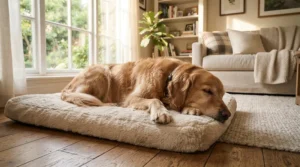
Breathable Summer Dog Bed: Why Airflow Beats Gel in Some Homes
A breathable summer dog bed uses open mesh and a raised frame to let air pass above, below and around your dog. It’s the opposite of the plush, filled beds that trap warmth.
That matters because heat doesn’t just come from the room. It comes from your dog’s own body, and a dense foam bed acts like a duvet. The Coolaroo Original Elevated Dog Bed lifts the sleeping surface roughly 8 inches off the floor, and the Veehoo Cooling Elevated Dog Bed about 9 inches. That gap lets air carry heat away continuously, with no resetting needed.
Raised beds shine in garden shade, hot spare rooms and on warm floors. Where gel mats fade in a stifling space, a mesh bed keeps going. The downside is comfort for some dogs: thin dogs and older dogs may want a cushion layer. A thin blanket on top defeats some of the airflow, so use a breathable one.
Heatstroke Symptoms in Dogs: What to Watch For and What to Do
A cooling bed lowers risk. It doesn’t remove it. Knowing heatstroke symptoms in dogs could save a life.
The RSPCA’s heatstroke guidance lists the key signs: heavy panting, thick sticky drooling, lethargy, a fast pulse, vomiting, collapse and seizures. It also warns that an unconscious dog may stop panting even though their temperature is still dangerously high.
If you suspect heatstroke, the RSPCA’s order of action is to stop activity, get the dog into shade, then cool them with cool, not icy, water over the body. It advises avoiding the head, particularly in flat-faced or unconscious dogs. The charity’s rule is cool first, transport second, and then contact a vet.
Hot Cars and the Law
Never leave a dog in a parked car. Lambeth Council’s animal welfare guidance says cars can reach 49°C or more, and that leaving a dog in a locked car could lead to prosecution. If you see a dog in distress in a car, it advises ringing 999. A cooling mat on the back seat is never a substitute for leaving the dog at home.
Hydration and Shade Tips: The Free Half of Keeping Dogs Cool
These hydration and shade tips cost almost nothing, and they work with every bed in this guide.
Water. Blue Cross’s hot-weather guidance recommends clean, fresh water at all times, ideally in a large bowl filled to the brim. Ice cubes can keep it cold. Carry a travel bowl on every walk, and place a second bowl near the cooling bed so water is never a trek away.
Shade. Put beds where shade lasts all day, not just at lunchtime. Remember that sun moves, so a spot that’s cool at 10am can be baking by 3pm. Open mesh beds beneath a parasol or covered deck make an easy outdoor setup.
Walks. Move walks to early morning or late evening. The RSPCA suggests testing the pavement with the back of your hand for five seconds. If it’s too hot for you, it’s too hot for paws.
Extras. Damp towels, a shaded paddling pool and frozen treats all help. Brush out loose coat, and keep an eye on older, overweight and flat-faced dogs, who overheat fastest.
Common Mistakes When Buying a Cooling Dog Bed for Summer
Ignoring weight ratings. A rating is a limit, not a target. Dogs jump on beds, and the load spikes. Leave a clear margin.
Buying gel for a chewer. Gel mats and puncturing teeth don’t mix. If your dog destroys bedding, go raised mesh and supervise.
Expecting an ice pack. A cooling gel mat dog bed doesn’t feel freezing. If you expect a cold slab, you’ll think it’s broken when it’s working as designed.
Placing it in the sun. The most common error. A mat on a sun-warmed floor does very little.
Skipping the introduction. Dogs distrust new surfaces. Give them time.
Treating a bed as a safety net. No product is a substitute for shade, water and avoiding hot-day exercise. And if your dog shows signs of heatstroke, a bed isn’t treatment, so call a vet.
Long-Term Cost & Maintenance
A cooling dog bed for summer should last more than a season, and the maths differs between types.
| Product | Indicative Band | Lifespan Factor | Best For |
|---|---|---|---|
| Coolaroo Original Elevated Dog Bed | £35–£75 | Replaceable covers extend life | Outdoor use |
| Veehoo Cooling Elevated Dog Bed | £35–£70 | Frame durable; mesh may sag | Large dogs |
| Amazon Basics Raised Dog Bed | £25–£50 | Whole-bed replacement likely | Value seekers |
| Pecute Dog Cooling Mat | £18–£28 | Puncture risk limits life | First-time gel buyers |
| HyperKewl Evaporative Cooling Dog Pad | £20–£40 | Machine-washable fabric | Hot-day backup |
Raised beds cost more up front but cope with several summers, particularly where replacement covers exist, such as with the Coolaroo Original Elevated Dog Bed. Gel mats are cheap but vulnerable, so one claw can end a mat’s life. Think in cost per hot day, not sticker price. A £60 bed used through six summers is cheaper than a £20 mat replaced every year.
Maintenance is simple: wipe weekly, check for leaks, tighten frames, and store dry over winter.

Frequently Asked Questions About a Cooling Dog Bed for Summer
❓ How much does a cooling dog bed for summer cost in the UK?
❓ Can I use a cooling gel mat dog bed inside a crate?
❓ Are cooling beds safe for puppies?
❓ Where is the best place for a cooling dog bed for summer?
❓ Can I take a cooling bed in the car?
Conclusion: Choosing Your Cooling Dog Bed for Summer
A good cooling dog bed for summer is one part of a bigger plan alongside shade, water and common sense. For most British homes, a raised mesh bed is the most dependable first step, and the Amazon Basics Raised Dog Bed is the cheapest way to find out whether your dog takes to one. If your dog is heavy, the Veehoo Cooling Elevated Dog Bed offers a strong weight rating, while the Coolaroo Original Elevated Dog Bed suits sheltered outdoor spots.
If you’d rather have a mat, the Pecute Dog Cooling Mat is the safest all-rounder, the Scruffs Self-Cooling Mat suits the biggest breeds, and the Ancol Cooling Mat is a worthwhile experiment with phase-change cooling. For the hottest days, the HyperKewl Evaporative Cooling Dog Pad delivers the strongest effect at the cost of some effort.
On the cooling mat vs cooling bed question, many owners end up with both. And no product replaces knowing the heatstroke symptoms in dogs and putting the hydration and shade tips into practice. Keep water close, walks early and the cooling spot somewhere genuinely cool.
Recommended for You
- Temperature-Regulating Dog Bed: 7 Best Proven Picks (2026)
- Sun-Safe Dog Bed: 7 Best UV-Protective Picks For UK Gardens (2026)
- Dog Bed For Conservatory: 7 Best UK Picks For 2026
Disclaimer: This article contains affiliate links. As an Amazon Associate, I earn from qualifying purchases. If you purchase products through these links, we may earn a small commission at no additional cost to you.
✨ Found this helpful? Share it with your friends! 💬🤗
