
In This Article
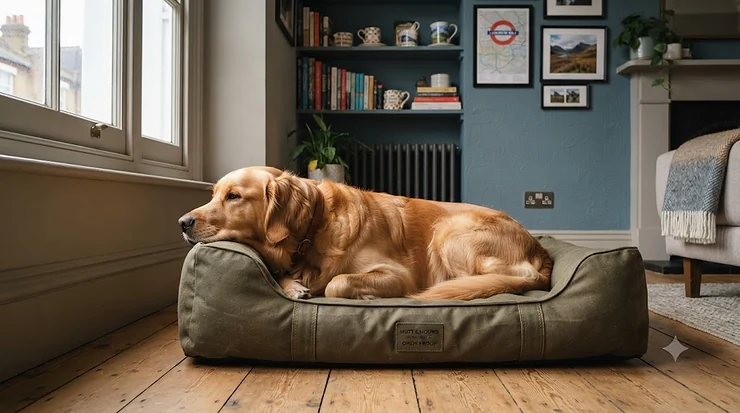
If you’ve ever walked into the living room to find a snowstorm of foam stuffing where a £60 bed used to be, you already know why you’re here. A chew-proof dog bed isn’t a luxury for destructive dogs — it’s damage control, and honestly, it’s cheaper than replacing a cushioned bed every six weeks. The good news is that the market has moved on a lot from “just buy something tougher and hope.” Modern beds now use genuinely engineered materials — ballistic nylon, ripstop weaves, aluminium frames with hidden fabric channels — that remove the actual grip points a dog’s jaw needs to do damage in the first place.
This guide walks through seven real, currently available beds for the UK market, spanning budget crate pads to premium aluminium cots, and explains — with honest analysis, not marketing fluff — which one actually suits your dog’s chewing habits, size, and your budget. We’ll also dig into what “chew-proof” really means (spoiler: no bed is bite-proof against a determined enough jaw), how warranty terms work, and how to handle a teething puppy without sacrificing another bed to the cause.
Quick Comparison Table
| Bed | Best For | Frame/Fabric | Price Range |
|---|---|---|---|
| Amazon Basics Raised Dog Bed | Budget buyers | Steel frame, breathable mesh | £25-£45 |
| Scruffs ArmourDillo | Balance of comfort + toughness | Ballistic-grade fabric, memory foam | £45-£80 |
| Kuranda Aluminium Dog Bed | Long-term severe chewers | Aircraft-grade aluminium, channel-set fabric | £90-£160 |
| Gorilla Dog Beds Tough Orthopedic | Extreme chewers, crate use | 1000D ballistic Cordura | £80-£150 |
Looking at the spread above, the pattern is clear: the cheapest beds win by giving a chewer nothing to grab (no stuffing, taut mesh), while the priciest beds win by using genuinely bite-resistant fabric construction that survives even when a dog does get a grip. The Kuranda Aluminium Dog Bed sits at the top of the price range because its channel-locked fabric design is patented and has been proven in shelters for years, while the Amazon Basics Raised Dog Bed proves you don’t need to spend big if your dog is a moderate chewer rather than a determined one.
💬 Just one click — help others make better buying decisions too!😊
Top 7 Chew-Proof Dog Beds: Expert Analysis
1. Amazon Basics Raised Dog Bed — best budget elevated cot
The Amazon Basics Raised Dog Bed strips the problem down to basics: a breathable mesh sleeping surface pulled taut over a powder-coated steel frame, with zero stuffing and zero soft edges. That absence of anything soft is precisely the point — a determined chewer needs something to grip, and a tightly stretched mesh gives them almost nothing to work with. The frame legs use a screw-together assembly that’s held up well across large batches of owner reports, and the elevated design keeps dogs off cold conservatory floors and draughty utility rooms, which matters more in a British winter than most buyers initially think.
Who this suits: dogs that are moderate rather than extreme chewers, and owners who want to test whether an elevated-cot format works for their dog before committing to a pricier aluminium version. Reviewers consistently report that the mesh holds up well to scratching and light gnawing, though a handful note that puppies in a full teething phase can eventually work loose threads at the corners if left unsupervised for long stretches.
Pros:
- ✅ Genuinely nothing soft for a dog to grip and pull
- ✅ Elevated design keeps dogs off cold or damp floors
- ✅ Very low price point for the durability on offer
Cons:
- ❌ Mesh can fray at corners under sustained determined chewing
- ❌ No cushioning — some dogs need a topper for comfort
At around £25-£45, this is the sensible first step for anyone who hasn’t yet worked out how destructive their dog actually is. Value-wise, it’s hard to beat as an entry point before upgrading.
2. Scruffs ArmourDillo — best balance of comfort and toughness
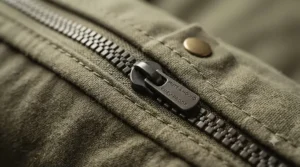
What most buyers overlook about the Scruffs ArmourDillo is that it solves the comfort-versus-durability trade-off that plagues most “tough” beds. The outer shell is a multi-layered, ballistic-grade fabric built to resist teeth and claws, but inside sits genuine memory foam rather than the thin, flat padding you get on most reinforced beds. That matters because a bed that survives your dog but that your dog refuses to lie on hasn’t actually solved anything.
Based on the spec comparison with other mid-range options, the ArmourDillo’s fabric sits closer to the ballistic nylon used in flight-jacket construction than to standard canvas — a heavier, tighter weave that resists puncturing rather than simply being thick. Reviewers consistently note that it holds its shape well after repeated washing, and the removable cover makes it genuinely practical for muddy-paw households.
Pros:
- ✅ Rare combination of orthopaedic comfort and real durability
- ✅ Machine-washable cover simplifies muddy-dog maintenance
- ✅ UK brand with widely available replacement covers
Cons:
- ❌ Not marketed as fully chew-proof for the most extreme cases
- ❌ Premium fabric pushes it above basic elevated cots on price
Best for: dogs that chew moderately but need proper joint support — think older dogs, larger breeds, or anyone managing early-stage arthritis alongside destructive habits. In the £45-£80 range, it represents strong value for anyone who’s tired of choosing between “tough” and “comfortable.”
3. Kuranda Aluminium Dog Bed — premium long-term chewer solution
When cost matters less than genuinely solving the problem, the Kuranda Aluminium Dog Bed is the one that UK kennels, rescue centres and vet practices keep coming back to. Its trick isn’t a tougher fabric — it’s a completely different construction method. Rather than wrapping fabric around the outside of a frame (where the edge is exposed and grabbable), Kuranda slides the fabric into a channel machined into the aluminium rails, so there’s no loose edge for a dog to get a tooth under in the first place.
Here’s what to weigh: the aircraft-grade aluminium frame won’t rust, bend, or corrode outdoors, and buyers can choose between Cordura, ballistic nylon, or heavy-duty vinyl fabric depending on whether the priority is chew resistance, weather resistance, or easy cleaning. What the spec sheet won’t tell you, but reviewers note repeatedly, is how dramatic the before-and-after difference is compared to conventional beds — dogs that destroyed multiple standard beds within hours are frequently reported to leave the Kuranda completely untouched, simply because there’s no accessible edge to start with.
Pros:
- ✅ Patented channel design removes the grabbable edge entirely
- ✅ Comprehensive one-year warranty on frame and most fabrics
- ✅ Trusted by professional kennels and veterinary practices for years
Cons:
- ❌ Significant investment compared with basic elevated cots
- ❌ Textilene (outdoor mesh) fabric option isn’t covered by the chew warranty
Best for: severe, repeat-offender chewers and multi-dog households where you genuinely cannot afford to keep replacing beds. At £90-£160, it’s a lifetime-value purchase rather than an impulse buy.
4. K9 Ballistics Tough Rip-Stop Orthopedic Dog Bed — best for teething puppies
The K9 Ballistics Tough Rip-Stop Orthopedic Dog Bed earns its spot here for one specific reason: it’s built with a ripstop weave designed to resist scratching and chewing behaviours that are extremely common in puppies working through their teething phase. Unlike adult destructive chewing, puppy chewing is usually short bursts of exploratory gnawing rather than sustained demolition — which means the reinforcement grid woven into ripstop fabric (thicker threads interlaced at regular intervals to stop small tears spreading) is often exactly the right level of toughness without overpaying for military-spec materials a puppy doesn’t need yet.
On paper this means a bed that can survive the unpredictable, opportunistic nibbling of a five-to-eight-month-old puppy while still offering genuine orthopaedic support for growing joints. The reinforced stitching along seams — traditionally the weak point where cheaper beds fail first — adds a second layer of protection specifically where puppies tend to focus their attention.
Pros:
- ✅ Ripstop weave stops small nips from becoming full tears
- ✅ Orthopaedic support suits fast-growing puppy joints
- ✅ Reinforced seams target the most common failure point
Cons:
- ❌ Not intended as a match for a fully grown, determined destructive chewer
- ❌ Sizing up as your puppy grows adds to long-term cost
Best for: households currently navigating the teething window, roughly three to eight months old, where chewing is developmental rather than a settled behavioural pattern. Expect to pay in the £70-£120 range depending on size.
5. Veehoo Elevated Dog Bed with Removable Bolster — best raised design with comfort add-ons
The Veehoo Elevated Dog Bed with Removable Bolster takes the classic chew-resistant raised-cot format and adds a genuinely useful comfort feature without compromising the core durability logic. The sleeping surface is a taut, breathable Textilene mesh — the same material family used in outdoor furniture — stretched across a frame, which keeps a dog cool in summer and gives almost nothing for teeth to latch onto. The bolster along one side gives dogs that like to rest their head somewhere a place to do it, without reintroducing the soft, grippable stuffing that causes problems on cushioned beds.
Based on the spec comparison with fully flat elevated cots, the bolster is removable, so if your dog does start working at it, you can simply take it off and revert to the plain mesh design. That flexibility is genuinely useful for owners who aren’t sure yet how destructive their dog will be with the added feature in place.
Pros:
- ✅ Breathable mesh keeps dogs cool and offers nothing to grip
- ✅ Removable bolster adapts to your dog’s actual chewing habits
- ✅ Lightweight frame is easy to move between rooms or gardens
Cons:
- ❌ Bolster itself is more vulnerable than the flat mesh base
- ❌ Assembly quality reports are mixed on frame joints
Best for: dogs that are light-to-moderate chewers who’d benefit from a headrest. Priced around £35-£60, it sits comfortably between budget and premium.
6. Gorilla Dog Beds Tough Orthopedic Crate Pad — best for extreme chewers and crate use
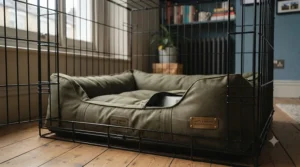
For dogs that have destroyed literally everything else on this list, the Gorilla Dog Beds Tough Orthopedic Crate Pad is built around 1000D ballistic Cordura — a genuinely heavy-duty fabric weight more commonly seen in tactical gear and military packs than pet products. The “1000D” figure refers to denier, a measurement of fibre thickness, and at this weight the fabric resists puncturing in a way that lighter canvas or standard polyester simply can’t match.
What most buyers overlook about crate pads specifically is that crate confinement often increases chewing intensity, because a bored or anxious dog has nowhere else to direct that energy. Reviewers consistently describe this pad surviving dogs that had previously destroyed multiple “chew-proof” competitors within a single day, which — while anecdotal — lines up with the fabric spec on paper.
Pros:
- ✅ 1000D ballistic Cordura is genuinely among the toughest fabrics used in pet beds
- ✅ Purpose-built to fit standard crate dimensions
- ✅ Orthopaedic foam layer underneath adds real comfort
Cons:
- ❌ Among the most expensive options in this list
- ❌ Overkill for dogs that only chew occasionally
Best for: genuinely extreme chewers and crate-trained dogs with a documented history of destroying softer beds. Expect £80-£150 depending on crate size.
7. MABOZOO Indestructible Dog Crate Pad — best budget puppy-proof crate mat
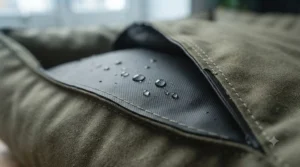
Specifically engineered for crate environments, the MABOZOO Indestructible Dog Crate Pad uses five-layer protection, including a bite-resistant top fabric and a waterproof PU lining underneath, aimed at turning a cold plastic crate tray into something a puppy will actually want to settle on. That waterproof layer matters more than it might sound for anyone dealing with a puppy that isn’t fully house-trained yet, since it stops accidents soaking through to the crate base.
Here’s what to weigh against the pricier options above: this isn’t marketed as indestructible against an adult, powerfully-jawed dog, but for puppy-proofing a crate during the early months, the multi-layer construction is a sensible, affordable middle ground between a flimsy foam mat and a premium aluminium cot you don’t yet know if you’ll need.
Pros:
- ✅ Waterproof PU lining protects against toileting accidents
- ✅ Five-layer construction adds real puncture resistance for the price
- ✅ Fits standard wire crate dimensions without modification
Cons:
- ❌ Not rated for adult dogs with strong, sustained chewing habits
- ❌ Thinner cushioning than dedicated orthopaedic beds
Best for: puppy-proofing a crate on a budget, particularly during house-training. Priced around £20-£35, it’s an easy low-risk starting point.
Practical Usage Guide: Setting Up a Chew-Proof Bed for the First 30 Days
Getting the bed right on day one matters more than most owners expect. Start by placing the bed somewhere your dog already associates with rest — moving it to an unfamiliar spot in week one often triggers exactly the anxious chewing you’re trying to avoid. For elevated cot-style beds, check the frame joints are fully seated before first use; a slightly loose leg creates a wobble that some dogs will investigate with their teeth out of curiosity rather than destructiveness.
For the first week, supervise use where possible and redirect any determined gnawing towards an appropriate chew toy nearby — this isn’t about the bed failing, it’s about building the habit that this particular surface isn’t for chewing. Wash removable covers according to the label from day one rather than waiting for visible dirt; residual scent from packaging or shipping can occasionally prompt extra investigative chewing in the first few days. Finally, check stitching and seams weekly for the first month, since this is when you’ll spot early wear before it becomes a genuine failure point, and most manufacturer warranties require documented early reporting anyway.
Real-World Scenarios: Matching the Bed to Your Dog
Picture three very different households. First, a first-time owner with an eight-week-old Labrador puppy, still teething, living in a flat with limited outdoor access — for this household, the MABOZOO Indestructible Dog Crate Pad or the K9 Ballistics Tough Rip-Stop Orthopedic Dog Bed make sense, since the chewing is developmental and budget flexibility matters while the puppy is still growing through several sizes.
Second, a rescue owner with an anxious rehomed Staffordshire Bull Terrier that has already destroyed three cushioned beds in as many months — here, the jump straight to the Kuranda Aluminium Dog Bed or Gorilla Dog Beds Tough Orthopedic Crate Pad is the financially sensible move, because the cost of one durable bed will likely undercut the cost of repeatedly replacing cheaper options. Third, a family with a moderately chewy but otherwise well-behaved Cockapoo who mostly wants somewhere comfortable to nap — the Scruffs ArmourDillo hits the sweet spot of genuine comfort without the premium price tag of the most extreme options.
Problem → Solution: Common Chew-Proof Bed Failures, Fixed
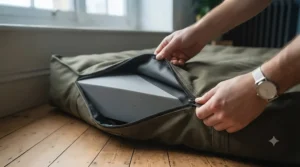
Problem 1: The corners fray first. This is almost always a sign the fabric isn’t tensioned tightly enough across the frame. Solution: choose a design with a channel-locked or fully taut mesh construction, like the Kuranda Aluminium Dog Bed, rather than fabric simply stapled or wrapped around a frame edge.
Problem 2: The dog ignores the “tough” bed and chews the crate itself. This usually signals boredom or separation anxiety rather than a bed failure. Solution: pair any chew-resistant bed with adequate mental stimulation and, per RSPCA guidance, address the underlying cause of excessive chewing rather than treating the bed as the whole fix — redirecting to appropriate chew toys alongside the bed upgrade tends to work far better than the bed alone.
Problem 3: A puppy outgrows the bed within months. Solution: for puppies still teething, choose a mid-range, less expensive option first (like the budget crate pads above) and reserve the premium aluminium investment for once you know their adult size and chewing intensity.
Problem 4: The bed becomes damp or smelly fast. Solution: prioritise beds with removable, machine-washable covers or waterproof PU linings, and wash on the schedule from day one rather than waiting for odour to build up.
Problem 5: A warranty claim gets rejected. Solution: read the warranty terms before you need them — most exclude digging damage and cosmetic wear, and require documented, timely reporting (more on this below).
What Is a Chew-Proof Dog Bed?
A chew-proof dog bed is a bed engineered to remove or resist the elements — soft stuffing, loose fabric edges, exposed seams — that give a dog something to grip and tear. In practice this usually means either an elevated mesh cot with a taut surface and no stuffing, or a cushioned bed built with heavy-duty fabric like ballistic nylon or ripstop weave. No dog bed is genuinely indestructible against every dog; a determined enough chewer with strong enough jaws can eventually damage almost anything.
How to Choose a Chew-Proof Dog Bed
- Assess your dog’s actual chewing intensity first. Occasional gnawing needs a lighter-duty solution than a dog that’s already destroyed multiple beds.
- Match the design to the chewing pattern. Elevated mesh cots suit dogs that chew edges; heavy-duty fabric cushioned beds suit dogs that dig and burrow.
- Check the fabric spec, not just the marketing word “tough.” Look for named materials — ballistic nylon, ripstop, 1000D Cordura — rather than vague claims.
- Read the warranty exclusions before buying, not after a claim. Digging and cosmetic damage are commonly excluded even on strong warranties.
- Size for growth if you’re buying for a puppy. A bed that fits now may need replacing within months regardless of durability.
- Factor in washability. A genuinely tough bed you can’t easily clean becomes a maintenance headache fast.
- Balance comfort against pure toughness. A bed your dog refuses to use because it’s too austere hasn’t solved the underlying problem.
Common Mistakes When Buying a Chew-Proof Dog Bed
The single most common mistake is buying based on the word “indestructible” in a product title without checking the actual fabric spec underneath it — marketing language varies wildly, while denier ratings and named fabric types are consistent and checkable. A close second is under-sizing for a growing puppy purely to save money upfront, which often means paying for two or three beds across a single growth period instead of one correctly sized bed. Owners also frequently skip reading warranty exclusions, then feel blindsided when a digging-related claim gets rejected months later. Finally, plenty of buyers assume the toughest, most expensive bed is automatically the right choice, when in reality a moderate chewer is often perfectly well served — and considerably better catered to on comfort — by a mid-range option like the Scruffs ArmourDillo.
Chew-Proof Dog Beds vs Traditional Cushioned Beds
Traditional cushioned beds prioritise comfort through soft stuffing and loose, wrappable covers — precisely the features that make them vulnerable to a determined chewer. Chew-proof beds flip that priority, either by removing softness entirely (elevated mesh cots) or by wrapping genuine comfort inside a puncture-resistant shell (ballistic nylon cushioned beds like the ArmourDillo). The trade-off is usually price: heavy-duty fabric and reinforced construction cost more to manufacture, which is reflected in the retail price gap between a basic cushioned bed and its chew-resistant equivalent. For a non-chewing dog, a traditional bed remains perfectly adequate and often more comfortable pound-for-pound; the moment chewing becomes a pattern rather than a one-off, though, the maths flips firmly in favour of investing once in a genuinely durable design.
Heavy-Duty Dog Bed Fabric: What Ripstop and Ballistic Nylon Actually Mean
The terms “heavy-duty” and “indestructible” get used loosely in pet product marketing, so it’s worth understanding what the named fabrics actually do. Ripstop is a woven fabric — frequently nylon-based — that interweaves thicker reinforcement yarns in a crosshatch grid at regular intervals, typically every 5-8mm. According to Wikipedia’s technical breakdown of the material, the advantage isn’t that ripstop can’t be torn at all — it’s that once a small tear starts, the reinforcement grid stops it spreading further, which is exactly the failure mode you want to prevent in a dog bed. Ballistic nylon, used in beds like the K9 Ballistics Tough Rip-Stop Orthopedic Dog Bed, was originally developed for military flak jackets and uses a thick basketweave construction that prioritises puncture resistance over the tear-stopping crosshatch of ripstop. In practice, both fabric families outperform standard canvas or polyester significantly, but ripstop tends to suit dogs that scratch and nibble at edges, while ballistic weaves suit dogs that bite down hard and repeatedly in one spot.
Dog Bed Warranty Terms: What’s Actually Covered
Warranty language on “chew-proof” beds is where a lot of buyers get caught out, so it’s worth reading the fine print before you need it rather than after a claim is rejected. Under the Consumer Rights Act 2015, a manufacturer’s guarantee is a legally binding agreement that must be written in plain language, state your statutory rights clearly, and specify its duration and territorial scope — but it sits alongside your statutory rights rather than replacing them. In practice, most chew-proof bed warranties (commonly ranging from 120 days to a full year across the brands covered here) cover structural frame damage and fabric failure from normal chewing, but explicitly exclude damage from digging, and almost always exclude purely cosmetic wear like fading or minor scuffing. Registering your purchase promptly and photographing any damage as soon as it appears will make any genuine claim considerably smoother to process.
Puppy-Proof Bedding for Teething Pups
Puppies chew for entirely different reasons than adult destructive chewers, and understanding that difference changes what “puppy-proof” should actually mean for your buying decision. Teething typically runs from around twelve weeks through to roughly seven months of age, as baby teeth are replaced by adult teeth, and chewing during this window genuinely soothes sore gums rather than signalling a behavioural problem. That’s why a lighter, ripstop-based bed like the K9 Ballistics Tough Rip-Stop Orthopedic Dog Bed or a budget crate pad like the MABOZOO Indestructible Dog Crate Pad is usually the smarter first purchase over a premium aluminium investment — puppies grow through sizes quickly, and developmental chewing is generally less sustained and severe than settled adult destructive chewing. Pairing the bed with plenty of appropriate chew toys nearby, rather than expecting the bed alone to survive unsupervised gnawing, tends to produce far better results during this phase.
Long-Term Cost & Maintenance
Working out genuine value means looking past the sticker price to cost-per-year of actual use. A £30 budget cot that needs replacing every four months works out more expensive over eighteen months than a £120 aluminium bed that lasts five years or more — and that’s before factoring in the hassle of repeatedly shopping and waiting for delivery. Maintenance-wise, elevated mesh cots are the easiest to keep clean since they simply wipe down or hose off, while cushioned fabric beds need regular washing according to their care label to avoid odour build-up. If you’re weighing a premium purchase, it’s worth reading Which?’s guidance on how manufacturer warranties interact with your statutory consumer rights before you commit, since a strong warranty on a higher-priced bed can meaningfully offset the larger upfront cost.
FAQ
❓ Is any dog bed truly chew-proof?
❓ What is the best chew-proof dog bed for puppies?
❓ How long should a chew-proof dog bed warranty last?
❓ Are elevated dog beds better than cushioned ones for chewers?
❓ Can I machine wash a chew-proof dog bed?
Conclusion
Choosing the right chew-proof dog bed really comes down to being honest about your dog’s actual chewing intensity rather than chasing the toughest-sounding product on the shelf. A moderate chewer is often perfectly well served by a mid-range option like the Scruffs ArmourDillo, while a genuinely determined destroyer justifies the investment in something like the Kuranda Aluminium Dog Bed or Gorilla Dog Beds Tough Orthopedic Crate Pad. Puppies going through teething deserve a lighter, more affordable starting point since they’ll outgrow it regardless of how tough it is. Whatever you choose, understanding the fabric spec, reading the warranty exclusions upfront, and pairing any bed with appropriate chew toys will get you far further than relying on the word “indestructible” alone.
Recommended for You
- Wipe-Clean Dog Bed: 7 Best Easy-Care Picks for UK Homes (2026)
- Non-Slip Dog Bed Guide: 7 UK Picks That Stop Sliding (2026)
- Waterproof Dog Bed for Kitchen: 7 Best Picks for 2026
Disclaimer: This article contains affiliate links. As an Amazon Associate, I earn from qualifying purchases. If you purchase products through these links, we may earn a small commission at no additional cost to you.
✨ Found this helpful? Share it with your friends! 💬🤗
