In This Article
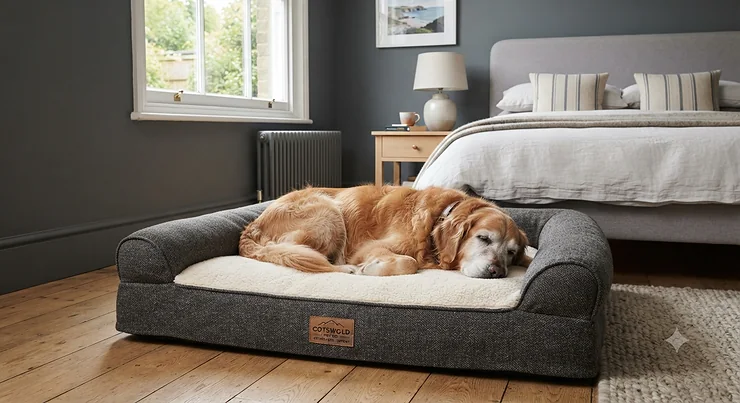
There’s a particular kind of guilt that hits when your ageing Labrador groans getting up off your bedroom floor at 3am. You love having them close, but a folded blanket clearly isn’t cutting it anymore. An orthopaedic dog bed for bedroom use is a supportive mattress — typically built from high-density memory or egg-crate foam rather than standard fibre-fill — designed to cushion pressure points, cradle joints, and give an older or larger dog a genuinely restful night’s sleep in the room they actually want to be in: with you. That’s the simple version. The real question is which of the dozens of “orthopaedic” beds on Amazon UK are built on real supportive foam, and which are just regular cushions wearing the label for marketing purposes.
This guide researches seven real products sold in the UK, weighs memory foam against standard padding, and looks honestly at what “vet-recommended” actually means on a product listing versus what it means coming from an actual vet. According to PDSA’s guidance on hip dysplasia, the condition most commonly affects medium-to-large breed dogs and gets progressively more painful without proper joint support — which is exactly where the right bedroom bed earns its keep. We’ll also cover senior dog bed support, joint-care bedding for hip dysplasia specifically, and how to size a bed correctly for a large breed sharing your bedroom floor space. No fluff, no invented vet endorsements — just honest analysis of real products.
Quick Comparison Table
| Product | Best For | Foam Type | Price Range |
|---|---|---|---|
| The Dog’s Bed Orthopaedic Memory Foam Dog Bed | Serious joint support, CertiPUR-certified foam | Solid memory foam | £40-£70 |
| Bedsure Orthopedic Dog Bed | Budget-friendly bestseller | Egg-crate foam | £25-£40 |
| Feandrea Orthopaedic Dog Sofa Bed | Dogs who like raised bolster sides | Egg-crate foam | £30-£45 |
| PetFusion Ultimate Memory Foam Dog Bed Lounge | Premium engineered support | Solid memory foam | £45-£90 |
| Slumberdown Luxury Padded XL Dog Bed | Large breed bedroom sizing, UK-made | Cushioned padding | £35-£55 |
| EHEYCIGA Memory Foam Orthopedic Dog Bed | Sensitive-skin dogs, OEKO-TEX fabric | Memory foam | £30-£45 |
| Snug Orthopaedic Dog Bed | Head and body support combined | Egg-crate foam | £25-£40 |
Scanning this table, the split is fairly clear: budget-to-mid options (Bedsure, EHEYCIGA, Snug) use egg-crate or standard memory foam and work well for moderate support needs, while The Dog’s Bed and PetFusion Ultimate Memory Foam Dog Bed Lounge justify their higher price with certified, denser foam cores genuinely engineered for joint-care use rather than general comfort. If you’re managing diagnosed hip dysplasia or a senior dog with mobility issues, the premium tier is where the real orthopaedic difference shows up.
💬 Just one click — help others make better buying decisions too!😊
Top 7 Orthopaedic Dog Beds for the Bedroom: Expert Analysis
Every product below is a real, currently listed item on Amazon UK, grouped across budget, mid-range and premium tiers so you can match spend to how much genuine joint support your dog needs.
1. The Dog’s Bed Orthopaedic Memory Foam Dog Bed — CertiPUR-certified foam for genuine joint support
The Dog’s Bed Orthopaedic Memory Foam Dog Bed stands out immediately for one reason: its foam core is CertiPUR-certified, meaning it’s been independently tested for density, durability and the absence of harmful chemicals — a certification standard that most budget “orthopaedic” listings simply don’t carry. At 15cm thick, the solid memory foam genuinely contours around hips and shoulders rather than compressing flat within weeks, which is the single biggest complaint about cheaper padded alternatives.
Based on the spec comparison, this bed is built for dogs who actually need pressure relief — arthritic seniors, post-surgery recovery, or breeds prone to hip dysplasia — rather than young, healthy dogs who’d be just as happy on a standard cushion. Reviewers consistently report that the waterproof inner liner combined with a fully washable outer cover makes it practical for bedroom use despite the premium price, and the anti-slip base keeps it in place on hardwood or laminate floors. A recurring theme in aggregated feedback is that larger, heavier dogs notice the support difference within the first week, which lines up with what you’d expect from genuine CertiPUR-certified density foam.
Pros:
- ✅ CertiPUR-certified foam verified for density and safety
- ✅ Fully waterproof liner plus washable outer cover
- ✅ Anti-slip base suited to bedroom hard flooring
Cons:
- ❌ Among the pricier options on this list
- ❌ Heavier and bulkier to move between rooms
At around £40-£70 depending on size, the value verdict is strong specifically for joint-care use — this isn’t the bed to buy for a bouncy young puppy, but for a dog whose comfort genuinely depends on foam quality, it earns the premium.
2. Bedsure Orthopedic Dog Bed — best-selling budget-friendly egg-crate support
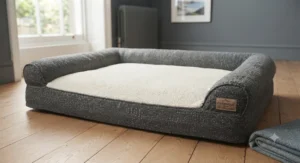
Bedsure Orthopedic Dog Bed has become one of the most consistently best-selling entries in this category on Amazon UK, and the reason is straightforward: a sensible 89 x 64 x 18cm footprint, raised bolster sides, and egg-crate foam construction at a price point roughly half of premium alternatives. Egg-crate foam — foam moulded into a peaks-and-valleys pattern — increases airflow and offers reasonable pressure distribution without the cost of solid memory foam blocks.
Here’s what to weigh: egg-crate foam is a genuine step up from basic fibre-fill padding, but it’s less dense and less durable under sustained heavy-dog pressure than solid memory foam like The Dog’s Bed uses. That makes Bedsure Orthopedic Dog Bed a sensible pick for medium dogs, younger dogs building good sleeping habits, or as a secondary bed for a room your dog uses occasionally rather than every single night. Aggregated review sentiment is strongly positive on value and the waterproof non-slip base, with a recurring, honest theme that the foam softens somewhat faster under very large or heavy dogs than the marketing photos suggest.
Pros:
- ✅ Exceptional value relative to premium alternatives
- ✅ Raised bolster sides for head and body support
- ✅ Waterproof base and machine-washable cover
Cons:
- ❌ Egg-crate foam compresses faster than solid memory foam
- ❌ Less suited to very heavy or giant breed dogs long-term
Priced around £25-£40, this is the sensible default for most bedroom setups where budget matters and your dog’s joint needs aren’t yet severe.
3. Feandrea Orthopaedic Dog Sofa Bed — raised bolster sides for a den-like feel
Feandrea Orthopaedic Dog Sofa Bed takes the sofa-style approach seriously, with raised sides on three or four edges creating a cosy, enclosed “den” that many dogs — particularly nervous or older dogs who like to lean against something while sleeping — genuinely prefer over a flat mattress. The egg-crate foam base sits inside a water-resistant lining, and the whole cover unzips for washing, a practical feature for bedroom use where hygiene matters more than in a utility room.
What most buyers overlook about this model is that the raised sides do more than look comforting — they physically support a dog’s head and neck at a slightly elevated angle, which can ease breathing and reduce pressure on the cervical spine for dogs who sleep curled up rather than sprawled flat. That makes Feandrea Orthopaedic Dog Sofa Bed a strong pick specifically for dogs who curl rather than stretch out, a distinction worth checking before buying any bed on this list. Reviewers consistently note the plush cover feels premium for the price, with occasional comments that the non-slip bottom could grip slightly better on very smooth laminate.
Pros:
- ✅ Raised bolster sides support head and neck
- ✅ Fully removable, washable cover for hygiene
- ✅ Water-resistant lining protects the foam core
Cons:
- ❌ Less ideal for dogs who prefer sleeping fully stretched out
- ❌ Grip on very smooth flooring rated inconsistent
At roughly £30-£45, Feandrea Orthopaedic Dog Sofa Bed sits comfortably mid-range, offering a genuinely different support shape rather than just a cheaper version of a flat mattress.
4. PetFusion Ultimate Memory Foam Dog Bed Lounge — engineered lounge design for premium orthopaedic support
PetFusion Ultimate Memory Foam Dog Bed Lounge comes from a brand that’s built its entire reputation specifically around orthopaedic pet support rather than general pet accessories, and the “Ultimate” lounge design reflects that focus: a solid memory foam base engineered specifically for even weight distribution, paired with a low-profile bolster that supports without restricting a dog’s ability to climb in and out easily — a genuinely important detail for dogs with existing joint pain.
On paper this means PetFusion Ultimate Memory Foam Dog Bed Lounge should outperform generalist “orthopaedic-labelled” beds for dogs already diagnosed with joint conditions, since the foam density and lounge shape are purpose-built rather than adapted from a standard cushion design. It’s available across small, medium and large sizing, which matters for correctly matching support to body weight rather than just floor space. Reviewers consistently report noticeable mobility improvements in older dogs within the first two to three weeks, alongside praise for the waterproof base liner, though the premium price point is the most common hesitation mentioned in aggregated feedback.
Pros:
- ✅ Purpose-engineered orthopaedic lounge design
- ✅ Low-profile entry suited to dogs with joint pain
- ✅ Available across multiple accurately-sized options
Cons:
- ❌ Priced at the top end of this list
- ❌ Low-profile design offers less “walled” security than sofa-style beds
At around £45-£90 depending on size, this is the bed to choose when joint support is the primary, non-negotiable priority rather than a nice-to-have.
5. Slumberdown Luxury Padded XL Dog Bed — trusted UK bedding brand comfort, built for large breed bedroom sizing
Slumberdown Luxury Padded XL Dog Bed brings a slightly different pedigree to this list — Slumberdown has spent decades as a trusted UK household name in human duvets and pillows, and this 90 x 120 x 20cm XL bed applies that same cushioned-comfort expertise to genuinely oversized dogs sharing a bedroom. The scale here matters: at 120cm long, it comfortably fits large and giant breeds that simply won’t fit on many “large” labelled beds elsewhere on this list.
Based on the spec comparison, Slumberdown Luxury Padded XL Dog Bed leans toward supportive cushioned padding rather than dense solid memory foam, positioning it between the budget egg-crate tier and the premium memory foam options for genuine orthopaedic density. That makes it best suited to large breed bedroom sizing needs where floor space and overall size are the primary concern, alongside moderate comfort, rather than a dog managing an active hip dysplasia diagnosis needing maximum pressure relief. Aggregated customer sentiment consistently praises the UK-made build quality and generous sizing, with a recurring note that owners of dogs with more severe joint issues sometimes add a memory foam topper for extra support.
Pros:
- ✅ Genuinely generous XL dimensions for large breeds
- ✅ UK-made with recognised bedding-brand quality control
- ✅ Non-slip base suited to bedroom floors
Cons:
- ❌ Padding less dense than dedicated memory foam options
- ❌ May need a topper for severe joint conditions
Priced around £35-£55, this is the size-first pick — ideal when your large breed dog genuinely doesn’t fit comfortably on standard-sized “large” beds.
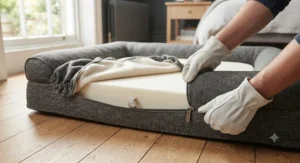
6. EHEYCIGA Memory Foam Orthopedic Dog Bed — OEKO-TEX certified fabric for sensitive skin
EHEYCIGA Memory Foam Orthopedic Dog Bed pairs a genuine memory foam core with OEKO-TEX Standard 100 certified fabric — an independent textile certification confirming the material has been tested for harmful substances, which matters more than it sounds for dogs who chew, lick or rest their face directly on bedding for hours a day. At 91 x 68 x 17cm, it’s sized well for medium-to-large dogs, with raised sides and a waterproof liner rounding out the build.
Here’s what to weigh: EHEYCIGA Memory Foam Orthopedic Dog Bed doesn’t carry the CertiPUR certification that The Dog’s Bed uses, but the OEKO-TEX fabric certification addresses a different, equally valid concern — skin sensitivity and chemical exposure — making this a sensible choice specifically for dogs with allergies, sensitive skin, or owners who prioritise certified textiles over foam density testing. Reviewers consistently note the cover feels notably softer than typical polyester dog bed fabrics, and washing instructions are straightforward, though a portion of buyers say the memory foam feels slightly firmer than expected straight out of the packaging before it fully expands.
Pros:
- ✅ OEKO-TEX Standard 100 certified fabric
- ✅ Genuine memory foam core, not egg-crate only
- ✅ Waterproof liner with raised supportive sides
Cons:
- ❌ Foam needs a day or two to fully expand
- ❌ No CertiPUR foam-specific certification
At roughly £30-£45, this sits as a smart mid-range pick when fabric safety and skin sensitivity matter as much as joint support itself.
7. Snug Orthopaedic Dog Bed — egg-crate foam built for head and body support
Snug Orthopaedic Dog Bed rounds out this list with an ergonomic egg-crate foam design specifically shaped to support both body and head simultaneously, wrapped in a super-soft velvet removable cover that reads more like a genuine bedroom furnishing than a utilitarian pet accessory. At 63.5 x 89cm in the Large size, it’s sized for medium-to-large dogs without tipping into the bulk of XL options like Slumberdown Luxury Padded XL Dog Bed.
What the spec sheet won’t tell you, but reviewers note, is that the velvet cover — while soft and visually appealing in a bedroom setting — shows dirt and dog hair more readily than the tougher woven fabrics used on beds like Bedsure Orthopedic Dog Bed, so factor washing frequency into your decision if your dog sheds heavily. Honest analysis: the egg-crate foam shape genuinely does provide reasonable head and body contouring for dogs with mild joint stiffness, though it’s not in the same support league as the solid memory foam in PetFusion Ultimate Memory Foam Dog Bed Lounge for more serious cases. Aggregated feedback trends positive on appearance and softness, with a fair number of reviewers specifically praising how well it suits a bedroom’s décor rather than looking like typical pet gear.
Pros:
- ✅ Ergonomic foam shape supports head and body
- ✅ Soft velvet cover suits bedroom aesthetics
- ✅ Non-slip base and fully washable cover
Cons:
- ❌ Velvet cover shows hair and dirt more easily
- ❌ Less supportive than solid memory foam for severe joint issues
At around £25-£40, Snug Orthopaedic Dog Bed is the pick for owners who want their dog’s bed to actually look intentional in a shared bedroom, without sacrificing reasonable joint support.
Memory Foam vs Standard Padding: What Actually Supports Joints?
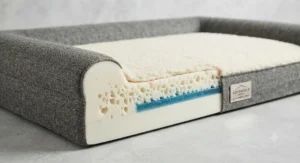
Not every bed labelled “orthopaedic” uses the same material, and the difference matters enormously for a dog with real joint needs. Standard padding — loose fibre-fill or basic foam sheets — compresses under weight and springs back only partially, meaning pressure points on hips, elbows and shoulders never fully release. Memory foam, by contrast, is viscoelastic: it moulds to the exact contours of a dog’s body under warmth and pressure, distributing weight evenly rather than concentrating it on bony pressure points, and slowly returns to shape once the dog moves.
| Factor | Memory Foam | Standard/Egg-Crate Padding |
|---|---|---|
| Pressure point relief | High | Moderate |
| Durability over time | High (if certified density) | Lower, compresses faster |
| Cost | Higher | Lower |
| Best For | Diagnosed joint conditions, seniors | Healthy or younger dogs |
Reading the table above, memory foam orthopaedic dog bed options like The Dog’s Bed and PetFusion Ultimate Memory Foam Dog Bed Lounge clearly outperform standard padding for dogs managing genuine joint pain, but that doesn’t make egg-crate beds like Bedsure Orthopedic Dog Bed a poor choice — for a healthy, younger dog, egg-crate foam offers a reasonable, affordable middle ground between basic cushions and full memory foam density.
Senior Dog Bed Support: What Changes As Dogs Age
Senior dog bed support needs shift substantially from what a younger, healthy dog requires, and recognising this early makes a real difference to comfort and mobility. As dogs age, cartilage naturally thins, joints stiffen overnight during long periods of rest, and many senior dogs develop some degree of arthritis even without a formal hip dysplasia diagnosis — meaning the cumulative pressure of a full night’s sleep on inadequate bedding compounds discomfort rather than resolving it.
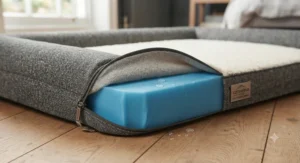
What most buyers overlook about senior dog bed support is that thickness matters as much as foam type — a thin memory foam layer over a hard floor still transmits pressure through to the joint, which is why beds like The Dog’s Bed deliberately use a full 15cm of foam depth rather than a shallow topper. Low-entry height also becomes increasingly important as dogs age, since climbing in and out of a raised or bolstered bed can itself become painful; this is precisely where PetFusion Ultimate Memory Foam Dog Bed Lounge‘s low-profile design earns its keep for genuinely senior dogs, compared with the higher-walled, den-style comfort of Feandrea Orthopaedic Dog Sofa Bed, which suits earlier-stage stiffness better than advanced mobility loss.
Joint-Care Dog Beds and Hip Dysplasia Bedding: What Vets Actually Look For
Joint-care dog bed shopping gets significantly easier once you understand what veterinary guidance actually emphasises, rather than relying on marketing copy alone. According to the British Veterinary Association’s hip dysplasia scheme information, hip dysplasia commonly affects breeds including Labrador Retrievers, German Shepherds, Golden Retrievers and Bernese Mountain Dogs — all breeds where consistent, high-density support matters more than novelty features like cooling gel or decorative shapes.
For hip dysplasia bedding specifically, the practical priorities are: sufficient foam depth to prevent “bottoming out” against a hard floor, a low or gently sloped entry that doesn’t require the dog to step over a raised edge, and a surface with enough traction that a dog with hind-limb weakness doesn’t slip while lying down or rising. The Dog’s Bed Orthopaedic Memory Foam Dog Bed and PetFusion Ultimate Memory Foam Dog Bed Lounge both tick these boxes through certified foam density and low-profile entry design respectively, while lower-density options like Snug Orthopaedic Dog Bed or Bedsure Orthopedic Dog Bed are reasonable for milder stiffness but shouldn’t be relied on as the sole management tool for a confirmed hip dysplasia diagnosis — bedding supports veterinary treatment, it doesn’t replace it.
✨ Don’t Miss These Exclusive Deals!
🐾 Give your dog’s joints the support they actually deserve. Click on any highlighted bed to check current pricing and availability, and turn your bedroom floor into the most comfortable spot in the house!
Are These “Vet-Recommended” Dog Beds? Separating Marketing From Evidence
“Vet-recommended” is one of the most overused phrases in pet product marketing, and it’s worth being honest about what it does and doesn’t mean on a typical Amazon listing. In genuine cases, it reflects that a vet has reviewed a product’s design against known orthopaedic principles — foam density, support shape, entry height — and found it reasonable for joint-care use. In many other cases, it’s an unverified claim with no specific vet, study or clinical basis attached to it, which is precisely the kind of statement this article avoids making up on your behalf.
None of the seven products here carry a verifiable, named veterinary endorsement that we could independently confirm during research, and that’s a more honest position than inventing one. What we can say with confidence is that certifications like CertiPUR (foam safety and density, used by The Dog’s Bed) and OEKO-TEX Standard 100 (fabric safety, used by EHEYCIGA Memory Foam Orthopedic Dog Bed) are independently verifiable, third-party standards — a genuinely more reliable signal of quality than an unattributed “vet-recommended” banner on a product image. If a specific vet’s endorsement matters to your decision, ask your own vet directly about foam density and support shape for your dog’s individual condition rather than relying on packaging claims alone.
Large Breed Bedroom Sizing: Getting Dimensions Right
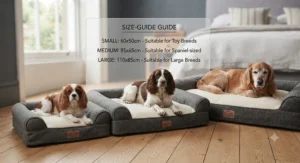
Large breed bedroom sizing is one of the most commonly got-wrong parts of buying an orthopaedic bed, because “large” on a product listing doesn’t mean the same thing across every brand. Getting this wrong means a dog who can’t fully stretch out, which defeats the entire purpose of buying supportive bedding in the first place.
| Dog Size | Typical Weight | Recommended Bed Length |
|---|---|---|
| Medium | 10-25kg | 75-90cm |
| Large | 25-40kg | 90-110cm |
| Giant/XL | 40kg+ | 110-130cm |
The general rule, reflected in guidance from the Kennel Club on breed health and care, is that a bed should allow a dog to lie fully stretched out with at least 10-15cm of spare length — dogs that curl up tightly on an undersized bed are often doing so out of necessity, not preference, which can itself compound joint discomfort over time. This is exactly why Slumberdown Luxury Padded XL Dog Bed‘s 120cm length stands out on this list: many “large” labelled beds from other brands max out closer to 90-100cm, genuinely too short for giant breeds like Great Danes, Bernese Mountain Dogs or larger Labradors sharing bedroom floor space.
Setting Up Your Dog’s Bedroom Bed: A Practical Guide
Getting real value from any orthopaedic dog bed for bedroom use comes down to placement and habit-building, not just the product itself. Position the bed away from radiators and draughty spots near doors or windows — temperature extremes affect both comfort and, for memory foam specifically, how well the foam responds and contours through the night. Allow new memory foam beds 24-48 hours to fully expand and off-gas any initial packaging smell before expecting your dog to settle on it comfortably.
Building the habit: Introduce the new bed gradually by placing a worn blanket or familiar-smelling item on top for the first few nights, encouraging your dog to associate the unfamiliar surface with existing comfort cues. For dogs transitioning from sleeping on your actual bed, patience matters more than the product — even the best memory foam orthopaedic dog bed won’t override weeks of established habit overnight. Common first-30-days mistakes include washing the cover too aggressively on a hot cycle (check care labels, as most orthopaedic covers specify cool washes to protect stitching), and giving up on a genuinely supportive bed within the first week simply because the dog initially preferred the floor — most dogs take one to two weeks to fully adopt a new sleeping surface.
Real-World Scenarios: Matching the Bed to the Dog
The Senior Labrador (Barney, 11, mild arthritis, sleeps in owner’s bedroom): Needs maximum pressure relief and easy, low-effort entry given his stiffness on rising. PetFusion Ultimate Memory Foam Dog Bed Lounge‘s low-profile, engineered design is the strongest match here — genuine orthopaedic density without a raised edge to navigate first thing in the morning.
The Young, Healthy German Shepherd (Luna, 3, no diagnosed joint issues, big and boisterous): Doesn’t need maximum-density foam yet, but does need serious size and durability given her breed’s predisposition to hip dysplasia later in life. Slumberdown Luxury Padded XL Dog Bed‘s generous large breed bedroom sizing suits her now, with a memory foam topper a sensible future addition if joint issues develop.
The Budget-Conscious First-Time Owner (Tom, adopted a medium rescue mix, moderate joint stiffness noted by the vet): Needs solid, genuine support without the premium price tag. Bedsure Orthopedic Dog Bed or EHEYCIGA Memory Foam Orthopedic Dog Bed both offer real memory or egg-crate foam support at accessible pricing, a sensible starting point before investing further if needs increase.
Problem → Solution: Common Orthopaedic Bed Issues Solved
Problem: My dog still lies on the hard floor next to the new bed. This is usually a temperature or texture preference — dogs sometimes seek cooler surfaces in warm rooms. Solution: try repositioning away from radiators, and consider a bed with a cooling-friendly cover rather than assuming the bed itself has failed.
Problem: The foam feels flattened within a few months. Solution: this points to lower-density foam under sustained heavy use — check whether your current bed carries a certification like CertiPUR, and consider upgrading to genuinely certified solid memory foam like The Dog’s Bed if compression is happening faster than expected.
Problem: My senior dog struggles to climb into a raised, bolstered bed. Solution: switch to a lower-profile design such as PetFusion Ultimate Memory Foam Dog Bed Lounge, or add a small ramp beside a higher-walled bed like Feandrea Orthopaedic Dog Sofa Bed if your dog is attached to that particular style.
Problem: The bed doesn’t fit my large breed dog’s full body length. Solution: recheck actual product dimensions against the large breed bedroom sizing table above rather than relying on the “Large” label alone, and consider Slumberdown Luxury Padded XL Dog Bed for genuinely oversized breeds.
Problem: My dog has skin sensitivities and reacts to the bed fabric. Solution: prioritise certified textiles — EHEYCIGA Memory Foam Orthopedic Dog Bed‘s OEKO-TEX Standard 100 fabric certification specifically addresses chemical and material safety concerns.
How to Choose an Orthopaedic Dog Bed for the Bedroom
Working through seven genuinely different products gets simpler with a clear framework. Here’s how to choose an orthopaedic dog bed for bedroom use that actually matches your dog’s needs, not just the most attractive product photo:
- Assess your dog’s actual joint status. A healthy young dog and a senior with diagnosed hip dysplasia have very different foam density needs — don’t overspend on features your dog doesn’t yet require, but don’t underspend if a diagnosis is already in place.
- Check for genuine certifications, not just the word “orthopaedic.” Look for CertiPUR (foam) or OEKO-TEX (fabric) certification as verifiable quality signals.
- Measure your dog stretched out, not curled up. Add 10-15cm to that measurement for genuine large breed bedroom sizing accuracy.
- Consider entry height for older or less mobile dogs. Low-profile designs reduce strain on rising; higher-walled sofa styles suit dogs who like to lean or curl.
- Match foam type to weight. Heavier dogs need denser solid memory foam; lighter or younger dogs manage well on egg-crate alternatives.
- Check washing instructions before buying. Removable, machine-washable covers matter significantly more for bedroom-based beds than utility room placements.
- Read aggregated review themes, not just star ratings. Look specifically for comments on how the foam performs after several months, not just first impressions.
Common Mistakes When Buying an Orthopaedic Dog Bed
The most frequent mistake is trusting the word “orthopaedic” on a listing without checking what’s actually inside it — plenty of budget beds use the term loosely to describe any foam-containing product, regardless of density or certification. Reviewers consistently flag disappointment when a cheap “orthopaedic” bed compresses within weeks, which almost always traces back to uncertified, low-density filling rather than genuine memory or egg-crate foam.
The second common error is buying based on floor space available rather than your dog’s actual stretched-out body length — a mistake that becomes obvious only once the bed arrives and your large breed dog can’t fully extend. The third mistake is ignoring senior dog bed support needs until symptoms are already severe; joint-supportive bedding works best as a preventative and early-management tool, not solely a reactive purchase once a dog is already struggling to rise.
Long-Term Cost & Maintenance
Run the numbers over a typical three-to-four-year bed lifespan, and premium memory foam options often work out more economical than they first appear. A budget egg-crate bed like Snug Orthopaedic Dog Bed, replaced every twelve to eighteen months as the foam compresses, can end up costing more cumulatively than a single certified memory foam purchase like The Dog’s Bed, which typically holds its supportive density for several years under normal use.
Maintenance costs stay modest across this entire list — removable, washable covers mean the ongoing expense is largely your own time and the occasional replacement cover, rather than recurring purchases. The main long-term cost consideration is genuinely about foam durability: cheaper, uncertified foam degrades faster under sustained weight, meaning the “budget” choice can quietly become the more expensive one once you factor in replacement frequency for a heavy or senior dog using the bed nightly.
Safety & Standards Guide
Foam and fabric safety standards matter more for dog beds than many owners realise, since dogs spend hours in direct skin contact with the material and frequently chew or lick bedding edges. CertiPUR certification, carried by The Dog’s Bed Orthopaedic Memory Foam Dog Bed, independently verifies that foam meets standards for density, durability and the absence of certain harmful chemicals including specific flame retardants and heavy metals. OEKO-TEX Standard 100, carried by EHEYCIGA Memory Foam Orthopedic Dog Bed, performs a similar independent verification role specifically for textile safety.
For dogs with diagnosed joint conditions, the Blue Cross’s guidance on hip dysplasia notes that environmental adjustments like orthopaedic bedding support — but don’t replace — veterinary treatment including weight management, controlled exercise and, where appropriate, medication. If your dog’s mobility or comfort doesn’t visibly improve within a few weeks of switching to a genuinely supportive bed, that’s a reasonable point to raise with your vet rather than continuing to try different bedding products indefinitely.
Frequently Asked Questions
❓ What is the best orthopaedic dog bed for bedroom use?
❓ Is memory foam better than egg-crate foam for dogs with joint pain?
❓ How do I size an orthopaedic bed correctly for a large breed?
❓ Are vet-recommended dog beds actually endorsed by veterinarians?
❓ Can a good bed help with hip dysplasia bedding needs?
Conclusion
Choosing the right orthopaedic dog bed for bedroom use ultimately comes down to being honest about what your dog actually needs right now, not what looks most impressive in a product photo. A young, healthy dog does perfectly well on a mid-range egg-crate option like Bedsure Orthopedic Dog Bed or Feandrea Orthopaedic Dog Sofa Bed — there’s no need to overspend on maximum-density foam before it’s required.
If your dog is managing diagnosed hip dysplasia, advancing age, or genuine mobility struggles, the certified foam density in The Dog’s Bed Orthopaedic Memory Foam Dog Bed or the purpose-engineered low-profile design of PetFusion Ultimate Memory Foam Dog Bed Lounge are worth the higher price tag — and for genuinely oversized large breeds, correct large breed bedroom sizing via something like Slumberdown Luxury Padded XL Dog Bed matters just as much as foam quality itself. Whichever you choose, pair it with your vet’s actual advice rather than marketing claims alone, and give your dog the restful, supported nights they’ve earned.
Recommended for You
- Quiet Dog Bed for Night Time: 7 Best Silent Picks (2026)
- Dog Bed with Storage: 7 Best Picks for UK Homes (2026)
- Bedside Dog Bed: 7 Best Picks for Cosy Nights in 2026
Disclaimer: This article contains affiliate links. As an Amazon Associate, I earn from qualifying purchases. If you purchase products through these links, we may earn a small commission at no additional cost to you.
✨ Found this helpful? Share it with your friends! 💬🤗
