
In This Article
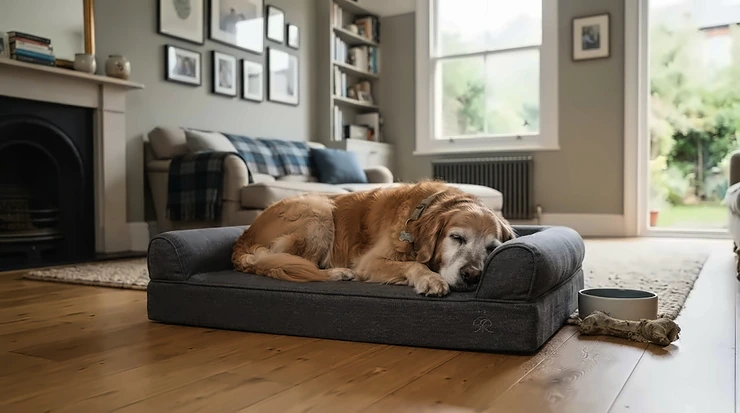
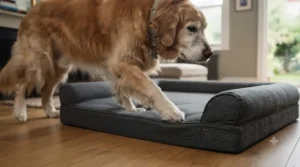
Watching an older dog hesitate at the edge of their own bed is one of those small, quietly heartbreaking moments every owner of a stiff-jointed dog knows well. A step-free dog bed is exactly what it sounds like: a bed built with a low or fully flat entry point, so a dog can walk straight onto the sleeping surface rather than lifting a leg over a raised bolster wall or climbing up onto a thick mattress edge. For dogs managing arthritis, hip dysplasia, or general age-related stiffness, that difference between “climb” and “walk” is genuinely significant.

Here’s the reassuring part: as PDSA’s veterinary guidance on arthritis explains, arthritis can’t be cured, but there are several treatment options available to slow its progression and manage pain, and much of that management happens outside the vet’s surgery, in the everyday environment a dog lives in. A well-chosen bed isn’t a luxury item in that picture — it’s a genuine piece of home-based joint management, sitting alongside weight control, non-slip flooring, and appropriate exercise.
This guide covers seven real, currently available beds designed with low or step-free entry, ranging from budget-friendly bolster styles to premium low-profile memory foam. We’ll walk through what the design details actually mean for a dog with limited mobility, where genuine value sits, and where marketing claims outpace what a bed can realistically do. As always, no invented five-star reviews or fictional testimonials — just honest analysis grounded in real product specifications and aggregated review sentiment, because a guide like this only earns its keep if it’s trustworthy.
Quick Comparison Table
Here’s a snapshot before we dig into specifics — useful as a shortlist tool if you already know roughly what you’re after.
| Product | Entry Style | Best For | Price Range |
|---|---|---|---|
| Feandrea Dog Bed (Linen-Look, Raised Edges) | Open low front, 3-sided bolster | Best budget all-rounder | £25-£40 |
| Amazon Basics U-Shape Bolster Bed | Fully open front | Simplest low-cost entry | £20-£35 |
| lionto Dog Bed with Low Entry | Dedicated low-entry design | Small dogs and cats, mixed households | £18-£30 |
| JOYELF Memory Foam Dog Bed | Open bolster front | Mid-range memory foam support | £35-£60 |
| EHEYCIGA Memory Foam Dog Bed | Open bolster front, low profile | Chewers and messy sleepers | £30-£55 |
| Dreamcatcher Orthopaedic Memory Foam Bed | Low front edge, cooling gel layer | Larger dogs, warm sleepers | £45-£75 |
| PetFusion Ultimate Dog Bed | Low-profile pillow, no high walls | Advanced arthritis, disabled dogs | £50-£90 |
The pattern here is fairly intuitive: budget beds achieve step-free access mainly by leaving one side of a bolster completely open, while premium options like the PetFusion Ultimate Dog Bed go further, ditching high walls altogether in favour of a genuinely flat, low-profile pillow design. For a dog with mild stiffness, an open-fronted bolster bed is often plenty. For a dog with advanced arthritis or a disability that limits leg lift entirely, the flatter, wall-free designs tend to serve them better.
💬 Just one click — help others make better buying decisions too!😊
Top 7 Step-Free Dog Beds: Expert Analysis
Seven real, currently listed beds follow, spanning budget to premium and covering a genuine range of mobility needs — no invented brands, no fictional five-star “MiracleBed 3000” nonsense. Here’s exactly what each one offers and who it actually suits.
1. Feandrea Dog Bed (Linen-Look, Raised Edges) — best budget all-rounder
This one comes from SONGMICS’ pet arm, Feandrea, and it’s the sort of bed that turns up in a huge number of UK living rooms for good reason: a soft, linen-look sofa-style design with raised edges on three sides and one side left low and open for easy access.
Based on the spec comparison with fully-enclosed dog baskets, the open front here is the standout feature — it means a stiff-hipped dog can walk straight onto the sleeping surface rather than stepping over a wall on every side. The raised edges that remain still give head and neck support for dogs who like to lean or rest their chin somewhere, which matters because not every mobility-limited dog wants a completely flat surface; many still appreciate a slight lip to nestle against.
Reviewers consistently note that the removable, washable cover is a genuine practical win for anyone managing an older dog’s accidents or muddy paws, and a repeated theme in aggregated feedback is that the non-slip bottom keeps the bed from sliding on laminate or tiled floors — exactly the kind of surface where an unstable bed can genuinely undermine a shaky dog’s confidence getting on and off it.
Pros:
- ✅ Open, low front makes entry genuinely step-free
- ✅ Removable, machine-washable cover for easy cleaning
- ✅ Non-slip base keeps bed steady on hard floors
Cons:
- ❌ Raised sides still require light coordination to lean against
- ❌ Smaller sizes may not suit dogs who like to fully stretch out
At roughly £25-£40 depending on size, this is a sensible starting point for anyone testing whether a step-free design actually helps their dog before investing in something pricier.
2. Amazon Basics U-Shape Bolster Bed — best simplest low-cost entry
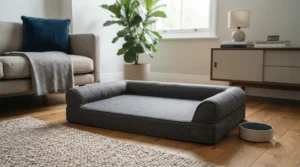
Sometimes the simplest option is genuinely the right one. The Amazon Basics version strips things back to a U-shaped bolster — support along the back and two sides, with the entire front left completely open.
What most buyers overlook about a true U-shape design is that it removes any ambiguity about “how low is low enough” — there’s no front wall at all, just a flat approach onto the orthopaedic foam base. For dogs with more advanced joint stiffness who struggle even with a low bolster lip, a fully open front like this can be the difference between using the bed confidently and avoiding it altogether.
Aggregated customer sentiment tends to praise the straightforward practicality here — it’s not trying to be a design statement, it’s trying to be a supportive, accessible foam bed at a fair price, and reviewers broadly agree it delivers exactly that. A recurring theme in feedback does note the foam is on the firmer side compared with plusher premium beds, which some owners of very light or elderly dogs prefer for easier weight distribution, while others find it less plush than they expected.
Pros:
- ✅ Fully open front removes any entry barrier
- ✅ Orthopaedic foam base offers genuine joint support
- ✅ Straightforward, budget-friendly price point
Cons:
- ❌ Firmer foam feel than some premium alternatives
- ❌ Less head and neck support than 3 or 4-sided bolsters
Priced around £20-£35, it’s hard to beat as an honest, no-frills entry point into step-free bedding.
3. lionto Dog Bed with Low Entry — best for small dogs and multi-pet households
The lionto Dog Bed is explicitly marketed around its low-entry design, and it’s built with smaller dogs and cats specifically in mind — a detail worth flagging since not every “step-free” bed genuinely suits a Yorkshire terrier or an elderly cat sharing the household.
Here’s what the spec sheet won’t tell you: smaller dogs and cats often struggle disproportionately with even modest bolster heights relative to their leg length, so a design purpose-built around a genuinely low entry matters more for this size category than it might for a larger breed. The reversible pillow design adds a small but genuinely useful bit of flexibility, letting owners flip the sleeping surface between two textures depending on the season or the individual dog’s preference.
Real user feedback on beds in this category frequently highlights the value of a robust, non-slip underside for households with multiple pets sharing floor space, since a bed that shifts or slides during a scramble to get comfortable can genuinely knock an unsteady older animal off balance. One consistent theme in reviews is that buyers appreciate the compact footprint fitting neatly into smaller UK homes without sacrificing the low-access design that made them choose it in the first place.
Pros:
- ✅ Purpose-built low entry suited to small dogs and cats
- ✅ Reversible pillow adds seasonal flexibility
- ✅ Robust non-slip underside for multi-pet homes
Cons:
- ❌ Not sized for medium or large breed dogs
- ❌ Less cushioning depth than dedicated memory foam beds
Expect to pay around £18-£30, making it one of the most affordable genuinely low-entry options for smaller companions.
4. JOYELF Memory Foam Dog Bed — best mid-range memory foam support
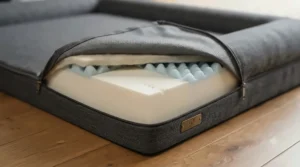
Stepping up from foam-only bases, the JOYELF Memory Foam Dog Bed pairs a high-density memory foam core with a soft bolster surround and, crucially, an open low front for step-free access. The “independent mat design” on the larger version means the memory foam base can be handled and positioned separately from the bolster surround, which is a small but genuinely thoughtful engineering detail.
On paper, this means the memory foam actually contours to the dog’s body shape rather than simply cushioning it, which matters significantly for a dog with sore hips or shoulders — even weight distribution reduces pressure on the specific joints that ache most, rather than concentrating weight on a handful of contact points the way cheaper polyfill beds tend to. The waterproof internal liner is a sensible addition for older dogs managing incontinence, a genuinely common companion issue alongside joint problems.
What most buyers overlook about memory foam specifically is that it needs time to “recover” its shape after being compressed in shipping — several reviewers note the bed needs 24-48 hours to properly expand after unpacking, and judging the foam’s supportiveness before that window has passed can give a misleadingly flat first impression. Once settled, aggregated feedback consistently describes the support as noticeably firmer and more consistent than standard polyfill cushions.
Pros:
- ✅ Memory foam contours to reduce joint pressure points
- ✅ Waterproof liner suits dogs managing incontinence
- ✅ Open bolster front keeps entry step-free
Cons:
- ❌ Needs 24-48 hours to fully expand after unpacking
- ❌ Pricier than basic foam-only alternatives
Sitting in the £35-£60 range depending on size, this is a solid mid-tier pick for owners ready to invest a bit more once they’ve confirmed their dog responds well to a step-free design.
5. EHEYCIGA Memory Foam Dog Bed — best for chewers and messy sleepers
The EHEYCIGA Memory Foam Dog Bed takes a similar core approach to the JOYELF — memory foam base, bolster sides, open low front — but adds specific chew-resistant construction and a dedicated waterproof film layered between the fleece top and the base fabric.
Based on the spec comparison with beds lacking this reinforcement, the chew-resistant detailing genuinely matters for anxious or teething dogs who nibble bedding edges, a behaviour that can crop up even in older dogs experiencing discomfort-related restlessness. The waterproof film specifically protects against liquid reaching the memory foam core, which is a distinct feature from a fully waterproof liner enclosing the whole foam block — worth understanding if you’re comparing spec sheets closely, since it means the sides (described as faux linen) aren’t fully waterproof even though the sleeping surface is protected.
Reviewers frequently mention appreciating the flannel-covered sleeping surface for softness against ageing joints, and a common theme in aggregated feedback is that the non-slip bottom point genuinely reduces sliding on wooden and tiled floors — a small detail that, again, matters disproportionately for dogs who are already unsteady on their feet.
Pros:
- ✅ Chew-resistant construction suits anxious or restless dogs
- ✅ Waterproof film protects sleeping surface from spills
- ✅ Soft flannel top comfortable against sensitive joints
Cons:
- ❌ Side fabric isn’t fully waterproof, only the top layer
- ❌ Foam inner not machine washable, only the cover
Priced around £30-£55, it’s a sensible pick for households where durability against chewing or spills matters as much as joint support.
6. Dreamcatcher Orthopaedic Memory Foam Bed — best for larger dogs who run warm
The Dreamcatcher Orthopaedic Memory Foam Bed is a UK-sold option built specifically with a low front edge for easy access, paired with a solid memory foam base that includes a cooling gel layer — a detail that sets it apart from most of the beds already covered here.
What most buyers overlook about cooling gel layers is that they’re not simply a summer comfort feature — dogs with joint inflammation often run warmer in the affected area, and a bed that helps dissipate that heat rather than trapping it against the body can genuinely improve settling and sleep quality, not just comfort on a hot day. The four-sided bolster design with a deliberately low front edge gives head, neck, and back support on three sides while keeping the step-free entry point intact where it matters most.
Aggregated review sentiment around this bed frequently highlights the reversible cover — sherpa fleece on one side for colder months, cooler Oxford fabric on the other — as a genuinely useful year-round feature rather than a marketing gimmick, with several buyers specifically noting they switch sides seasonally. One recurring practical note in feedback: the bed ships vacuum-packed and needs 24-48 hours to expand fully, consistent with most memory foam products in this category.
Pros:
- ✅ Cooling gel layer helps reduce heat around sore joints
- ✅ Reversible fleece/Oxford cover suits both seasons
- ✅ Low front edge keeps step-free access on a 4-sided design
Cons:
- ❌ Larger footprint needs more floor space than open-front designs
- ❌ Premium features mean a higher price than basic bolster beds
At around £45-£75 depending on size, it’s a strong mid-to-premium pick for larger breeds who benefit from both joint support and temperature regulation.
7. PetFusion Ultimate Dog Bed — best for advanced arthritis and disabled dogs
Rounding out the list is the bed that arguably goes furthest toward genuine zero-threshold design. The PetFusion Ultimate Dog Bed uses a low-profile pillow construction with light polyfilled bolsters rather than tall, structured walls, meaning there’s no meaningful height for a dog to navigate at all — just a slightly raised edge that a dog can rest against rather than climb over.
Here’s what the spec sheet won’t tell you: for dogs with advanced arthritis, partial paralysis, or other significant mobility limitations, even a modest bolster lip of a few centimetres can represent a genuine obstacle when hind-leg strength or coordination is compromised. The PetFusion Ultimate Dog Bed‘s solid CertiPUR-US certified memory foam base sits essentially flush with the floor-level bolster edge, which is about as close to true zero-threshold as a structured bed design gets while still offering some edge definition.
Aggregated customer sentiment consistently praises the quality and density of the CertiPUR-US foam, a certification that specifically verifies the foam is manufactured without certain harmful chemicals — a detail worth knowing for owners of dogs who spend the vast majority of their day, not just their sleeping hours, on this surface. Several reviewers specifically mention using this bed for dogs recovering from surgery or managing severe joint disease, citing the low profile as the deciding factor over bulkier bolster alternatives.
Pros:
- ✅ Near-flat profile suits dogs with severe mobility limits
- ✅ CertiPUR-US certified foam avoids certain harmful chemicals
- ✅ Removable, washable cover with a durable waterproof liner
Cons:
- ❌ Minimal bolster offers less head/neck support than deeper sofa beds
- ❌ Premium pricing reflects the certified foam and construction quality
At roughly £50-£90 depending on size, this sits at the premium end of the list, but for a dog whose mobility genuinely limits what “step-free” needs to mean, it’s often worth the difference.
Practical Usage Guide: Helping Your Dog Adjust to a New Bed
A step-free bed only helps if your dog actually uses it, and that transition isn’t always automatic — especially for older dogs who’ve had the same bed, and the same routine around it, for years.
Start by placing the new bed in the same spot as the old one, if possible. Dogs, particularly older ones, often build strong location habits, and a bed in an unfamiliar corner of the room can go unused simply because it doesn’t register as “the sleeping spot” yet. If you’re moving location deliberately — say, to somewhere warmer or less draughty — do it gradually over a few days rather than all at once.
Encourage first use with familiar bedding. Placing an old blanket or a worn jumper with your dog’s scent on the new bed for the first few days often speeds up acceptance considerably. Some dogs adjust within hours; others, particularly anxious or very set-in-their-ways older dogs, can take one to two weeks to fully commit to a new bed.
Watch how your dog actually approaches the bed in the first few days. If they’re hesitating, circling, or attempting to step over a side that’s meant to be the low-entry point, it may indicate the bed still isn’t positioned optimally, or that the specific model’s “low” edge is still higher than ideal for that individual dog’s current mobility level. A few common early mistakes worth avoiding: placing the bed on a slippery floor without a rug or mat underneath (undermining even the best non-slip base), skipping the foam recovery period before judging support, and assuming a dog who avoids the new bed simply “doesn’t like it” rather than checking whether the entry height is still a genuine barrier.
Real-World Scenarios: Matching the Bed to Your Dog
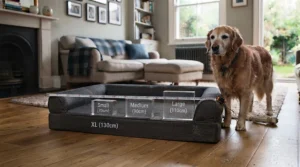
Specs only tell part of the story. Here are three genuinely different situations to help you see where you fit.
The senior Labrador with mild, early-stage stiffness. If your dog is just starting to show occasional reluctance to jump on furniture but still manages stairs and general movement reasonably well, an open-fronted bolster bed like the Feandrea Dog Bed or Amazon Basics U-Shape Bolster Bed is likely sufficient — the low, open entry removes the specific challenge of a high step without over-investing before you know how the condition progresses.
The medium-sized rescue dog with confirmed hip dysplasia. For a dog with a diagnosed joint condition and a vet-recommended management plan, a memory foam option like the JOYELF Memory Foam Dog Bed or EHEYCIGA Memory Foam Dog Bed offers genuine pressure-point relief alongside the step-free access, which matters more once joint damage is an established, ongoing concern rather than an early symptom.
The elderly large-breed dog with advanced arthritis or reduced hind-leg function. Here, the PetFusion Ultimate Dog Bed‘s near-flat profile earns its premium price — when a dog’s mobility limitations are severe enough that even a modest bolster edge is a genuine obstacle, a true low-profile design isn’t an upgrade, it’s closer to a necessity for the dog to use the bed independently at all.
Your Buyer’s Decision Framework
A quick priority checklist to work through:
If your dog shows only occasional stiffness and still moves reasonably well, choose a budget open-front bolster bed like the Amazon Basics U-Shape Bolster Bed, because the low cost lets you confirm the step-free design actually helps before spending more.
If your dog is small or shares the home with other pets navigating the same bed, choose a purpose-built compact option like the lionto Dog Bed with Low Entry, because size-appropriate low-entry design matters disproportionately for smaller animals.
If your dog has a confirmed joint condition needing genuine pressure relief, choose a memory foam bed like the JOYELF Memory Foam Dog Bed, because contouring foam distributes weight away from the specific joints causing pain.
If your dog runs hot or is a larger breed prone to overheating on standard foam, choose a cooling option like the Dreamcatcher Orthopaedic Memory Foam Bed, because the gel layer addresses both joint support and temperature regulation together.
If your dog has advanced arthritis, is recovering from surgery, or has significantly reduced mobility, choose a near-flat design like the PetFusion Ultimate Dog Bed, because even a modest bolster lip can be a genuine barrier once mobility is severely compromised.
How to Choose a Step-Free Dog Bed
Scrolling through near-identical Amazon listings without a framework wastes time. Here’s what genuinely differentiates a good step-free dog bed from one that only markets itself as such, in order of importance:
- Actual entry height, not just “low sides.” Marketing language varies wildly — always check measurements where listed, since “low” on one bed can still be higher than a fully flat design on another.
- Foam quality and density. As Canine Arthritis Management’s guidance on home environment adaptations notes, a supportive, conforming mattress is a core part of managing a dog’s comfort at rest — cheap foam that compresses within months quietly removes that joint protection even while the bed still looks intact.
- Non-slip base. A bed that shifts as a dog steps onto it can genuinely undermine confidence and stability, actively working against the whole point of a step-free design.
- Size relative to your dog stretched out, not curled up. Measure nose to tail base and add roughly 15-20cm; a step-free bed that’s too small forces awkward positioning that can offset any entry-height benefit.
- Washable, removable covers. Older dogs managing incontinence or general mess make this less of a convenience feature and more of a practical necessity.
- Waterproof liner versus waterproof film. These aren’t identical — a full liner protects the whole foam block, while a surface film only protects the top layer, which matters for accident-prone dogs.
- Whether bolsters remain where support is actually needed. The best step-free designs keep support on the sides a dog leans against while opening only the side used for entry, rather than sacrificing all structure.
Common Mistakes When Buying Beds for Dogs With Limited Mobility
Even well-intentioned purchases go wrong in predictable ways. Based on recurring feedback themes across this product category, here’s where owners commonly trip up.
Buying based on marketing language like “orthopaedic” or “low entry” without checking actual measurements is a frequent misstep — these terms aren’t regulated, and what one brand calls “low” can still represent a real obstacle for a severely stiff dog. Another common error is prioritising aesthetics over floor placement; a beautiful bed on a slippery hardwood floor, without a rug or mat underneath, can undermine even the best non-slip base and leave a dog nervous about approaching it at all.
Underestimating size is another recurring issue — a step-free entry means little if the sleeping surface itself is too small for a dog to fully stretch out, forcing cramped positioning that can itself aggravate stiff joints. Finally, expecting a single bed purchase to substitute for veterinary management is a genuinely important mistake to avoid: a supportive bed is one piece of a broader arthritis management plan, not a replacement for proper diagnosis, weight management, and, where appropriate, pain medication prescribed by a vet.
Step-Free Beds vs Traditional Raised Dog Beds
It’s worth addressing directly: some dog beds are deliberately raised off the ground on a frame, marketed for cooling and hygiene benefits. How do these compare against step-free, ground-level designs for a mobility-limited dog?
| Factor | Step-Free Bed | Raised Frame Bed |
|---|---|---|
| Entry difficulty | Low to none | Requires stepping up onto frame |
| Best for | Arthritic, senior, disabled dogs | Healthy dogs, hot climates, outdoor use |
| Joint pressure | Foam conforms, reduces pressure points | Taut fabric offers less contouring |
| Typical use case | Indoor primary sleeping spot | Garden, conservatory, warm-weather use |
The comparison isn’t really about which bed type is objectively better — it’s about matching design to physical capability. Raised frame beds genuinely excel at keeping a healthy, mobile dog cool and off cold or damp ground, which explains their popularity for garden and conservatory use. But that raised structure works directly against everything a step-free design is trying to achieve, since a dog with genuine mobility limitations has to overcome the same climbing challenge a raised frame introduces that a ground-level bed removes entirely. For a dog managing arthritis or reduced mobility, a ground-level, step-free bed is very much the more appropriate choice for primary indoor sleeping.
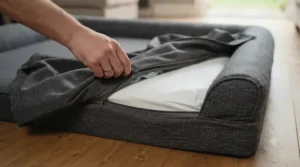
Step-Free Entry Dog Bed Reviews & Real Owner Feedback
Pulling together aggregated review themes across the seven beds covered here gives a genuinely useful picture of what step-free design delivers in practice, beyond the spec sheet.
A consistently recurring theme across step-free entry dog bed reviews is that owners notice a behavioural shift fairly quickly — dogs who’d started avoiding their old bed, or who were sleeping on cold floors instead, often return to using a bed regularly within days of switching to a genuinely low-entry design. That’s a meaningful signal, since reluctance to use a familiar resting spot is itself a commonly cited early sign of discomfort worth mentioning to a vet.
Reviewers also frequently distinguish between beds that are “technically” low entry and those that feel genuinely step-free in daily use — a distinction that seems to matter more with severely affected dogs than with those in earlier stages of stiffness. Aggregated feedback across multiple listings in this category also repeatedly flags foam recovery time, non-slip base performance, and washable cover quality as the three details most likely to be mentioned in both positive and negative reviews, regardless of specific brand — useful to know when weighing up new, less-reviewed listings against established ones.
Zero-Threshold Design: What It Actually Means
The term “zero-threshold” originates in human accessibility design — think wet rooms or step-free shower entries — and it’s increasingly borrowed by pet bed marketing, so it’s worth clarifying what it should actually mean in this context.
A genuinely zero-threshold dog bed has no meaningful height differential between the surrounding floor and the sleeping surface itself — a dog can walk directly from the floor onto the bed without any lifting, stepping, or leg-raising motion at all. In practice, very few structured dog beds achieve this perfectly, since some kind of edge or base thickness is usually needed to keep the bed’s shape and prevent the foam from sliding around. What most buyers overlook about the term is that it’s a spectrum rather than a binary — the PetFusion Ultimate Dog Bed in this list gets closest with its low-profile pillow construction, while open-fronted bolster beds like the Feandrea Dog Bed achieve a similar practical effect by removing the entry-side wall entirely rather than lowering the whole bed’s profile.
For genuinely severe mobility cases, some owners go a step further and use a flat, unstructured mat directly on a padded rug, sacrificing bolster support entirely in favour of true zero height differential. Whether that trade-off makes sense depends heavily on the individual dog — one who still benefits from head and neck support may do better with a low-bolster compromise, while a dog with very limited ability to lift a leg at all may genuinely need the completely flat option.
Dog Beds for Dogs With Limited Mobility: What Changes
Beyond entry height, a dog with limited mobility has several other bed-related needs that differ meaningfully from a fully mobile dog’s requirements, and it’s worth walking through them directly.
Positioning within the home matters more than many owners initially realise. A step-free bed placed at the top or bottom of a staircase, or in a room a mobility-limited dog struggles to reach independently, undermines the whole point of the low-entry design. As Guide Dogs UK’s guidance on arthritis in dogs explains, this is a life-long progressive condition without a cure, which is exactly why environmental adjustments like bedding location, access, and draught-free positioning matter as an ongoing part of care rather than a one-off fix.
Surface firmness also needs reconsidering. A dog who previously enjoyed a very soft, sink-in bed may actually find a firmer, more supportive surface easier to rise from once mobility declines — softer surfaces that a healthy dog sinks into comfortably can become genuinely harder to push up and out of for a dog with weakened hind-leg strength. This is part of why several beds in this list, including the Amazon Basics U-Shape Bolster Bed, use denser orthopaedic foam rather than soft polyfill.
Finally, proximity to essentials matters. A mobility-limited dog benefits from having food, water, and their bed within a manageable distance of each other, ideally on the same floor level, reducing the total number of times a day they need to navigate stairs or long distances on stiff joints.
Supporting Dogs With Advanced Arthritis
Advanced arthritis represents a meaningfully different stage of joint disease than early stiffness, and bedding needs shift accordingly. At this stage, a dog may struggle not just with entry height but with changing position once settled, rising from a lying position, or maintaining balance on an unstable surface.
For dogs at this stage, the near-flat profile of a bed like the PetFusion Ultimate Dog Bed tends to matter more than additional features like cooling gel or reversible covers, simply because the primary barrier has shifted from “comfort while resting” to “physical ability to get on and off the bed at all.” Firmer, denser foam becomes more important too, since a dog with reduced muscle strength around affected joints needs a surface that assists rather than resists the effort of standing back up.
It’s worth being clear-eyed here: no bed reverses or treats arthritis itself. What a well-chosen bed does is remove one avoidable physical obstacle from a dog’s day, reducing unnecessary strain and potentially reducing the number of times a dog either avoids resting altogether or attempts a difficult, painful movement to reach a resting spot. That’s a genuinely meaningful contribution to quality of life, but it works alongside veterinary treatment, not instead of it — weight management, appropriate pain relief, and regular vet check-ins remain the foundation of managing advanced arthritis properly.
Step-Free Beds for Disabled Dogs
Disability in dogs covers a wide range of presentations — from partial hind-leg paralysis and amputation to neurological conditions affecting coordination and balance — and bedding needs vary considerably depending on the specific situation, more so than with age-related stiffness alone.
For dogs with significantly reduced or absent hind-leg function, a completely flat, wall-free surface tends to matter even more than for arthritic dogs, since there may be no meaningful ability to lift a leg over any obstacle at all, however low. In these cases, positioning the bed with open access from multiple sides, rather than relying on a single designated “entry” edge, can make a genuine practical difference — a dog manoeuvring with reduced coordination may not always approach the bed from the intended direction.
Non-slip surfacing becomes particularly critical for disabled dogs using mobility aids like harnesses or wheeled supports, since a bed that shifts or slides can create genuine safety risks during transfers on and off it, beyond simple inconvenience. It’s also worth noting that some disabled dogs benefit from a bed placed directly at floor level with a low-pile rug extending beyond its edges, effectively removing any transition point between floor and bed entirely, rather than relying on a structured bed’s built-in low edge alone. Every disabled dog’s needs are genuinely individual here, and consulting with a vet or veterinary physiotherapist about specific positioning and support needs is worthwhile before settling on a single bed solution.
Long-Term Cost & Maintenance
Looking past the initial price gives a clearer sense of real value across a typical multi-year lifespan.
| Product | Foam Type | Cover Care | Estimated Lifespan |
|---|---|---|---|
| Feandrea Dog Bed | Standard polyfill/foam | Machine washable | 1-2 years |
| Amazon Basics U-Shape Bolster Bed | Orthopaedic foam | Machine washable | 2-3 years |
| JOYELF Memory Foam Dog Bed | Memory foam | Machine washable cover | 2-4 years |
| PetFusion Ultimate Dog Bed | CertiPUR-US memory foam | Machine washable, YKK zips | 3-5 years |
Budget bolster beds like the Feandrea Dog Bed and Amazon Basics U-Shape Bolster Bed cost the least upfront but tend to flatten or lose supportive structure faster, particularly under a larger or heavier dog’s regular weight. Memory foam options like the JOYELF Memory Foam Dog Bed and EHEYCIGA Memory Foam Dog Bed cost more initially but generally hold their supportive shape considerably longer, which matters more the longer a dog is expected to rely on that support daily. The PetFusion Ultimate Dog Bed‘s certified foam and reinforced zippers reflect its premium price with a correspondingly longer realistic lifespan, making the true cost-per-year comparison considerably closer to the budget options than the upfront price difference initially suggests.
Looking at it from a value perspective, foam density and recovery speed genuinely matter more than surface fabric when comparing long-term cost — a bed that holds its shape for years continues protecting joints, while a visually intact bed with collapsed foam offers only the appearance of support.
Safety, Materials & When to See a Vet
Dog beds sold in the UK aren’t subject to the same regulatory framework as human furniture, so material safety claims like CertiPUR-US certification (seen on the PetFusion Ultimate Dog Bed) or OEKO-TEX fabric certification are voluntary but genuinely useful signals of quality control, particularly for a surface a dog spends many hours in direct contact with daily.
A step-free bed is a supportive environmental change, not a diagnostic or treatment tool. Canine Arthritis Management’s Home Assessment Tool specifically frames questions like whether a dog can get in and out of their bed easily, without help, as part of a broader checklist for identifying where a home environment could be adapted to reduce the impact of arthritis — bedding is one meaningful piece of that picture, alongside flooring, ramps, and feeding station placement, not a standalone fix.
Speak to a vet promptly if you notice a dog suddenly avoiding a bed they’ve previously used happily, increasing reluctance to lie down or rise, visible limping or stiffness that doesn’t ease with rest, or any sudden change in mobility. These can indicate progressing joint disease or an unrelated injury, and while a better-designed bed can meaningfully ease day-to-day discomfort, only a vet can properly diagnose what’s actually happening and recommend appropriate medical management alongside any environmental changes at home.
Frequently Asked Questions
❓ What actually makes a dog bed step-free?
❓ Is a step-free dog bed necessary for mild stiffness, or only advanced arthritis?
❓ Can a step-free bed actually help manage my dog's arthritis?
❓ How do I know if the entry height is still too high for my dog?
❓ Are memory foam step-free beds worth the extra cost over basic foam?
Conclusion
A step-free dog bed won’t cure arthritis, undo a disability, or turn back the clock on an ageing dog’s joints — but it genuinely removes one avoidable daily obstacle from a life that’s already navigating enough of them. Whether that means the simple, budget-friendly open front of the Amazon Basics U-Shape Bolster Bed, the joint-conforming support of the JOYELF Memory Foam Dog Bed, or the near-flat, purpose-built design of the PetFusion Ultimate Dog Bed for more advanced mobility needs, the right choice depends entirely on where your own dog currently sits on that spectrum.
Pair whichever bed you choose with proper flooring, sensible positioning within the home, and ongoing veterinary guidance, and you’re addressing the full picture rather than one isolated piece of it. None of these seven beds is magic — but for a dog who’s been quietly hesitating at the edge of their own bed, the right one can make a genuinely visible difference.
Recommended for You
- 7 Best Non-Slip Dog Bed for Senior Dogs (2026 UK Guide)
- Easy Access Dog Bed for Senior Dogs: 7 Best Picks 2026
- Pressure-Relief Dog Bed for Large Senior Dogs: 7 Best Picks 2026
Disclaimer: This article contains affiliate links. As an Amazon Associate, I earn from qualifying purchases. If you purchase products through these links, we may earn a small commission at no additional cost to you.
✨ Found this helpful? Share it with your friends! 💬🤗
