In This Article
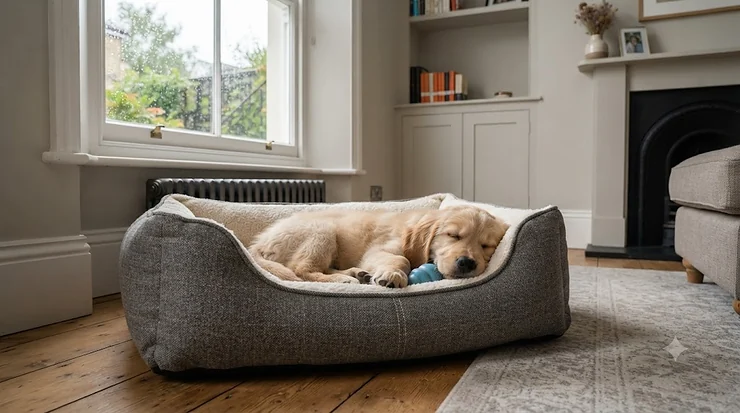
Somewhere between the third and seventh month of puppyhood, your sweet, sleepy little companion turns into a small, determined demolition crew — and their bed is usually first on the list. If you’re reading this with a half-chewed cushion at your feet, you already know why a proper teething proof puppy bed matters more than any other purchase you’ll make this year. This isn’t about being fussy. A puppy with sore, swollen gums will chew whatever’s within reach, and a flimsy bed doesn’t just cost you money — it can turn into a genuine choking hazard once the stuffing comes out.
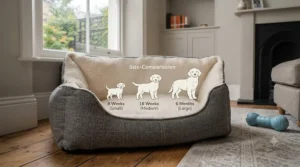
We’ve spent time digging into real specifications, genuine aggregated customer feedback, and honest comparative analysis across seven beds actually sold on amazon.co.uk, rather than simply repeating what’s printed on the box. According to RSPCA guidance on separation-related behaviour, destructive chewing often stems from separation anxiety, boredom or stress, particularly when dogs are left alone — teething is a separate, additional driver, and it’s often the loudest one during those first few months. Whichever it is for your pup, the right bed absorbs the punishment so your sofa doesn’t have to. Below, we’ve broken down seven genuinely durable options, explained what the specs actually mean for a teething puppy, and built out a full buying framework so you can pick with confidence rather than crossing your fingers.
Quick Comparison Table
| Product | Type | Price Range | Best For | Chew Resistance |
|---|---|---|---|---|
| K9 Ballistics Chew Proof Elevated Dog Bed | Raised cot | £70-£100 range | Aggressive teething chewers | Very High |
| MABOZOO Indestructible Crate Pad | Crate mat | Under £30 | Crate-trained puppies | High |
| Kuranda Aluminium Dog Bed | Elevated frame | £80-£150 range | Growing large-breed puppies | Very High |
| Veehoo Chew Proof Elevated Bed | Raised cot | £40-£70 range | Warm sleepers, active pups | High |
| Bedsure Waterproof Crate Mat | Flat pad | Under £36 | Budget-conscious first bed | Moderate |
| K9 Ballistics Tough Orthopedic Bed | Cushion bed | £50-£80 range | Moderate chewers/diggers | Moderate-High |
| Carhartt Canvas Dog Bed | Reversible cushion | £45-£65 range | Indoor/outdoor durability | Moderate |
Looking across this line-up, the clearest split is between elevated cot-style beds and traditional cushion beds — and for a genuinely teething proof puppy bed, that distinction matters enormously. The K9 Ballistics Chew Proof Elevated Dog Bed and Kuranda Aluminium Dog Bed tuck fabric inside a metal frame, physically removing any loose edge for milk teeth to grab onto, while cushion beds like the Carhartt Canvas Dog Bed rely purely on tough fabric and reinforced stitching. Neither approach is “wrong,” but your choice should match how determined your particular chewer already is — something we’ll help you assess further down this guide.
💬 Just one click — help others make better buying decisions too!😊
Top 7 Teething Proof Puppy Bed Picks: Expert Analysis
1. K9 Ballistics Chew Proof Elevated Dog Bed — best for aggressive teething chewers
When a puppy has already destroyed two or three “chew-resistant” beds, this is usually where owners land. The K9 Ballistics Chew Proof Elevated Dog Bed uses a fully aluminium frame paired with 1200D ripstop ballistic fabric pulled taut across the frame, leaving no loose edge for teeth to catch.
Key specs, translated: the 1200D denier rating puts this fabric in military-grade tear-resistance territory — for context, most standard pet beds use 200-400D material, so this is roughly three to six times tougher. Fabric is secured within channels in the frame rather than stitched to the edges, which is the actual engineering trick that makes it hard to chew, not just marketing language.
Based on the spec comparison against the softer beds on this list, this is the option to reach for if your puppy has already proven themselves a determined chewer rather than an occasional nibbler. Reviewers consistently report that even breeds known for powerful jaws, like Staffordshire Bull Terriers, have failed to breach the taut fabric over many months of use — though a handful note assembly takes a little patience the first time.
Pros:
- ✅ Genuinely difficult for puppies to get a grip on
- ✅ Elevated design keeps growing joints supported
- ✅ Backed by a 120-day chew-proof warranty
Cons:
- ❌ Pricier than a basic cushion bed
- ❌ Firmer surface than plush alternatives
Priced in the £70-£100 range, this is a mid-to-premium buy, but for a genuinely destructive teether it often works out cheaper than replacing a soft bed every few weeks.

2. MABOZOO Indestructible Crate Pad — best five-layer crate mat for puppies
If your puppy sleeps in a crate, the MABOZOO Indestructible Crate Pad is purpose-built for that environment rather than adapted from a standard bed design. It uses a five-layer construction — bite-resistant fabric, an absorbent middle layer, and a waterproof PU lining — stacked to handle both teething damage and toileting accidents in one product.
What most buyers overlook about crate mats is that the waterproofing matters just as much as the chew resistance during the teething months, since house-training and teething tend to overlap almost exactly. The layered build means a puddle doesn’t soak through to the crate tray underneath, which saves considerably more cleanup than a standard blanket.
Aggregated review sentiment is strongly positive on durability for the price point, with several UK puppy owners specifically noting that determined chewers, including German Shepherd puppies mid-teething, have struggled to penetrate the fabric. It’s a genuinely budget-friendly puppy bed that can’t be chewed through easily, without the elevated-bed price tag.
Pros:
- ✅ Waterproof layer handles teething-and-toileting overlap
- ✅ Fits standard UK crate dimensions across sizes
- ✅ Machine washable and dries quickly
Cons:
- ❌ Can slide around inside larger crates
- ❌ Thinner cushioning than a padded bed
At under £30 for most sizes, this is one of the smartest first purchases for a new puppy owner.
3. Kuranda Aluminium Dog Bed — best lifetime investment for growing breeds
This is the bed UK kennels, rescue centres and some veterinary practices reach for when nothing else has survived. The Kuranda Aluminium Dog Bed uses aircraft-grade aluminium tubing and a patented fabric tension system where the cover is locked into a channel around the frame’s perimeter — there’s simply no edge available to grip.
Here’s what to weigh: the frame itself doesn’t grow with your puppy, but the sizing range is broad enough that most owners buy for their dog’s expected adult size and let a growing puppy use it slightly loose in the meantime. On paper this means a single purchase can realistically outlast an entire adolescence of teething, adult chewing habits, and everyday wear.
A common theme in aggregated reviews is longevity measured in years rather than months, with several owners of notoriously destructive breeds reporting zero fabric damage after extended daily use. The trade-off is upfront cost and a firmer sleeping surface than a plush cushion.
Pros:
- ✅ Frame is physically impossible to chew through
- ✅ One-year comprehensive warranty as standard
- ✅ Hoses clean in seconds, ideal for muddy paws
Cons:
- ❌ Significant investment at £80-£150+
- ❌ Less cushioned feel than pillow-style beds
Best for: owners who’d rather pay once than replace a cheaper bed every few months during peak teething.
4. Veehoo Chew Proof Elevated Bed — best breathable cot for hot sleepers
Some puppies run hot, especially fluffier or double-coated breeds, and the Veehoo Chew Proof Elevated Bed answers that with a raised aluminium frame and breathable Textilene mesh rather than solid fabric. The mesh allows air to circulate underneath, which matters more than people expect once summer arrives.
The 23cm elevation isn’t just about temperature, though — it’s also the mechanism that makes this a puppy bed that can’t be chewed in the way a flat cushion can. With no slack fabric hanging over an edge, a teething puppy has nothing to hook their incisors into, and the mesh itself resists tearing far better than woven cotton.
Reviewers consistently note the ease of cleaning outdoor use brings — muddy paws simply hose off — though a few mention that older or very young puppies occasionally need a step or ramp to climb on comfortably until they grow into the height.
Pros:
- ✅ Keeps warm-coated puppies noticeably cooler
- ✅ Aluminium frame rated to support up to 68kg
- ✅ Weather-resistant enough for garden use
Cons:
- ❌ Mesh surface feels firmer than padded beds
- ❌ Very small puppies may need a lower step initially
Sitting in the £40-£70 range, it’s a strong middle-ground pick between the budget crate mats and the premium Kuranda.
5. Bedsure Waterproof Crate Mat — best budget pick under £30
Not every household needs — or can justify — a £100 elevated bed for a puppy who might only nibble occasionally. The Bedsure Waterproof Crate Mat uses Oxford fabric with a waterproof liner and reinforced corners, aimed squarely at owners managing mild-to-moderate chewing on a tighter budget.
Reviewers consistently describe good results against occasional nibblers and scratchers rather than determined destroyers, with the waterproof liner earning particular praise for protecting against the inevitable teething-phase accidents. What the spec sheet won’t tell you, but reviewers note, is that the reinforced corners are genuinely the first point of failure to watch — if your puppy is going to find a weak spot, it tends to be there first.
For many new owners, this is a sensible starter bed: affordable enough that a chewed corner isn’t a financial disaster, while still holding up better than an unreinforced blanket or cheap pillow bed.
Pros:
- ✅ Genuinely good value under £30
- ✅ Removable cover is fully machine washable
- ✅ Waterproof liner protects against accidents
Cons:
- ❌ Won’t survive a genuinely aggressive chewer
- ❌ Sewn seams are the eventual weak point
Best for: first-time puppy owners who aren’t yet sure how destructive their pup will become.
6. K9 Ballistics Tough Orthopedic Bed — best plush option for moderate chewers
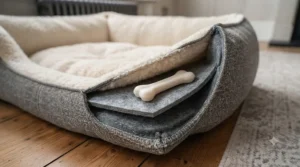
Some puppies want comfort more than they want a chew target, and the K9 Ballistics Tough Orthopedic Bed is built for that middle ground — a cushioned bed with genuinely reinforced fabric rather than a metal frame. It uses 600D ripstop ballistic nylon over CertiPUR-US certified orthopedic foam.
Based on the spec comparison, 600D sits well below the 1200D used in the fully chew-proof elevated beds, which is an honest trade-off: you gain real orthopedic cushioning and a softer feel, but you lose some of the outright toughness. For puppies who scratch, dig and circle before settling rather than gnawing directly at the fabric, this compromise tends to work well.
Aggregated feedback is strongly positive on comfort and joint support, with several owners of larger-breed puppies reporting daily use over many months without serious damage — though a consistent minority note that truly aggressive chewers eventually find the seams.
Pros:
- ✅ Genuine orthopedic support for growing joints
- ✅ Water-resistant cover wipes clean easily
- ✅ 120-day chew-proof warranty included
Cons:
- ❌ Not designed for extreme, persistent chewers
- ❌ Costs more than a basic cushion bed
Priced from roughly £50 to £80, it’s the pick for puppies who dig more than they demolish.
7. Carhartt Canvas Dog Bed — best reversible indoor/outdoor bed
Borrowing directly from workwear durability, the Carhartt Canvas Dog Bed is built from 12-ounce cotton duck canvas — the same fabric family used in Carhartt’s jackets — with triple-stitched seams and a reversible Sherpa fleece underside.
What most buyers overlook here is that this bed’s toughness comes from fabric weight and stitching quality rather than a chew-specific engineering trick like a frame channel or ripstop weave, so it behaves more like “very tough cushion bed” than “true chew-proof bed.” Reviewers consistently praise its performance through rough British weather — muddy gardens, damp conservatories, cold winters — and its reversible design means one bed does double duty across seasons.
Honest analysis: this suits a puppy who’s a moderate chewer rather than a determined destroyer, or a household that wants an outdoor-capable bed for the patio alongside a proper chew-resistant option indoors.
Pros:
- ✅ Exceptionally tough triple-stitched construction
- ✅ Reversible canvas/fleece for year-round comfort
- ✅ Handles outdoor and indoor use equally well
Cons:
- ❌ Determined chewers can eventually breach seams
- ❌ Less water-resistant than vinyl or mesh options
Sitting between £45 and £65, it’s a versatile choice for owners who split time between garden and living room.
Puppy Teething Timeline: What to Expect
What is puppy teething? Puppy teething is the natural process of losing 28 baby (deciduous) teeth and growing 42 permanent adult teeth, typically running from around three weeks to roughly seven or eight months of age, with the most intense chewing phase usually falling between three and seven months.
Understanding the timeline helps you predict exactly when a teething proof puppy bed earns its keep, rather than guessing. The stages generally run as follows:
- 3-6 weeks: Baby teeth erupt while puppies are still with their mother — this happens before most owners bring their puppy home.
- 8 weeks: All 28 deciduous teeth should be present; this is roughly when puppies come home.
- 12-16 weeks: Incisors (front teeth) start falling out and being replaced. You may spot tiny, rice-grain-sized teeth on the floor.
- 16-24 weeks: Canines and premolars erupt — widely considered the peak chewing phase, when gums are most inflamed and the urge to bite is strongest.
- 6-7 months: All 42 permanent adult teeth should be in place. Baby teeth still present alongside adult teeth at this point are considered abnormal and worth a vet check.
A breakdown of canine dental development confirms this general pattern of 28 deciduous teeth giving way to 42 permanent ones. Knowing roughly where your puppy sits on this timeline is genuinely useful: a bed that only needs to survive mild mouthing at 10 weeks needs to survive full-strength gnawing by 18 weeks, and buying accordingly saves you a second purchase later.
Gum Irritation Signs: How to Spot a Teething Puppy in Pain
Not every chewing session is teething-related, so learning to read the signs helps you respond appropriately rather than assuming every mouthy moment is discomfort.
Common gum irritation signs include:
- Increased chewing directed at hard, cool surfaces like furniture legs or skirting boards
- Small spots of blood on toys or bedding, usually mild and not cause for alarm on its own
- Slightly swollen or reddened gums around loose or emerging teeth
- Excessive drooling beyond your puppy’s usual baseline
- A temporary dip in appetite, particularly with harder kibble
- Increased whining, restlessness, or difficulty settling at bedtime
Mild bleeding and mouth discomfort are a normal part of the process, but not every symptom is harmless. If your puppy seems genuinely distressed, refuses food and water altogether, has visible facial swelling, or still has baby teeth firmly alongside adult teeth by seven months, it’s worth booking a veterinary check rather than assuming it will resolve on its own. Retained baby teeth in particular can trap food and encourage early dental disease if left unaddressed.
A Bed for Teething Puppy Use: What Actually Works
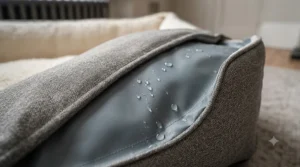
Not every bed marketed at puppies is genuinely built for the job. A proper bed for teething puppy months needs to do two things simultaneously: survive repeated chewing attempts, and stay comfortable enough that your puppy actually wants to sleep there instead of on the sofa.
Here’s what most generic “puppy bed” listings skip over. Softness and chew resistance often work against each other — the plushest beds are usually the first destroyed, because loose fabric and stuffing give a puppy something to grab and pull. The beds that hold up best either eliminate loose edges entirely (elevated cots like the Kuranda Aluminium Dog Bed) or use dramatically tougher fabric than standard bedding (600D-1200D ripstop, as used across most of the beds above).
Temperature and hygiene matter more during teething than most owners expect, too. Excess drooling is common during peak teething weeks, so a washable or wipeable surface isn’t a luxury — it’s practically a requirement. This is exactly why crate mats like the MABOZOO Indestructible Crate Pad and Bedsure Waterproof Crate Mat build waterproofing directly into the construction rather than treating it as an afterthought.
Puppy Bed That Can’t Be Chewed: Material Science Explained
The phrase “chew-proof” gets used loosely across pet retail, so it’s worth understanding the engineering behind a genuine puppy bed that can’t be chewed versus one that simply claims to be.
Ripstop weaving incorporates reinforcement threads at regular intervals in a grid pattern, so a small tear can’t spread the way it would through a standard weave — similar to how tights “ladder” rather than splitting apart entirely. Denier ratings measure thread thickness: standard pet beds sit around 200-400D, while genuinely chew-resistant beds use 600-1200D fabric, with 1200D representing roughly military-grade toughness.
Frame construction matters just as much as fabric on elevated beds. Aluminium won’t splinter like wood or crack like cheap plastic, and it discourages chewing through taste and texture alone. The real trick, though, is how the fabric attaches to the frame — beds like Kuranda and K9 Ballistics secure fabric within a channel rather than stitching it to an exposed edge, removing the one thing a puppy’s teeth actually need: something loose to grip.
No single material makes a bed 100% indestructible against every dog, which is an honest point worth stating plainly. What these design choices do is dramatically raise the odds a bed survives the teething window intact, particularly compared with a standard fleece or plush pillow bed offering no reinforcement at all.
How to Choose a Teething Proof Puppy Bed
- Rate your puppy’s chewing intensity honestly. Occasional nibbling calls for a different bed than systematic destruction within hours.
- Match bed style to severity. Elevated cots eliminate loose fabric entirely; cushion beds with reinforced covers suit moderate chewers who mostly dig and scratch.
- Check the denier rating where listed. Anything below 600D is unlikely to survive determined teething; 1000D and above is built for it.
- Prioritise waterproofing. Teething often overlaps with house-training, so a washable or wipeable surface saves real hassle.
- Size generously. Measure nose to tail base and add 15-20cm, remembering your puppy will grow substantially within months.
- Look for a genuine warranty. Brands offering 120-day or one-year chew guarantees are signalling real confidence in their construction, not just marketing.
- Budget for the whole teething window, not just today. A £25 mat that needs replacing three times can cost more than one £80 bed that lasts the full period.
Common Mistakes When Buying a Chew-Proof Puppy Bed
Even well-intentioned owners fall into a handful of predictable traps. Buying a bed sized for your puppy’s current dimensions rather than their adult size is one of the most common — most beds are marketed by current age rather than projected adult weight, so a Labrador puppy can outgrow a “medium” bed within weeks.
Assuming “chew-resistant” means “indestructible” is another frequent misstep. As the Blue Cross explains in its guidance on chewing behaviour, without adequate stimulation, intelligent and energetic breeds will often create their own entertainment — a tougher bed reduces the odds of destruction but doesn’t remove the underlying drive to chew. Pairing any bed with proper chew toys and adequate exercise matters more than the bed alone.
Finally, many owners buy the cheapest option first and end up spending more overall through repeated replacements. If your puppy has already shown determined chewing habits on furniture or previous beds, starting with a genuinely reinforced option is usually the more economical route.
Chew Toy Alternatives: Redirecting the Urge to Chew
A tough bed helps, but it works best alongside proper chew toy alternatives that give your puppy a dedicated, appropriate outlet for the teething urge — rather than relying on the bed to absorb every bite.
- Frozen rubber teethers: cold temperatures numb sore gums, similar to how a chilled teething ring soothes a human baby.
- Stuffed, freezable toys: filled with dog-safe food and frozen overnight, these occupy a puppy for a genuinely long stretch.
- Soft rope toys: good for gentle tugging and satisfying, without risking developing teeth the way something rigid might.
- Rotated toy baskets: swapping toys weekly maintains novelty and reduces the odds your puppy gets bored and turns to the bed instead.
Always supervise chewing, particularly with anything frozen or filled, and check toys regularly for wear. A puppy who has an engaging, appropriate chew toy readily available is measurably less likely to redirect that energy toward furniture, skirting boards, or an expensive new bed.
Setting Up Your Puppy’s New Bed: First 30 Days
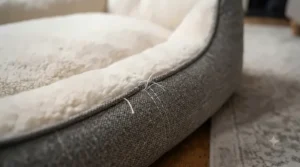
Getting the setup right in the first month makes a real difference to how well any bed survives. Start by placing the bed somewhere your puppy already feels secure — near the family but not in a high-traffic walkway — rather than isolating them somewhere new and unfamiliar.
For the first week, supervise bed use closely. This lets you spot early signs of determined chewing before a small nibble becomes a destroyed corner, and gives you the chance to redirect toward an appropriate chew toy the moment you notice it starting. If you’ve chosen a waterproof crate mat, expect a few accidents during this settling-in period — that’s normal, not a product failure.
A common mistake in the first 30 days is introducing bedding, toys and crate training all at once, which can overwhelm a young puppy. Introduce the bed on its own for a few days first, using treats and calm praise when your puppy settles on it, before layering in additional training elements. By week three or four, most puppies have formed a genuine association between “their bed” and rest, which meaningfully reduces destructive chewing directed at it going forward.
Real-World Scenarios: Matching the Bed to Your Puppy
The city-flat first-timer: A Cockapoo puppy in a one-bedroom flat, occasional nibbler, moderate budget. The Bedsure Waterproof Crate Mat or MABOZOO Indestructible Crate Pad covers this well — affordable, washable, and appropriately sized for a smaller breed without the elevated-bed price tag.
The garden-loving working breed: A Border Collie puppy with access to a garden, moderate-to-determined chewer, needs something weather-resistant. The Veehoo Chew Proof Elevated Bed suits this well, combining outdoor durability with genuine chew resistance and cooling ventilation for an active, energetic breed.
The powerful-jawed destroyer: A Staffordshire Bull Terrier or German Shepherd puppy who’s already destroyed two soft beds. This calls for the K9 Ballistics Chew Proof Elevated Dog Bed or the premium Kuranda Aluminium Dog Bed — both eliminate the loose fabric edges that give a determined chewer purchase in the first place.
The multi-dog household: Several dogs sharing space, budget stretched across multiple beds. A mix approach often works best: one premium Kuranda for the most destructive dog, paired with Carhartt Canvas Dog Bed options for calmer housemates.
Your Buyer’s Decision Framework
If your puppy is a mild, occasional nibbler and budget is tight, choose a reinforced crate mat like the Bedsure Waterproof Crate Mat, because the risk of destruction is low and value matters more than maximum toughness.
If your puppy is a moderate chewer who mostly digs and scratches rather than gnawing directly at fabric, choose a plush reinforced cushion bed like the K9 Ballistics Tough Orthopedic Bed, because comfort and joint support matter alongside durability.
If your puppy is a determined, repeat-offender chewer, choose an elevated frame bed like the K9 Ballistics Chew Proof Elevated Dog Bed or Kuranda Aluminium Dog Bed, because removing loose fabric edges entirely is the only reliable way to stop the cycle of destroyed bedding.
If you’re outfitting an outdoor or garden space, choose the Veehoo Chew Proof Elevated Bed or Carhartt Canvas Dog Bed, because weather resistance and easy cleaning matter as much as chew resistance in that setting.
Teething Proof Puppy Bed vs Regular Puppy Bed
A regular puppy bed is typically built from standard 200-400D fabric with sewn seams and loose, soft edges — comfortable, but offering little resistance against determined chewing. A genuine teething proof puppy bed instead uses reinforced high-denier fabric, tension-secured coverings, or an elevated frame construction specifically designed to remove chewable edges.
The practical difference shows up fastest in replacement frequency. Owners of regular beds during peak teething weeks (roughly months four to seven) frequently report needing a replacement within a matter of weeks, while reinforced or elevated beds in the same household routinely last the full teething window and well beyond. The upfront cost of a proper teething proof puppy bed is higher, but the total cost across the teething period is often considerably lower once repeat purchases are factored in.
Comfort is the genuine trade-off worth acknowledging honestly: elevated cot beds are firmer than a traditional cushion, and some puppies take a few days to adjust. For most owners dealing with anything beyond mild nibbling, that adjustment period is a fair exchange for a bed that survives.
Long-Term Cost & Maintenance
Run the numbers over a single teething window and the value case for a genuinely durable bed becomes obvious. A £20-£25 basic bed replaced every six to eight weeks during peak teething can total £100-£150 across five to six months, before even accounting for the mess and hassle of repeated shopping.
By comparison, a single £70-£100 elevated bed that survives the entire teething period — and typically well into adulthood — works out considerably cheaper per month of actual use, without factoring in the reduced risk of a chewed-up bed creating a choking hazard from swallowed foam or fabric fragments.
Maintenance is straightforward across most of these beds. Machine-wash removable covers at 30°C on a gentle cycle, avoiding fabric softener, which can reduce water resistance over time. Mesh and vinyl surfaces on elevated beds simply hose down and air dry. Foam inserts generally shouldn’t go in the machine — spot-clean instead, and let them air dry fully before reuse to avoid mould developing inside.
Safety, Regulations & UK Standards Guide
While there’s no specific British Standard governing pet beds directly, a few markers help identify genuinely safer products. CertiPUR-US foam certification indicates non-toxic, low-emission foam construction, widely accepted as a quality marker in the UK market. OEKO-TEX Standard 100 certification confirms fabric has been tested against a wide range of potentially harmful chemicals.
Safety matters practically, too, not just in certification terms. Destroyed bedding creates loose foam chunks and fabric strips that pose a genuine choking and intestinal blockage risk if swallowed — a far more expensive and distressing outcome than the cost of a proper bed in the first place. Always supervise a teething puppy around any bed or toy until you’re confident they won’t ingest damaged material, and remove any bed showing significant wear before it becomes a hazard rather than waiting for total destruction.
According to Petplan’s guidance for UK puppy owners, persistent teething discomfort beyond what seems ordinary is worth discussing with your vet, who may recommend a soothing gel or confirm there’s nothing else going on. It’s also a sensible moment to check whether your pet insurance policy covers dental treatment, since retained baby teeth and related issues are a genuinely common early-life claim.
✨ Don’t Miss These Exclusive Deals!
🔍 Give your teething puppy the bed they actually deserve. Click through to check current pricing and availability on any of the picks above — because a sofa cushion was never meant to be a chew toy.

Frequently Asked Questions
❓ Is a teething proof puppy bed really necessary, or will any bed do?
❓ At what age should I buy a chew-resistant puppy bed?
❓ Can teething cause blood on my puppy's bed?
❓ Do elevated beds actually stop chewing better than cushion beds?
❓ What size puppy bed should I buy if my dog is still growing?
Conclusion
Teething is temporary, but the damage a determined puppy can do to unsuitable bedding is very real while it lasts. Across the seven beds we’ve covered, the right choice ultimately comes down to how honestly you assess your puppy’s chewing intensity: mild nibblers do perfectly well on a budget-friendly option like the Bedsure Waterproof Crate Mat, moderate chewers benefit from cushioned, reinforced beds like the K9 Ballistics Tough Orthopedic Bed, and genuinely determined destroyers need the frame-based protection of the K9 Ballistics Chew Proof Elevated Dog Bed or the premium, long-lasting Kuranda Aluminium Dog Bed.
Whichever you choose, pair it with appropriate chew toy alternatives, a little patience, and consistent redirection away from furniture and toward the bed itself. Combined with proper exercise and mental stimulation, a genuinely teething proof puppy bed does more than protect your belongings — it gives your puppy a safe, comfortable space to work through a phase that, however chaotic it feels right now, really is just a phase.
✨ Ready to Puppy-Proof Bedtime?
🔍 Take the guesswork out of teething season with a bed built to survive it. Check current prices on any of the seven picks above and give your puppy somewhere comfortable — and safe — to rest while those adult teeth come through.
Recommended for You
- Soft Crate Bed for Puppy: 7 Cosy UK Picks for 2026
- Puppy Crate Mattress UK: 7 Best Picks Compared 2026
- 7 Best Crate Bed for Puppy Picks UK 2026
Disclaimer: This article contains affiliate links. As an Amazon Associate, I earn from qualifying purchases. If you purchase products through these links, we may earn a small commission at no additional cost to you.
✨ Found this helpful? Share it with your friends! 💬🤗
